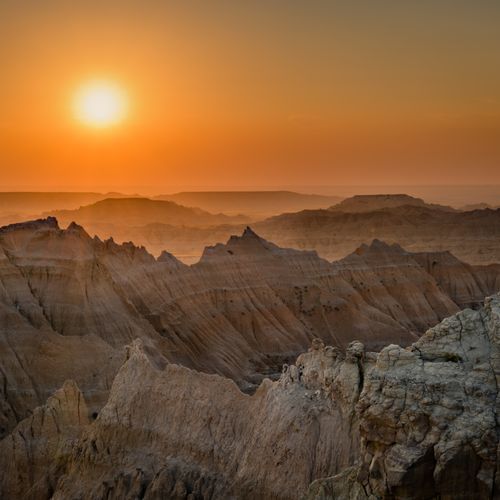
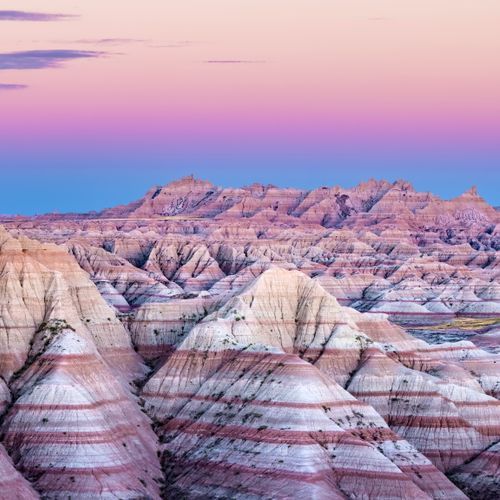
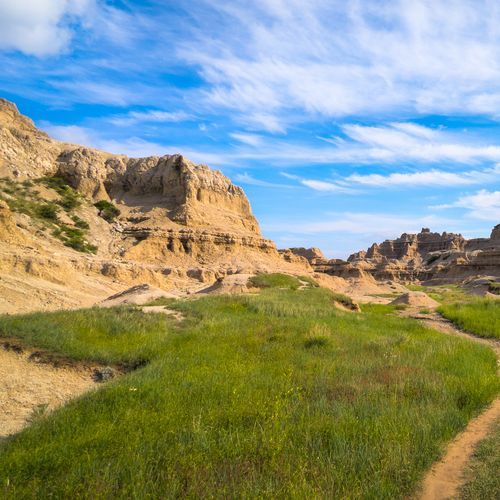
Badlands National Park breaks into four distinct areas, and visitors who understand that geography will have a far better trip. The North Unit is the park most people picture: the dramatic wall of striped buttes, pinnacles, and eroded canyons strung along Badlands Loop Road. This is the classic sightseeing corridor, where overlooks, short trails, and the Ben Reifel Visitor Center make it easy to sample the park’s biggest scenery in a single day. It is the best area for first-time visitors, families, photographers, and anyone who wants maximum visual payoff with minimal logistics. Think of the North Unit as the park’s front stage—accessible, cinematic, and ideal for sunrise, sunset, short hikes, and wildlife watching between stops.
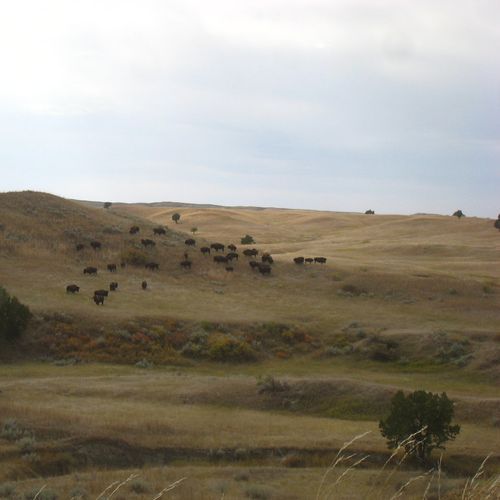
The Sage Creek area feels wilder and less polished. On the park’s western side, gravel roads, open prairie, prairie dog towns, and frequent bison sightings shift the emphasis from geologic spectacle to a broader Great Plains experience. The badlands formations are still impressive here, but the mood is quieter, more spacious, and better suited to travelers who want to slow down, scan the grasslands for wildlife, and catch a more remote side of the park. Beyond these developed and semi-developed zones lies the Badlands Wilderness Area, a vast roadless expanse where the park becomes raw and immersive. This is where experienced hikers and backcountry campers go to leave the roadside crowds behind and walk directly into the formations and mixed-grass prairie.
The fourth area is the South Unit, managed in conjunction with the Oglala Sioux Tribe and reached separately from the North Unit. It is less visited, more culturally rooted, and essential for anyone who wants to understand Badlands as more than a scenic drive. Here, the landscape is inseparable from Lakota history and identity, and the experience feels more open-ended and exploratory than the tightly organized North Unit. The smartest way to approach the park is to match each area to a different style of visit: use the North Unit for signature views and easy trails, Sage Creek for wildlife and solitude, the Wilderness Area for true immersion, and the South Unit for cultural depth and a broader sense of place.