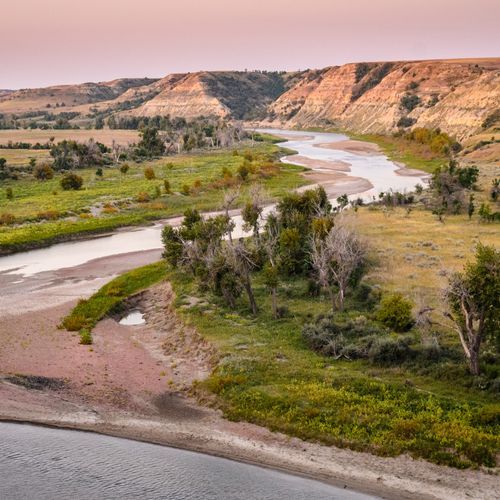
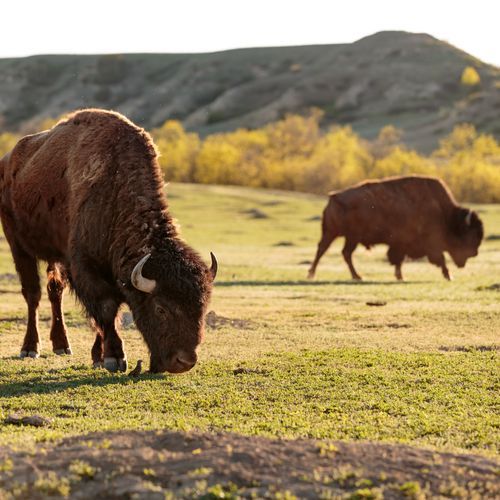
Theodore Roosevelt National Park is split into three separate areas, and each one feels like a different expression of the North Dakota badlands. The South Unit, near Medora, is the park’s classic introduction: the most accessible, the most visited, and the best place for first-time travelers to get their bearings. Here, a paved scenic drive links broad overlooks, colorful badland formations, prairie, and frequent wildlife viewing, with easy pull-offs that make it ideal for a half-day or full-day exploration. If you want the park’s signature mix of dramatic scenery, bison country, and straightforward logistics, start here. It delivers the essential Theodore Roosevelt experience without requiring much planning beyond giving yourself enough time to stop often and look out over the land.
The North Unit is wilder in mood and more removed, with a quieter, more spacious feel that rewards visitors who want a deeper, more contemplative visit. Its scenic drive is shorter, but the landscapes feel steeper, more rugged, and in many places more dramatic, with memorable high-country views over the Little Missouri River and surrounding badlands. This is the unit for travelers who don’t mind extra driving between park sections in exchange for fewer crowds and a stronger sense of isolation. If the South Unit is the park’s broad welcome, the North Unit is its more intimate, more atmospheric counterpart.
The third area, the Elkhorn Ranch Unit, is the most historically resonant and the least developed. This is where Theodore Roosevelt’s ranch once stood, and the appeal is not scenic convenience but atmosphere, solitude, and a direct connection to the place that helped shape his conservation ethic. Visitors should think of Elkhorn as a purposeful side trip rather than a casual stop: it is for those who want to slow down, absorb the landscape, and understand the human story behind the park. Taken together, the three areas invite different styles of exploration—South Unit for a classic scenic overview, North Unit for a quieter immersion in the badlands, and Elkhorn Ranch for history, reflection, and a sense of the land as Roosevelt knew it.