
Theodore Roosevelt National Park, located in the rugged badlands of North Dakota, stands as a living tribute to the 26th President of the United States, who was a staunch advocate for conservation and the natural world. This park encapsulates the landscapes that inspired Roosevelt's lifelong commitment to conservation. The park is divided into three units, the South Unit, the North Unit, and the Elkhorn Ranch Unit, each offering unique experiences of the badlands' rugged terrain and sweeping vistas.
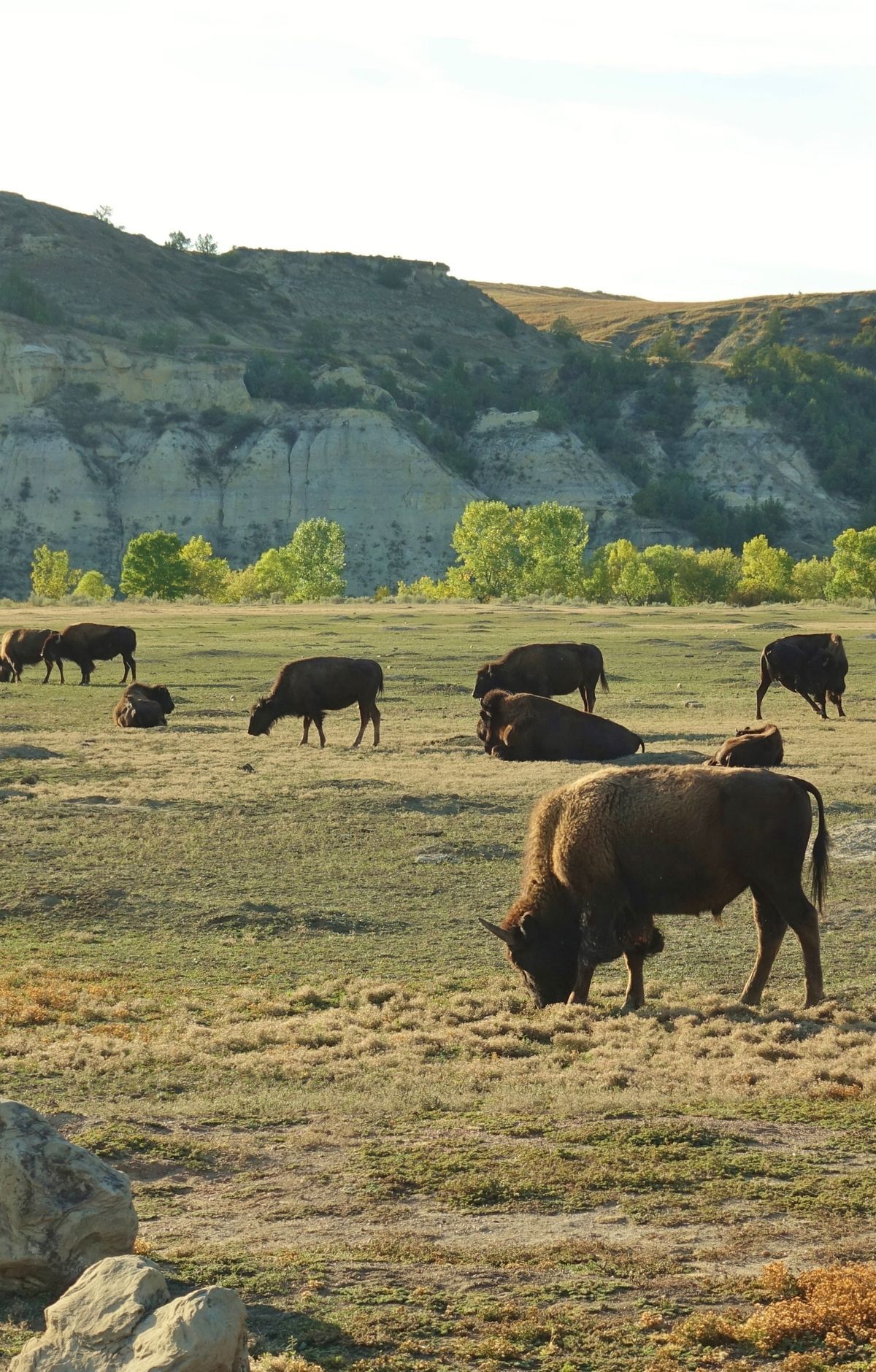
The park's geology is marked by colorful layers of sedimentary rocks, deeply eroded canyons, and striking rock formations. These geological features not only make for breathtaking scenery but also host to a wide variety of wildlife. Visitors might spot bison, wild horses, and elk, which roam freely within the park boundaries. The Little Missouri River carves through the terrain, shaping the park's landscape and serving as a vital water source for the area's wildlife.
The park's Elkhorn Ranch Unit includes the site of Theodore Roosevelt's own ranch, where he sought solace and rejuvenation in the wake of personal tragedy before rising to the presidency. His experiences here fundamentally shaped his conservation policies and efforts.
Visitors can explore the park through scenic drives such as the 36-mile loop in the South Unit, which features overlooks that provide stunning views of the Painted Canyon. For those who wish to delve deeper, the park's extensive trail system offers everything from leisurely walks to challenging hikes through the badlands' rugged terrain, providing intimate encounters with the natural environment that Roosevelt fought so passionately to preserve.
Theodore Roosevelt National Park
North Dakota
North Dakota
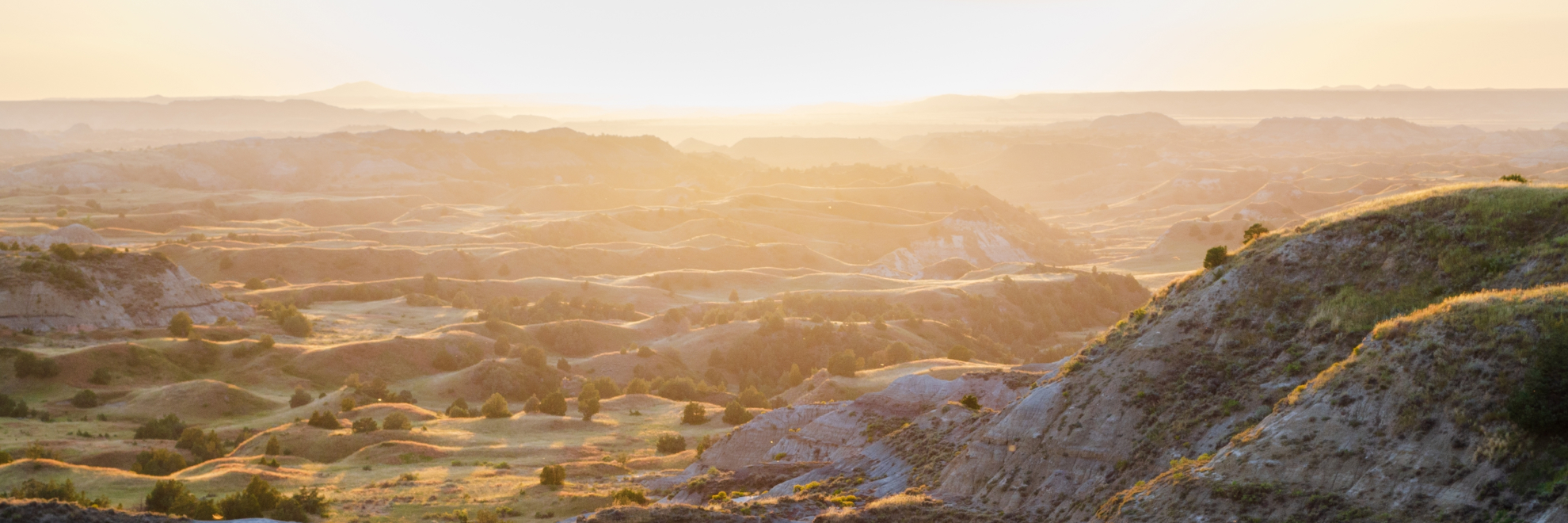
Set in the Dakota Badlands of North Dakota, this park is a mix of grassland and colorful bentonite hills. It honors the 26th president of the United States, who spent his early years here in the late 19th century. The rugged landscape he experienced helped shape the national land conservation policy that followed. The park is divided into three units: the South Unit, the North Unit, and the Elkhorn Ranch Unit. Bison, feral horses, and elk roam the grasslands, so visitors can enjoy wildlife viewing. Hiking trails wind through the badlands, and scenic roads lead to overlooks across the park.
Park Areas
All areas →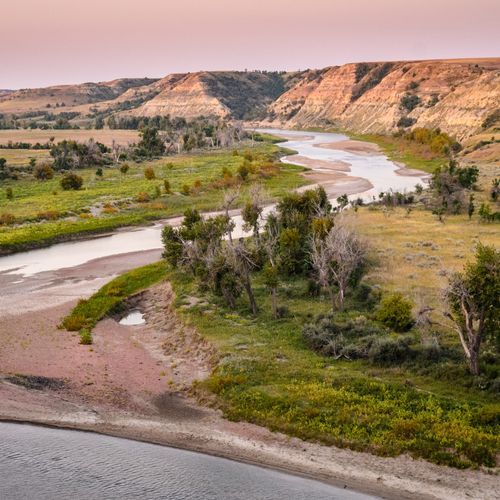
South Unit
Most visitors reach the South Unit from I-94, which gives it easier access than the more remote North Unit. Its defining feature is the badlands, a rolling, jumbled landscape of eroded hills that the Scenic Loop Drive winds across on a paved two-way loop. Numerous scenic overlooks and trailheads line the road, including Scoria Point and Boicourt Overlook. Hikers can choose from self-guided nature trails like Ridgeline Nature Trail and Coal Vein Trail, short walks such as the 0.4-mile Wind Canyon Trail, or longer backcountry routes suited to day or overnight trips. Prairie dog towns near the loop road make good stops for wildlife viewing, and the drive itself gives access to many more chances to spot animals.
North Unit
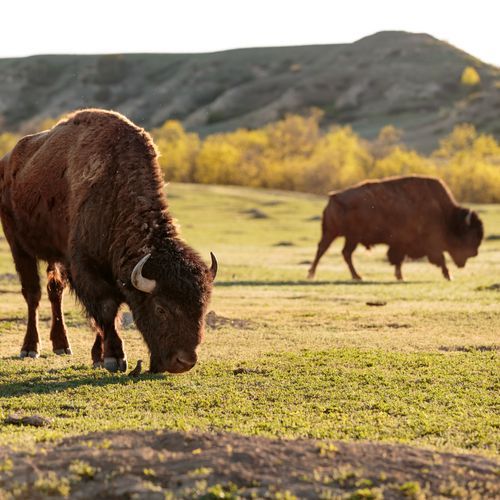
The North Unit is the quieter, more rugged part of the park, and it is much more compact than the South Unit. Broken badlands rise along the Little Missouri River, which bends eastward through the landscape. The 14-mile Scenic Drive is an out-and-back route that curls through the badlands, climbs to the prairie, and offers views over the designated wilderness that makes up most of this unit. Wildlife viewing is a highlight along the road. Hikers can choose short nature trails or backcountry routes, including the Achenbach Trail and the Caprock Coulee Trail, which cross the wilderness. Overnight hikers need a backcountry permit.
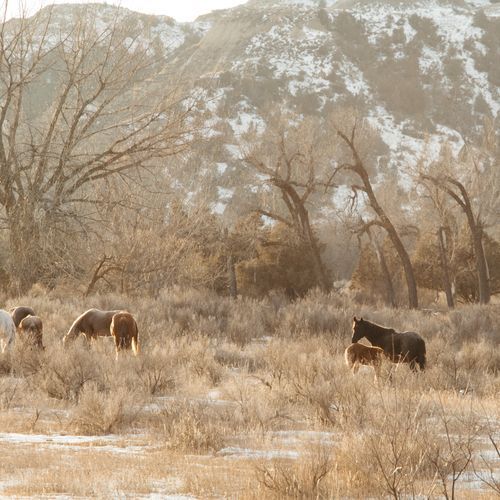
Elkhorn Ranch Unit
Few places in the park feel as removed as the Elkhorn Ranch Unit, the spot Theodore Roosevelt picked for his home ranch after his mother and his wife both died within hours of each other in 1884. The cabin is gone, and only foundation stones mark its spot in a cottonwood river bottom along the Little Missouri River. A level, mowed path of 0.7 miles runs from the lot to where the cabin once stood. Exhibits at the site share Roosevelt's own words about ranch life here. With no visitor center or other facilities on hand, the quiet itself is the draw. Reaching it means following gravel roads through private land and across the Little Missouri National Grassland, and the drive is scenic in its own right.
Popular Hiking Trails
All trails →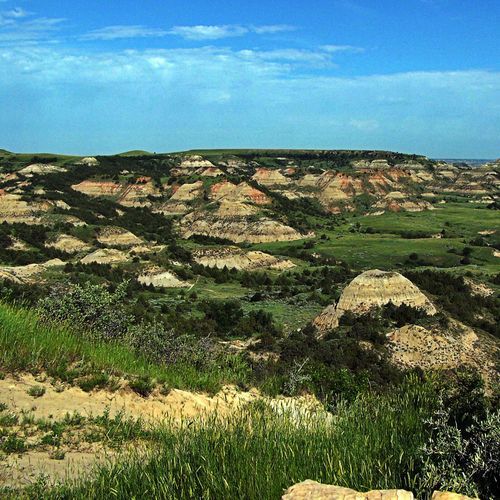
Painted Canyon Nature Trail
Moderate0.8 mi
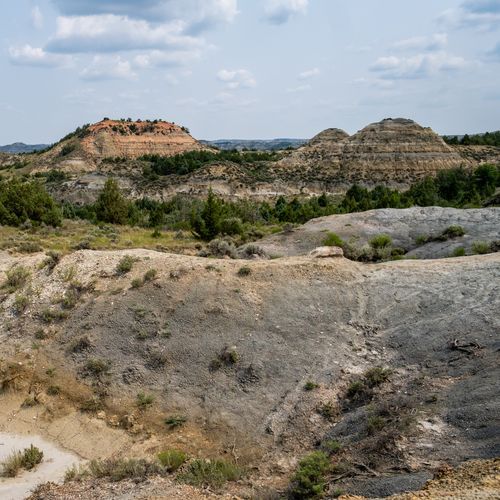
Painted Canyon Trail
Moderate4.2 mi
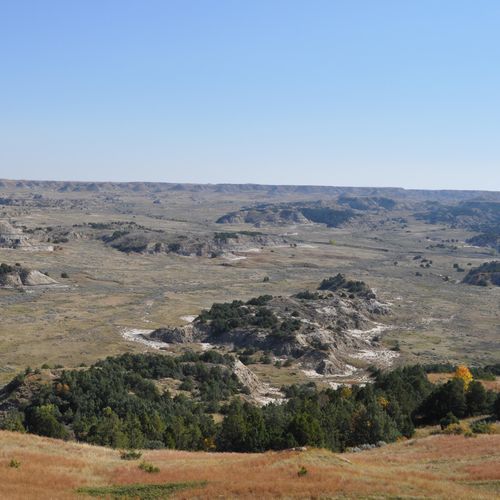
Buck Hill Trail
Easy0.6 mi
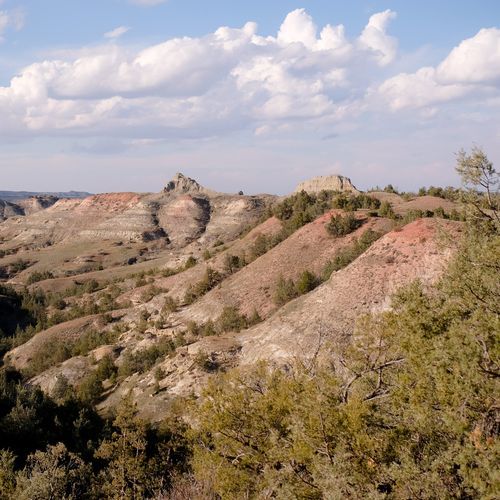
Petrified Forest Loop Trail
Moderate9.2 mi
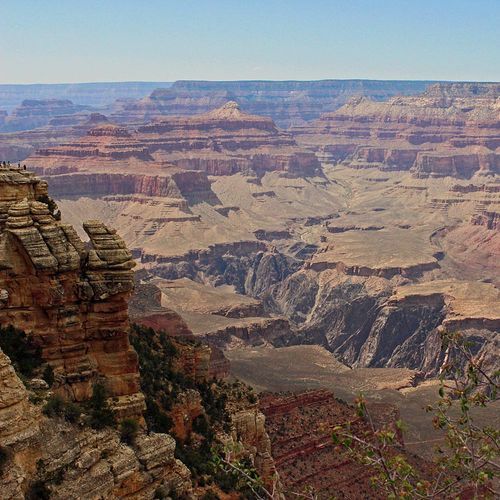
Wind Canyon Trail
Easy0.5 mi
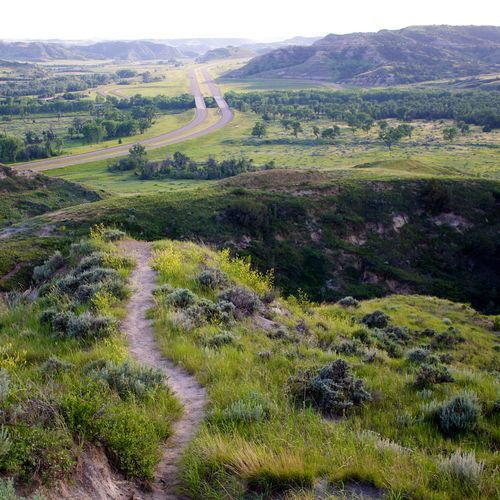
Achenbach Trail
Difficult18.0 mi
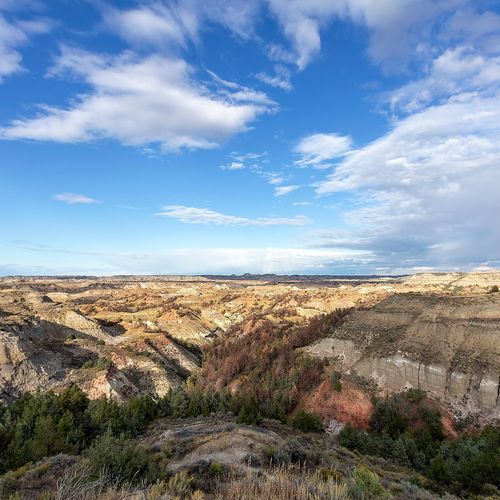
Ridgeline Nature Trail
Easy0.7 mi
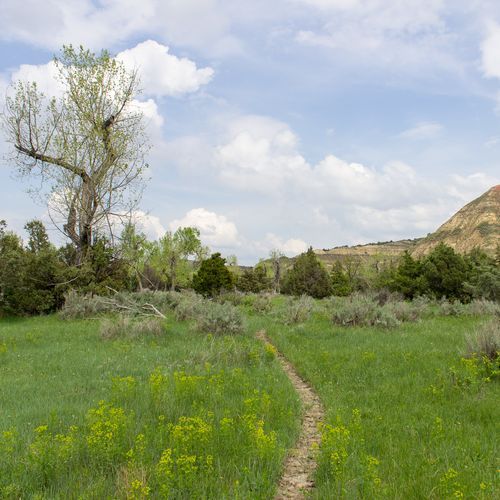
Lone Tree Trail
Easy0.2 mi
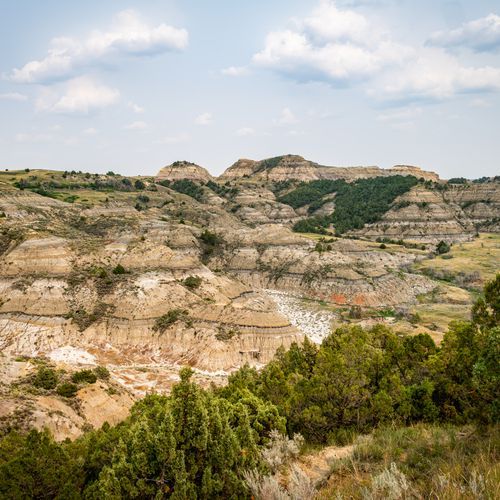
Ekblom Trail
Moderate3.2 mi
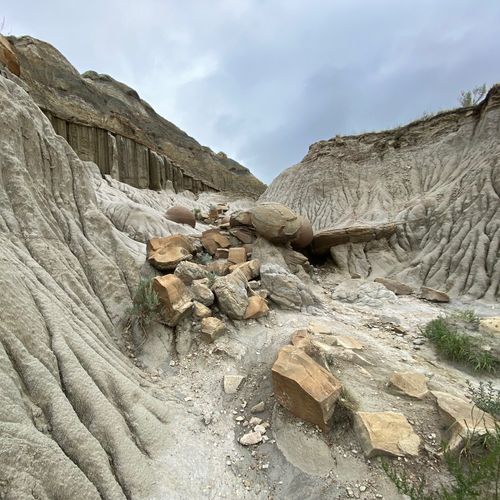
Little Missouri Nature Trail
Moderate3.9 mi
Visitor Centers
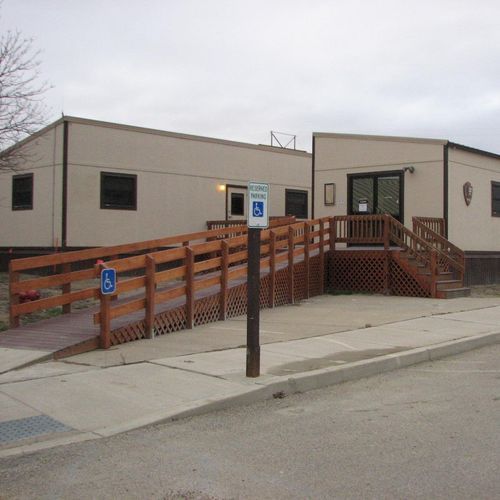
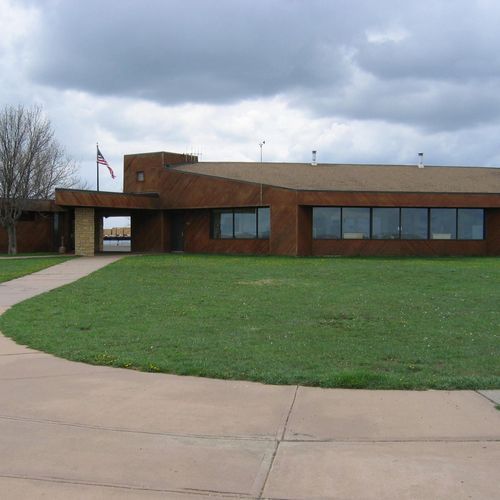
North Unit Visitor Center
9:00AM - 4:30PM
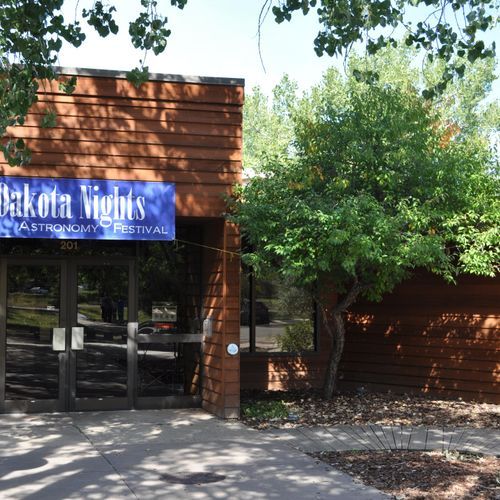
Painted Canyon Visitor Center
8:30AM - 5:30PM
South Unit Visitor Center
8:30AM - 5:30PM
Campgrounds
Camping guide →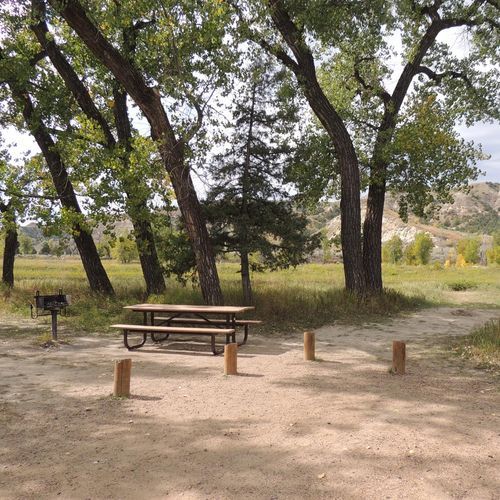
Cottonwood Campground
South Unit
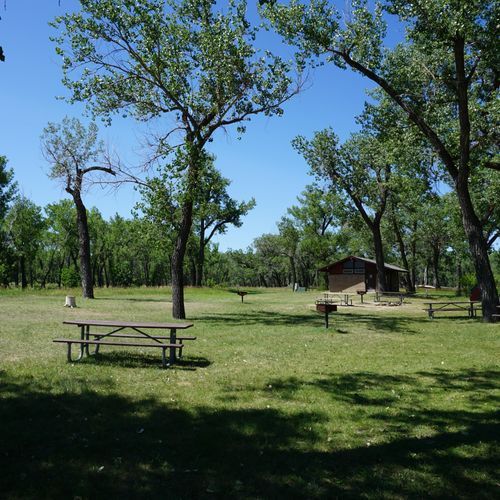
Juniper Campground
North Unit
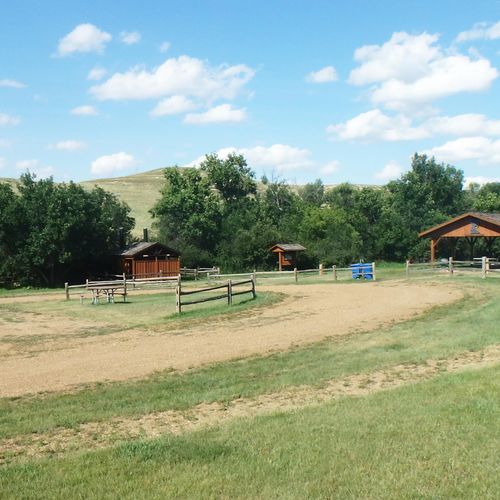
Roundup Group Horse Camp
South Unit
About the Park
Park Areas
The South Unit of Theodore Roosevelt National Park is a prime destination for visitors, showcasing the rugged badlands terrain and a variety of wildlife, including bison, prairie dogs, and wild horses. It offers accessible hiking trails and features the Painted Canyon, a popular stop along Interstate 94. The Maltese Cross Cabin, once occupied by Theodore Roosevelt, provides historical insights into his conservation legacy.
The North Unit offers a more secluded experience with its striking badlands formations and a scenic 14-mile drive that provides views of the Little Missouri River. Wildlife such as bison, pronghorns, and mule deer are commonly spotted here. The Caprock Coulee Trail allows visitors to explore the unique geology of the area. This unit is ideal for those seeking solitude and a quieter visit.
The Elkhorn Ranch Unit, located between the North and South Units, is a tranquil area that reflects Theodore Roosevelt's connection to the natural environment. Visitors can explore the original ranch site, marked by foundation stones, and enjoy the solitude of open plains and cottonwood trees. This unit emphasizes the park's diverse natural and cultural heritage, offering a historical and contemplative experience.
Park Guides
All 11 guides →Badlands Weather: Shoulder Seasons and Subzero Winters
Late spring, from April through May, and early fall, from September through October, are the best times to visit Theodore Roosevelt National Park.
South Unit Scenic Drive and Accessible Overlooks
The South Unit Scenic Drive is a 24-mile out-and-back route, and it gives you a practical way to see much of the area from your car.
Caprock Coulee and Other Badlands Hikes
The Caprock Coulee Trail in the North Unit makes a loop of about 4.1 miles, and many visitors consider it one of the best hikes in the park.
Bison Battles, Feral Horses, and Elk
Bison herds roam the grasslands and badlands of Theodore Roosevelt National Park. The North Unit Scenic Drive passes through the Little Missouri badlands, where bison and bighorn sheep feed on the prairie and along cliff edges.
Layered Clay and Volcanic Ash Badlands
The badlands of southwestern North Dakota were shaped by erosion over millions of years, and that erosion is still at work today.
