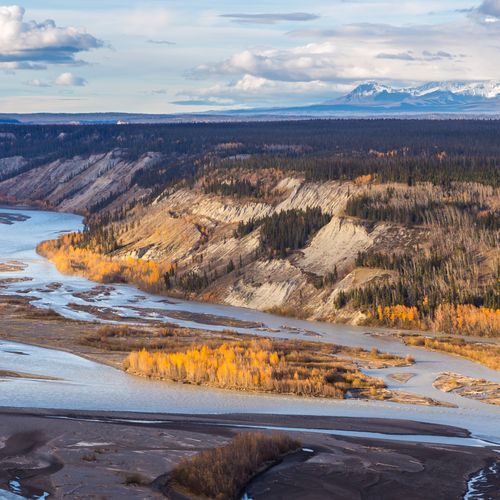
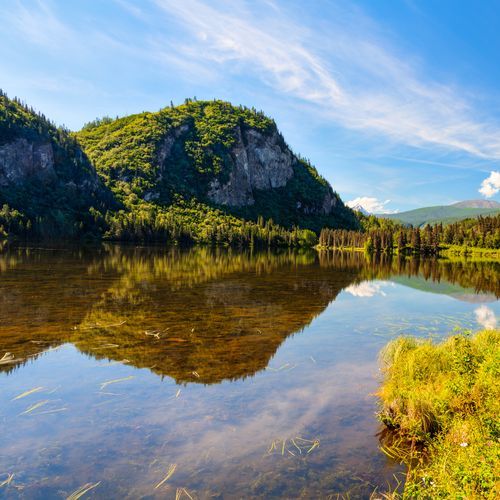
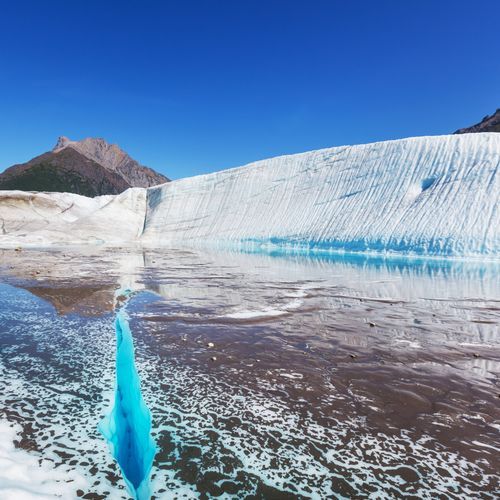
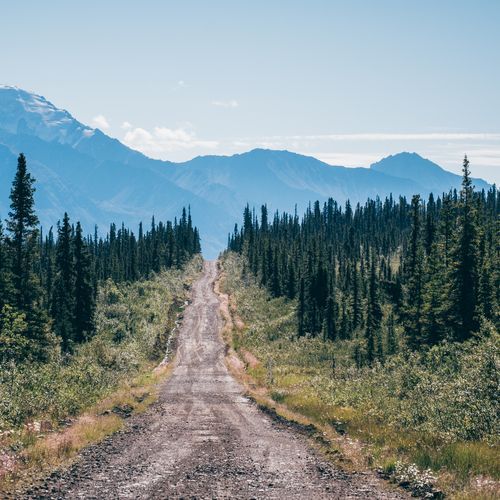
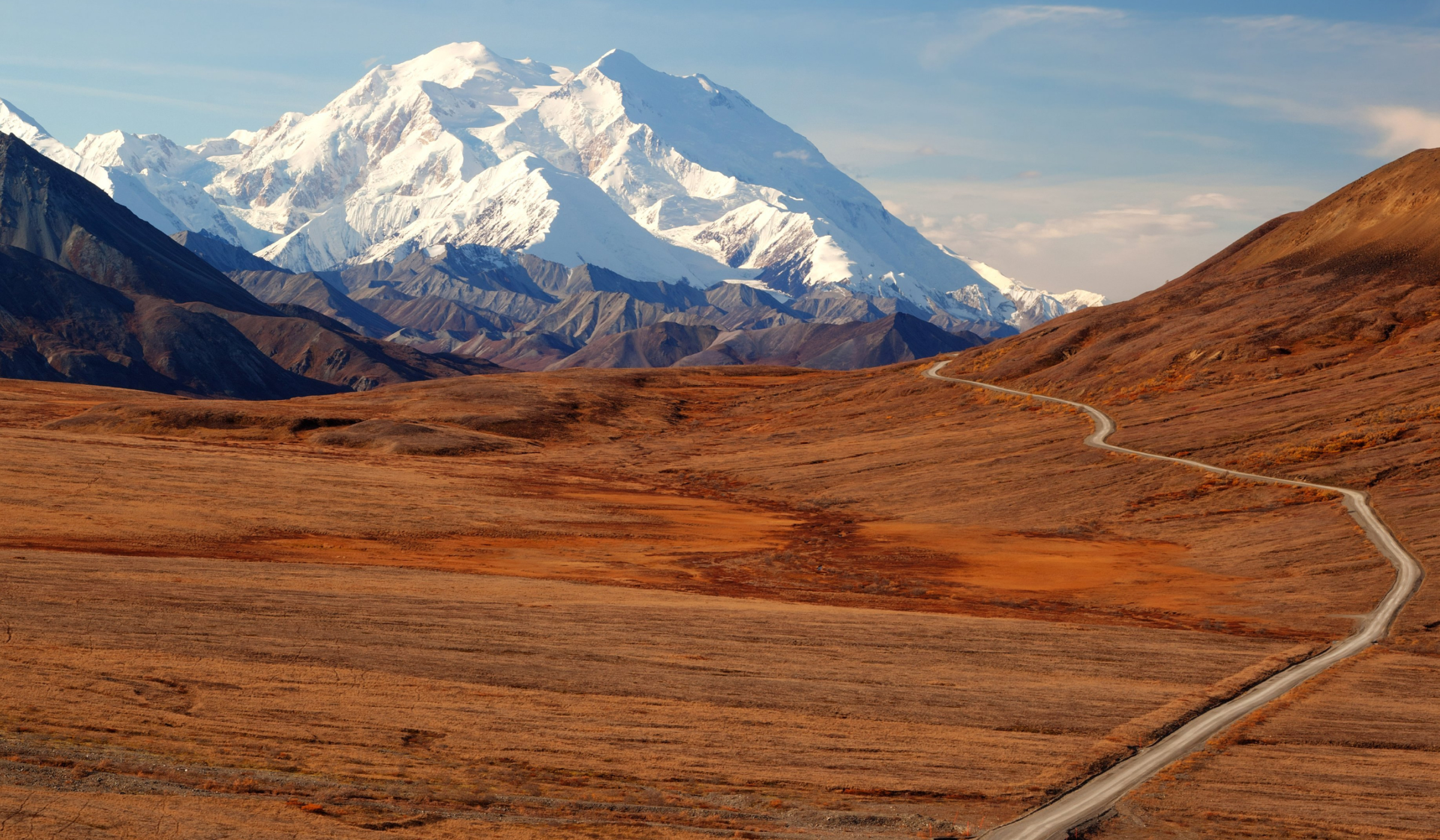
Wrangell–St. Elias is best understood not as a single destination, but as four distinct access regions, each revealing a different face of this immense Alaskan wilderness. The Kennecott and McCarthy area is the park’s most iconic and most approachable introduction: a dramatic mix of copper-mining history, glacier walks, classic day hikes, and high mountain scenery gathered around the old mill town and the Root and Kennicott glaciers. It is where many first-time visitors should begin if they want a concentrated experience with real atmosphere and a strong sense of place. To the north, the Nabesna Road corridor feels quieter, wilder, and more self-directed. This is the park for travelers who want fewer people, big valleys, wildlife viewing, old mining traces, and the freedom to pull over and explore on their own terms rather than follow a set itinerary.
The Yakutat district is Wrangell–St. Elias at its most maritime and remote, where the park meets the Gulf of Alaska in a landscape shaped by colossal ice, stormy coast, and immense tidewater glaciers. This is not a casual add-on; it is a serious expedition-style corner of the park best suited to visitors specifically seeking flightseeing, coastal wilderness, or a deeper Alaska trip beyond the road system. The fourth major region, the Copper Center and park headquarters area, serves as the practical gateway and orientation point for the park as a whole. It is where visitors ground themselves before pushing farther in, gathering maps, current conditions, and a clearer sense of the scale they are about to enter.
The right way to explore Wrangell–St. Elias is to choose a region rather than attempt to “do the whole park.” Distances are huge, services are limited, weather shifts quickly, and most of the landscape remains true backcountry. Think of Kennecott-McCarthy for history and accessible adventure, Nabesna for solitude and road-based exploration, Yakutat for remote glacier-and-coast wilderness, and Copper Center as the essential launch point. Visitors who embrace that regional approach will experience the park the way it deserves to be experienced: not as a checklist, but as one of the last genuinely vast and unruly landscapes in America.