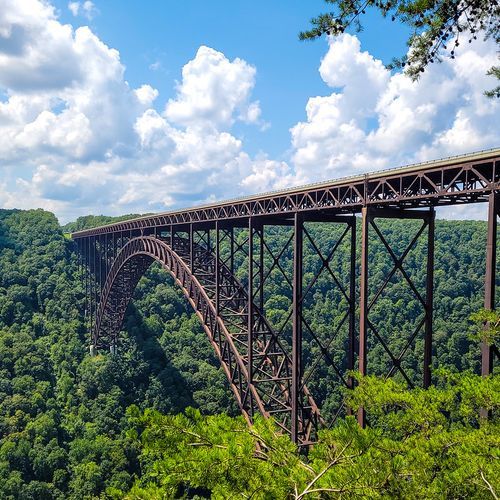
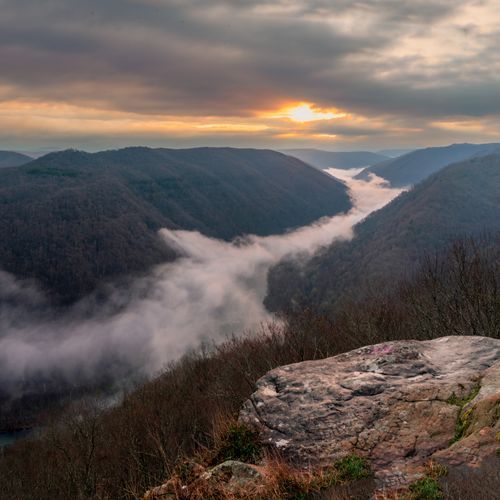
New River Gorge National Park & Preserve is best understood as four distinct areas strung along a dramatic Appalachian river corridor, each with its own mood, scenery, and style of adventure. Around Canyon Rim and the Fayetteville area, the park delivers its signature first impression: the great steel arch of the New River Gorge Bridge, sweeping overlooks into the gorge, easy access to visitor services, and a concentration of classic hikes and short scenic stops. This is the park’s most natural starting point, ideal for visitors who want the iconic view, a feel for the scale of the canyon, and a convenient base for rafting, rock climbing, and day hiking. To the south, Grandview lives up to its name with some of the broadest panoramas in the park, where the river bends through a vast horseshoe of forested cliffs. It feels more spacious and scenic than action-driven, making it a smart choice for travelers focused on overlooks, sunset light, and shorter walks with maximum visual reward.
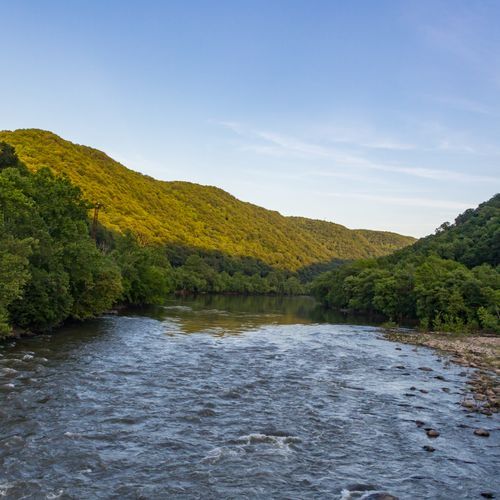
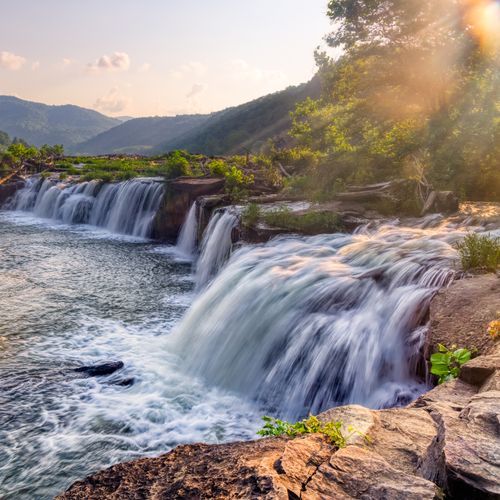
Farther downstream, Sandstone offers a quieter, more pastoral side of the park, where the river begins to ease out of its tightest gorge walls and the landscape opens in places into broad views, wetlands, and a richer sense of the river’s ecological character. Visitors who prefer a slower pace, birding, scenic drives, and less-crowded trailheads should give this section real time rather than treating it as a pass-through. By contrast, the northern reaches near Thurmond and Prince are where the gorge feels most layered with history. This is the railroad heart of the park, with old coal-country communities, steep hollows, river access, and a stronger sense of the New River as a working corridor as much as a natural wonder. Exploring here rewards visitors who enjoy combining scenery with story: abandoned mining landscapes, historic townsites, long views from high ridges, and a more immersive backroads feel.
The smartest way to explore New River Gorge is not to think of it as one centralized park with a single hub, but as a linear destination best tackled in sections. Canyon Rim is the essential introduction, Grandview is the scenic counterpoint, Sandstone is the quieter nature-focused stretch, and Thurmond-Prince is the historic, deeper-cut gorge experience. With one day, choose one or two areas and resist the urge to overdrive. With more time, moving deliberately between regions reveals the park’s real character: not just one overlook or one bridge, but a long, complex river landscape where geology, whitewater, forest, rail history, and mountain culture all shape a very different experience from one section to the next.