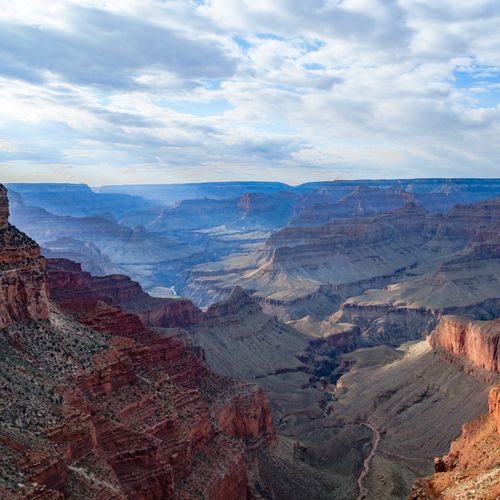
Grand Canyon National Park is best understood through its two primary public faces: the South Rim and the North Rim. The South Rim is the park’s classic front door, the place most travelers imagine when they picture the Grand Canyon. It is open, comparatively easy to reach, and built for a broad range of visitors, with Grand Canyon Village, iconic overlooks, services, lodging, and a dense concentration of viewpoints along the rim. This is where first-time visitors should begin, especially if the goal is to experience the canyon’s most famous panoramas without complex logistics. The South Rim delivers scale, drama, and convenience in equal measure, making it ideal for short visits, family trips, and anyone who wants the grand reveal with minimal effort.
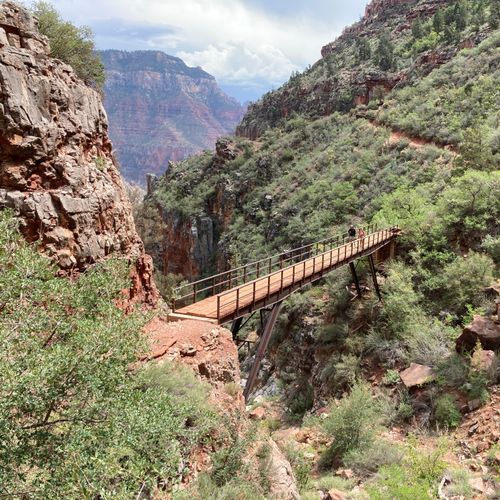
The North Rim is a different proposition altogether: higher, quieter, more seasonal, and notably more remote. It offers a cooler forested setting and a more contemplative experience of the canyon, with fewer crowds and a stronger sense of distance from the developed hub of the South Rim. Visitors should think of the North Rim not as an alternative version of the same trip, but as a distinct experience that rewards those willing to plan around its remoteness. The views are just as immense, but the mood is calmer and more intimate. For travelers choosing between the two, the South Rim is the essential introduction; the North Rim is the return visit, the deeper cut, the side of the park that feels wilder and more self-contained.
Beyond the rims, the canyon itself is the park’s true interior world: rugged, steep, and far more demanding than it appears from above. Trails descending from either rim quickly leave behind the easy comfort of scenic overlooks and enter a landscape defined by heat, elevation change, and enormous distances. This inner canyon, along with the remote backcountry beyond the main public areas, is where Grand Canyon shifts from sightseeing destination to serious expedition terrain. The smartest way to explore the park is to match ambition to time and ability: rim viewpoints for sweeping perspective, below-rim hikes for immersion, and backcountry or river travel for those prepared to experience the canyon on its own terms.