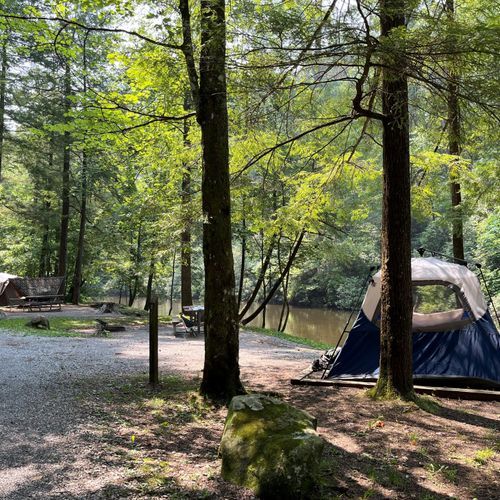
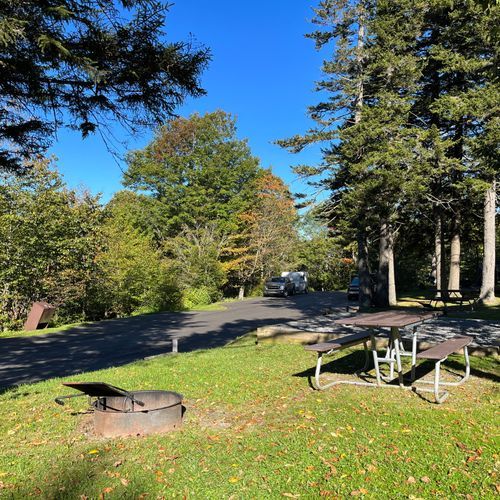
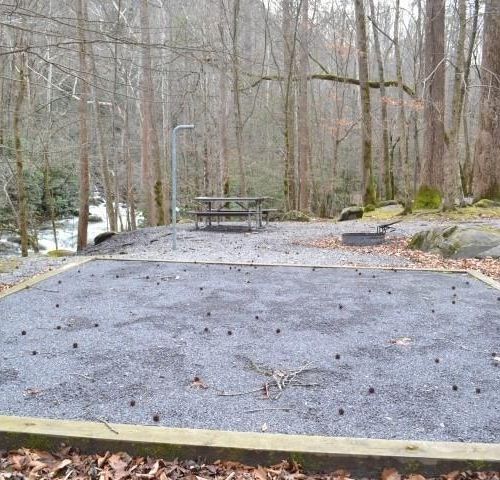
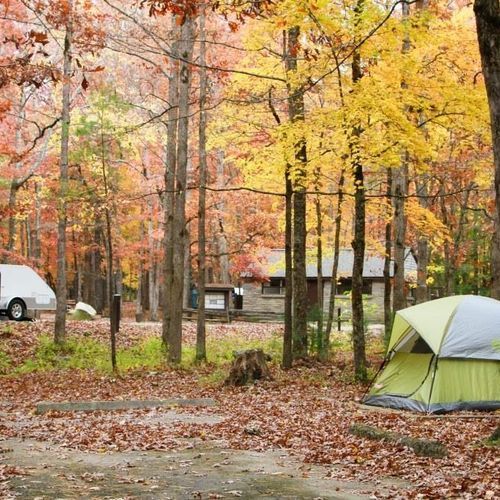
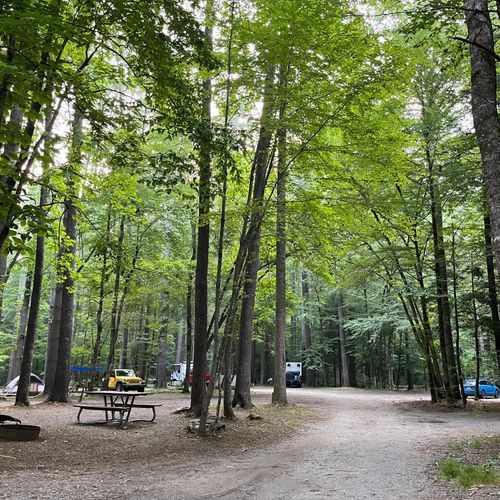
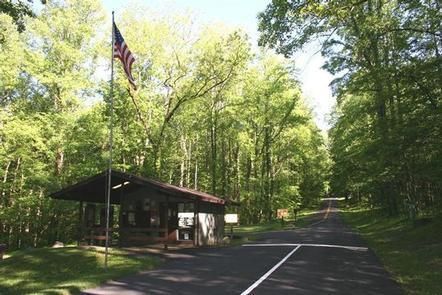
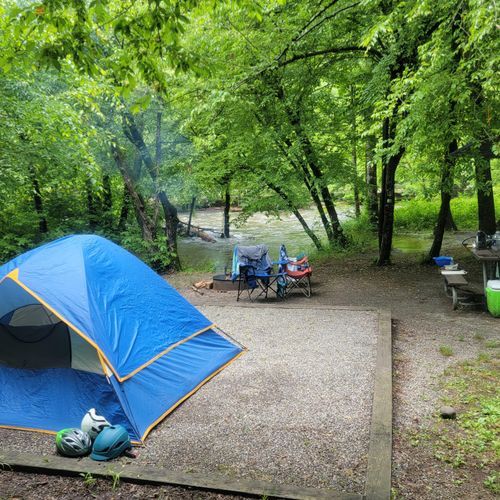
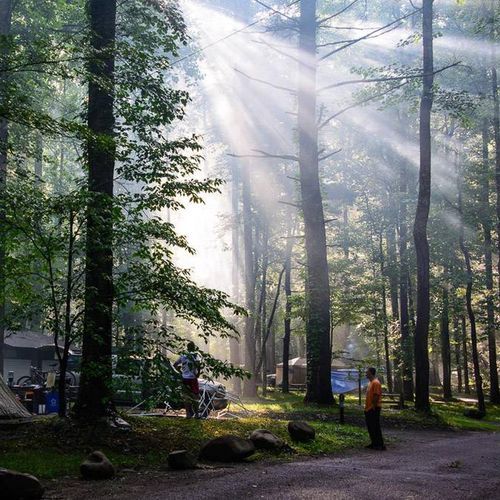
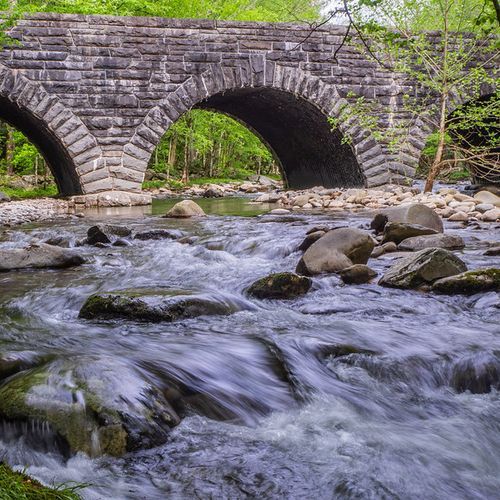
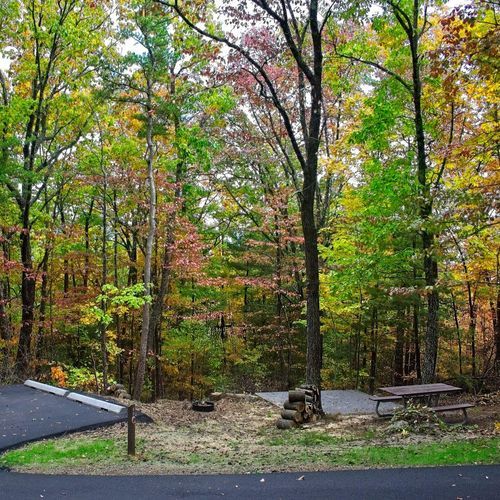
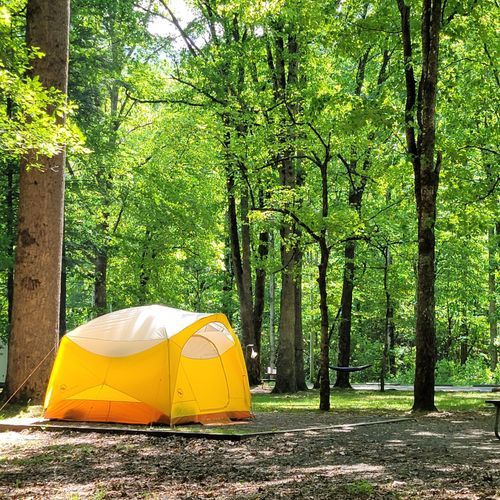
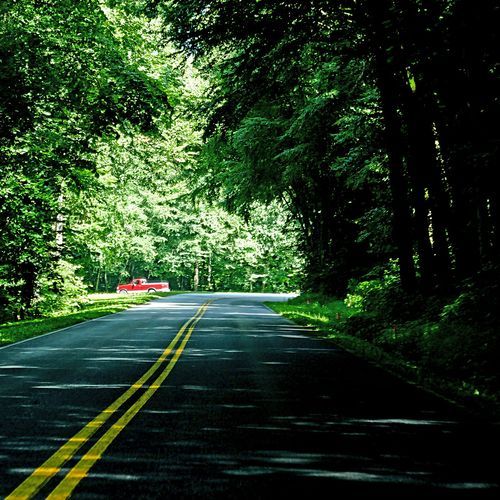
Camping in Great Smoky Mountains National Park ranges from easy frontcountry stays to true backcountry overnights, making it one of the most versatile camping destinations in the East. The park has 13 campgrounds, with a mix of developed campgrounds and more primitive options that put you closer to the Smokies’ wilder side. Frontcountry campgrounds are the best fit for most visitors, offering a classic national park base camp near major roads, trailheads, and scenic drives. Some, like Cades Cove and Smokemont, are especially popular for their access, atmosphere, and year-round appeal, while other campgrounds operate seasonally and feel quieter and more tucked into the forest.
The experience is exactly what most travelers come to the Smokies for: cool mornings under a dense tree canopy, evenings filled with the sound of creeks and insects, and easy access to some of the park’s best hiking, wildlife viewing, and historic landscapes. Even in developed campgrounds, the setting feels distinctly natural rather than resort-like. Expect wooded sites, a strong sense of seclusion, and a camping atmosphere that rewards early starts and unhurried evenings around camp. Backcountry campers will find a more rugged experience shaped by steep terrain, changing weather, and the deep quiet that settles over the mountains after dark.
Practical planning matters here. Reservations are typically required and the best campgrounds book up far in advance, especially in peak spring, summer, and fall seasons, so it pays to secure a site as early as possible. Check the specific rules for your campground before you go, since some sites are tent-only and may not allow RVs or trailers. Weather in the Smokies can shift quickly, even in warmer months, so bring layers and rain gear, and store food carefully in a landscape where wildlife is part of daily life. If you are heading into the backcountry, go prepared with maps, permits, and realistic expectations—the Smokies reward campers generously, but they favor those who arrive ready.