Dry Tortugas National Park guide · 2 min read
Ponce de León and the Name 'Dry Tortugas'
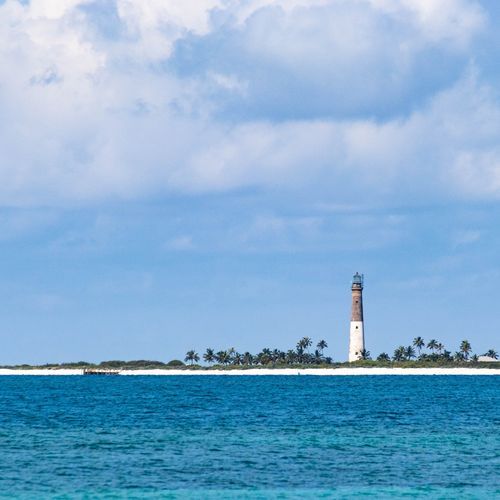
In 1513, the Spanish explorer Juan Ponce de León reached a cluster of seven islands about 70 miles west of Key West, at the far end of the Florida Keys.
He caught 160 sea turtles there and called the islands Las Tortugas, Spanish for the turtles. Most of the park is open water today.
The name Dry Tortugas has two parts, and each one tells you something about the islands. Dry was chosen because the islands have no fresh water on their surface. Tortugas is the Spanish word for sea turtles, a reminder of the animals Ponce de León found in such numbers.
Sea turtles are still one of the park's defining animals. Green and loggerhead turtles nest on the sandy beaches, and five kinds are commonly seen in the park. If you spot one while swimming or from a boat, keep your distance.
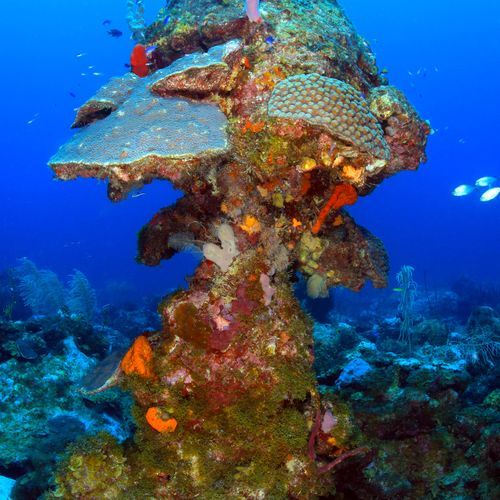
Less than one percent of the park is dry ground, so most visitors spend their time on or under the water. The park sits at the southwest corner of the Florida Keys reef system, the third largest reef system in the world. Below the surface you will find coral reefs, tropical fish and nurse sharks, and the marine life is often larger than in other parts of the Florida Keys. Snorkeling and swimming are the easiest ways to see it. Signs on the beaches note that no lifeguard is on duty and that some marine wildlife can be hazardous, so take care in the water.
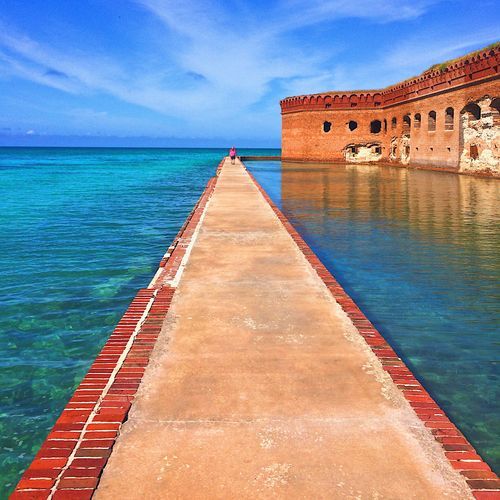
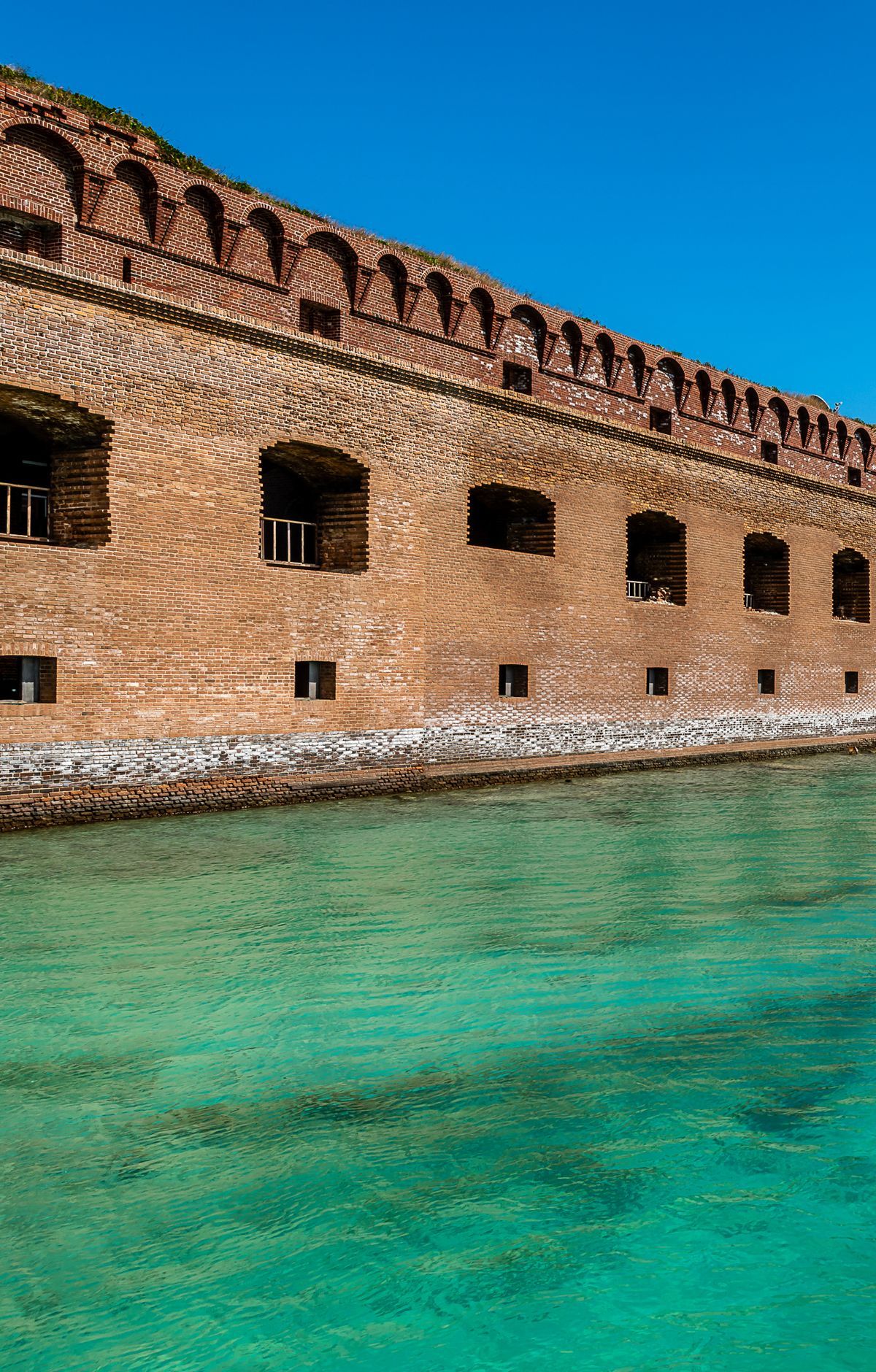
Fort Jefferson sits on Garden Key and is the largest brick structure in the Western Hemisphere. Work on it began in 1847, but the fort was never finished. It later held prisoners until 1874, and the most famous was a doctor who had treated John Wilkes Booth after the Lincoln assassination. Today visitors can tour the fort itself.