
Arches National Park is a unique place in the world - nowhere else has as many and as varied natural arches. These arches are formed by the weathering of sandstone layers, primarily the Entrada Sandstone. This sandstone rests on a thick layer of salt, which came from an ancient sea about 300 million years ago. The salt is unstable and can move, change, and dissolve under pressure, causing cracks and faults in the rock above. Water, ice, and wind then get into these cracks and wear away the rock, creating holes and gaps that eventually become arches.
There are over 2,000 natural rock arches in the park, with spans from 3 to 306 feet. Landscape Arch is the longest arch in the park with a span of 306 feet, and Double Arch has the tallest opening at 112 feet. The arches are still forming and changing, as some of them fall and new ones appear.
Arches National Park has a long human history. This land was home to various indigenous cultures, including the Ancestral Puebloans and the Fremont people. You can see pictographs and petroglyphs left behind on various trails in the park. Today, several Native American tribes consider Arches National Park to be part of their ancestral homeland. You can visit Wolfe Ranch cabin to see evidence of early European-American settlers in the area.
Keep an eye out for mule deer, desert bighorn sheep, coyotes, foxes, rabbits, lizards, snakes, and many birds, including peregrine falcons. The park also has over 450 species of plants, some of which are rare or endemic to the region.
Arches National Park is divided into several sections, including the Entrance area, Courthouse Towers, the Windows Section, and Devils Garden. The 18-mile scenic drive that winds through the park offers access to viewpoints and trailheads for short strolls and strenuous hikes.
Arches National Park is particularly stunning at sunrise and sunset, when the red rocks and shadows create dramatic views, and is a designated International Dark Sky Park. Arches is very popular, so plan for timed entry reservations during peak season and potentially crowded trails.
Arches National Park
Utah
Utah
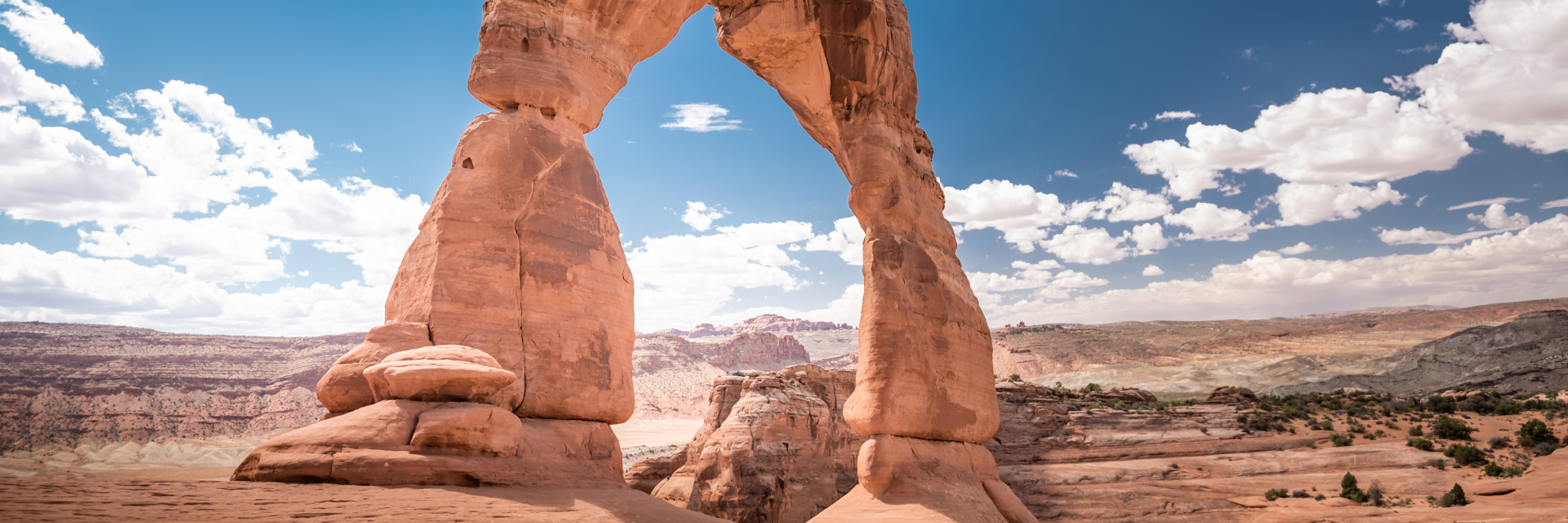
Arches National Park, near Moab, Utah, is known for more than 2,000 natural sandstone arches. Its red rock also forms pinnacles, tall fins, hoodoos and balanced rocks that stand out against the desert. Exposed rock layers in this high desert preserve a geologic record stretching back millions of years. A paved scenic road passes many of the best-known formations, and The Windows and Double Arch sit a short walk from it. Hikers can reach more arches on longer trails, and the Devils Garden Trail passes eight of them on a primitive route. Pronghorn, bighorn sheep and black bears also live here, so watch from a respectful distance and keep food stored securely.
Park Areas
All areas →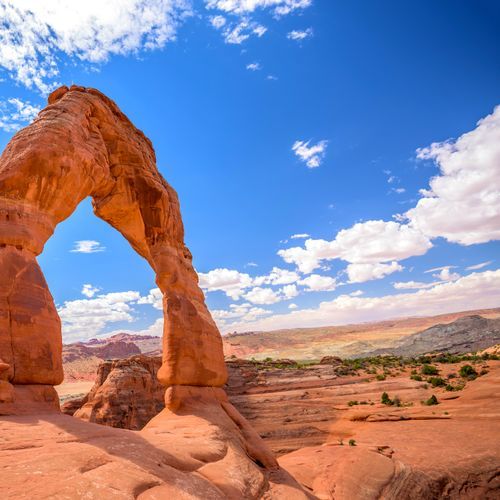
Delicate Arch & Wolfe Ranch
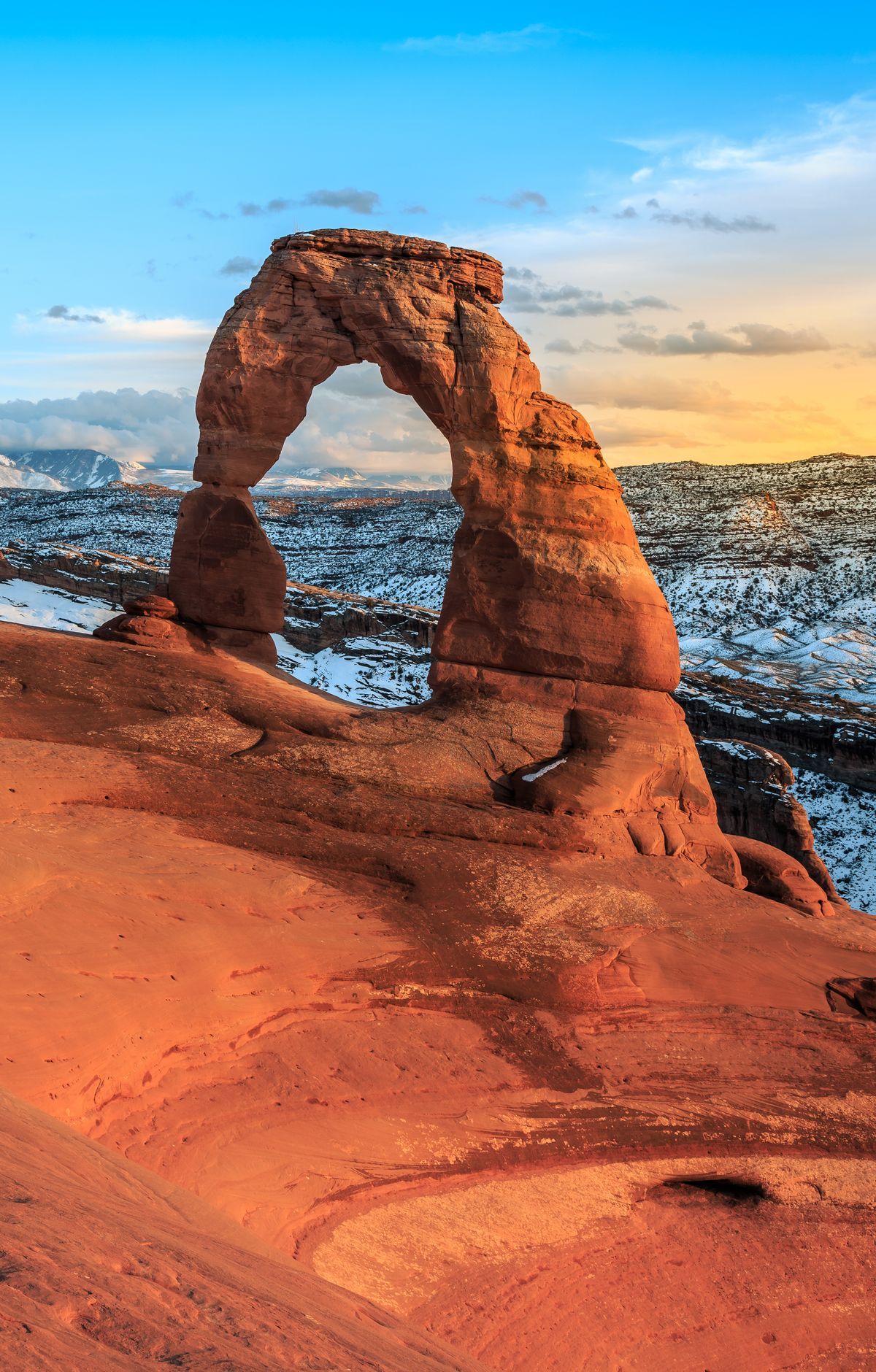
Delicate Arch is a freestanding arch shaped like an upside-down U, with an opening 46 feet tall and 32 feet across, bigger than any other freestanding arch in the park. The Delicate Arch Trail, a moderate hike of about three miles round trip, starts at the Wolfe Ranch Parking Lot. Short walks from the lot reach a petroglyph panel and Wolfe Ranch, where John Wesley Wolfe and his son Fred settled in the late 1800s. A weathered cabin, root cellar and corral from their ranch remain. About a mile farther down Delicate Arch Road, a second lot serves the Upper and Lower Viewpoints. The Upper one is a short, easy walk, while the Lower takes even less effort but sits far from the arch. Sunset is a popular time to photograph it, when the rock glows red.
The Windows Section
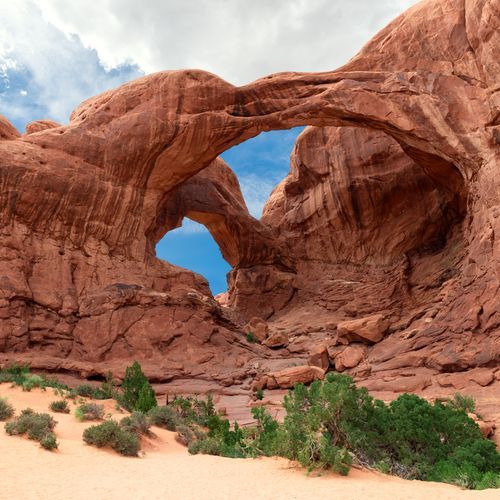
Few places in the park gather as many arches as this corner, where a short walk can bring you to several of them. The Windows Trail is a one-mile round trip that reaches North Window, South Window and Turret Arch, and you can get close enough to see the La Sal Mountains framed through the openings. Double Arch, made of two spans that meet, lies just across the parking lot. Several easy hikes start here, and the lot serves as the trailhead for these arches. Garden of Eden, Elephant Butte and Parade of Elephants are other named features nearby. The scenery makes this area a good place for both photography and stargazing.
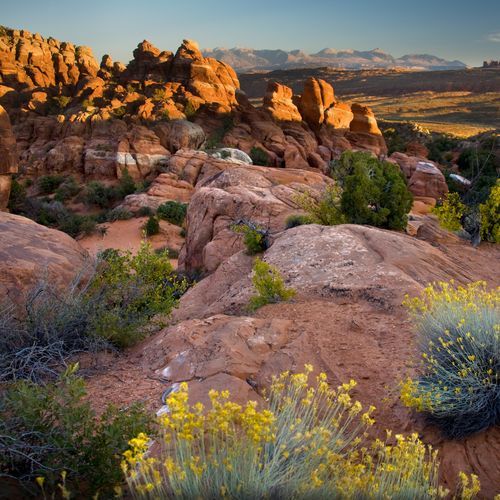
Fiery Furnace
Its name comes from the reddish glow it takes on at sunset, and the Fiery Furnace is a maze of narrow passages between towering sandstone fins. You can see it from an overlook a short walk from the parking lot, but going inside takes more effort. Entry requires either a ranger-guided hike, which runs spring through fall and needs a reservation, or a Self-Guided Exploration permit. Children under 5 are not permitted on either. The hikes are strenuous, with gaps to jump, narrow spots to squeeze through, ledges above drop-offs, and places where you press against the walls to hold yourself off the ground. It is easy to get lost, and GPS units do not work well between the high walls. Small markers flag only one counter-clockwise route, while many other possible paths may lead to dead ends.
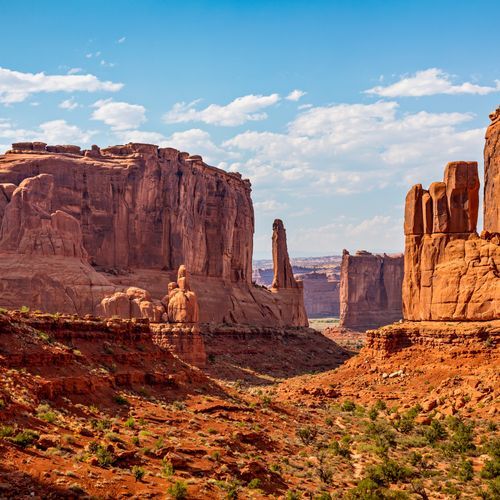
Park Avenue
Towering sandstone fins and cliffs rise on both sides of a narrow canyon along the Park Avenue Trail, and the rock walls are often compared to a city skyline. The trail begins on a paved path that leads to the Park Avenue Viewpoint, then drops steeply over rock steps and uneven slopes into the canyon. Along the way you pass the Three Gossips and the Courthouse Towers. Hikers can also walk the trail point-to-point, with someone in the group dropping them off at the start and collecting them at the far end. Starting from the Park Avenue trailhead and finishing at the Courthouse Towers Viewpoint keeps the walk mostly downhill. Watch for potholes, small puddles of water that matter to the desert landscape.
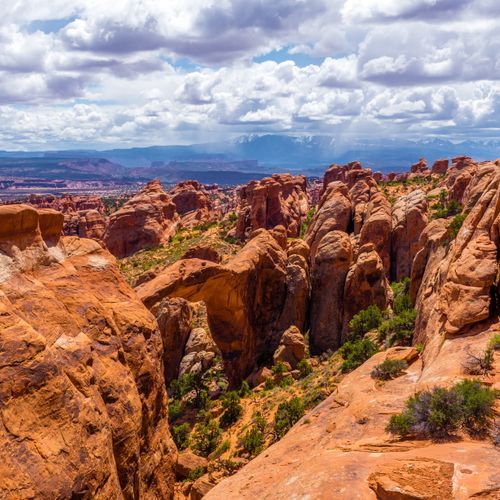
Devils Garden
Narrow rock fins stand across the sandy landscape here, and many of them have worn away into arches. Fins form when rainwater erodes parallel cracks in the rock, and Landscape Arch is the longest arch in North America, spanning 306 feet. At its narrowest, the arch is only 6 feet wide. The trail system totals 7.9 miles and can be hiked in sections, passing eight arches along the way. Hikers can take the short walk to Landscape Arch or the longer, more adventurous Primitive Trail, and Double O Arch is also on the route for those who want more. Overnight visitors can camp at the campground, which has 51 sites among slickrock outcroppings. The trailhead sits beside a parking lot with 160 spaces.
Popular Hiking Trails
All trails →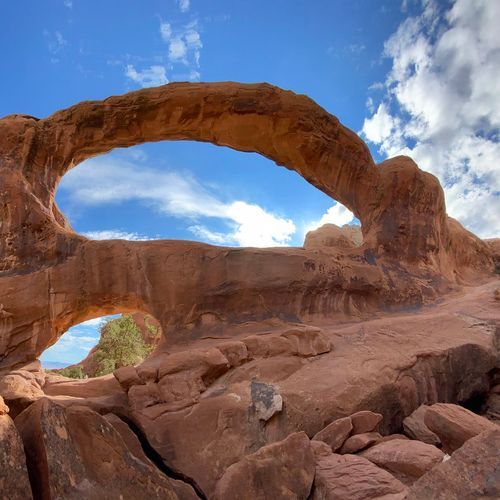
Devil's Garden Trail
Difficult8.8 mi
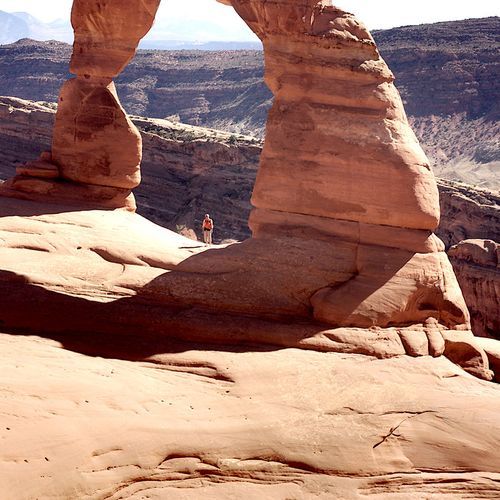
Delicate Arch Trail
Moderate3.1 mi
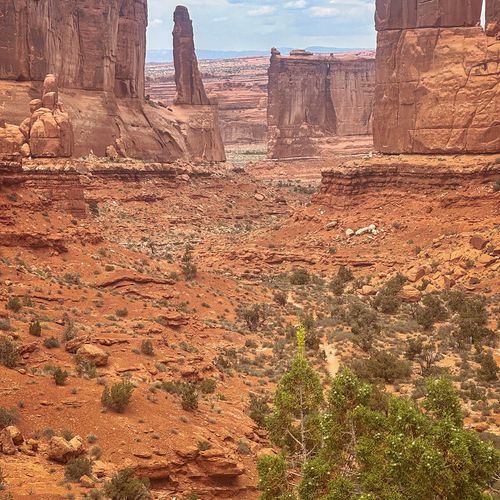
Park Avenue Trail
Easy1.9 mi
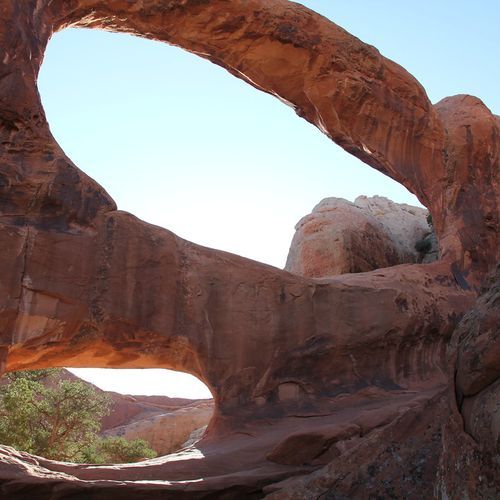
Double O Arch Trail
Moderate4.0 mi
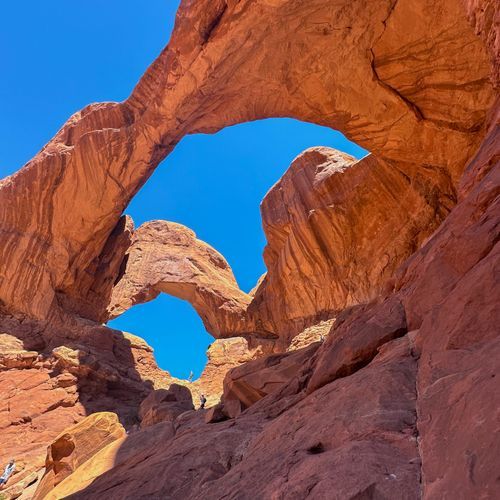
Double Arch Trail
Easy0.6 mi
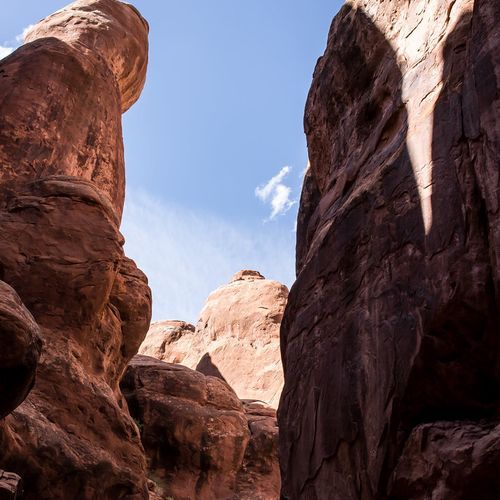
Fiery Furnace Loop
Difficult1.2 mi
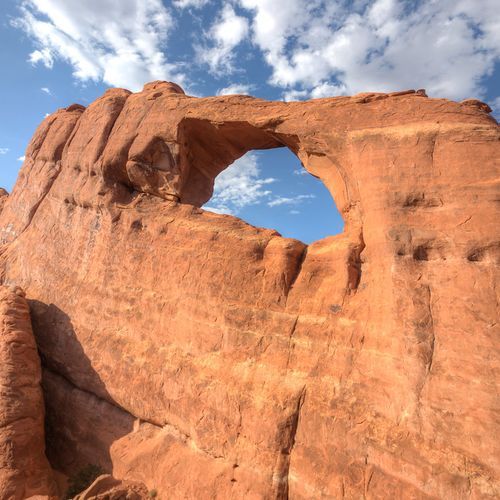
Skyline Arch Trail
Easy0.4 mi
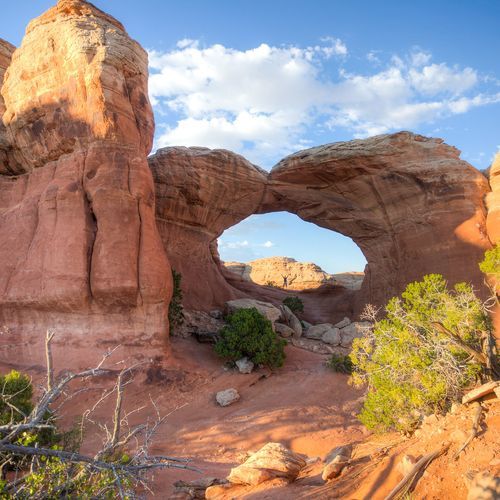
Broken Arch Trail
Easy1.7 mi
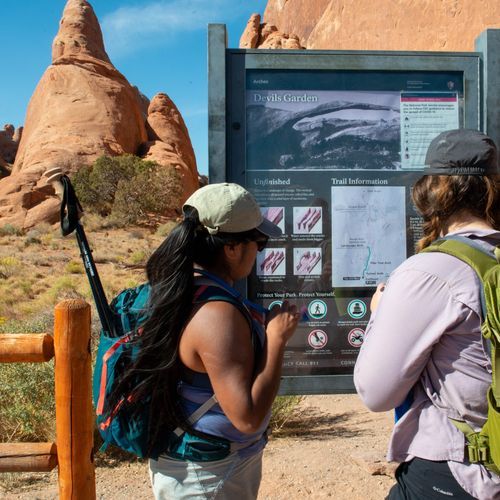
Devil's Garden Primitive Trail Loop
Easy1.6 mi
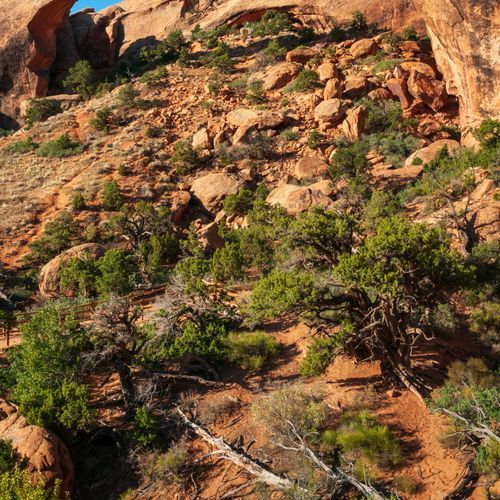
Navajo Arch Trail
Moderate3.0 mi
Visitor Centers
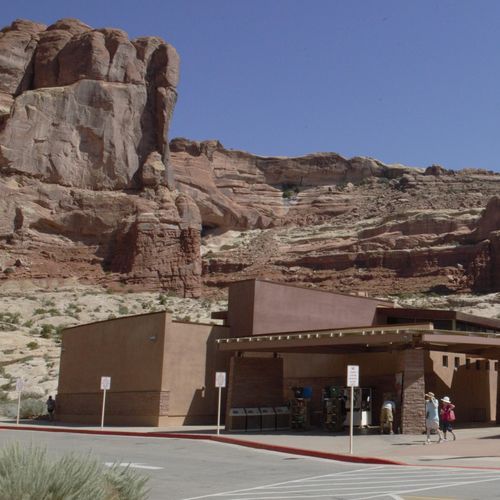
Arches Visitor Center
8:00AM - 5:00PM
Campgrounds
Camping guide →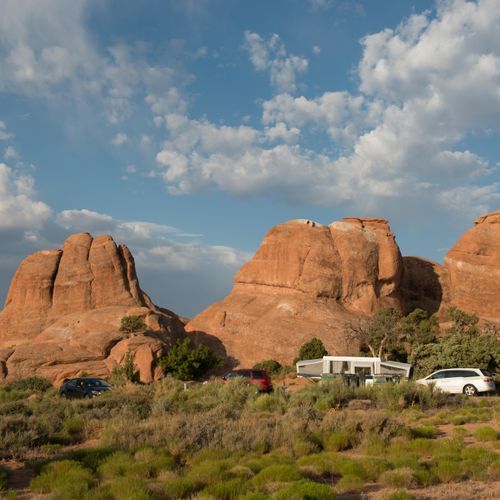
Devils Garden Campground
Devils Garden
About the Park
Park Areas
Delicate Arch & Wolfe Ranch is a must-see, featuring the iconic Delicate Arch, a freestanding natural arch that stands 65 feet high and 46 feet wide. Its isolated position and distinctive shape make it a prime spot for photography, especially at sunset. The arch is a symbol of Utah, often seen on the state's license plates. The Windows Section offers accessible views of large arches, including the North and South Windows and Turret Arch. This area provides a condensed experience of the park's features, with short trails for close observation, making it a popular photography spot during sunrise and sunset.
Fiery Furnace presents a labyrinth of narrow sandstone canyons and towering walls, requiring a ranger-led hike or a self-guided permit due to its complex terrain. It offers a challenging yet rewarding experience with rare geological formations and diverse ecosystems, appealing to seasoned explorers. Park Avenue features towering sandstone cliffs reminiscent of an urban skyline, offering a relatively easy hike. It emphasizes vertical rock formations, with dramatic monoliths like the Courthouse Towers and the Organ, attracting geology enthusiasts and photographers.
Devils Garden provides a notable trail with remarkable rock formations and natural arches, including the famous Landscape Arch. It offers diverse hiking options, from easy walks to challenging trails, and is known for its concentration of arches in a compact space, allowing exploration of unique geological features and scenic vistas.
Park Guides
All 12 guides →100°F Summers to Cold Winters: Arches Seasons
Arches sits in the Colorado Plateau, a high desert region where temperatures can swing sharply within a single day, sometimes by more than 40 degrees.
Beating the Crowds and Full Parking Lots
Arches is generally open 24 hours a day, all year, so you can pick the time that suits you best.
Delicate Arch and 2,000 Other Stone Arches
Delicate Arch draws travelers from around the globe, and for many it is the first stop on their plans.
Driving the 19-Mile Arches Scenic Drive
The Arches Scenic Drive is the only road through Arches National Park. It stretches 19 miles between Highway 191 and the Devils Garden trailhead, at the park's far end.
Arches Trails from Short Walks to 7.2 Miles
The trails here range from brief strolls to strenuous climbs over bare rock, so match your route to your stamina and comfort on uneven ground.
