Gateway Arch National Park guide · 2 min read
Iconic Gateway Arch: Engineering Marvel and Symbol
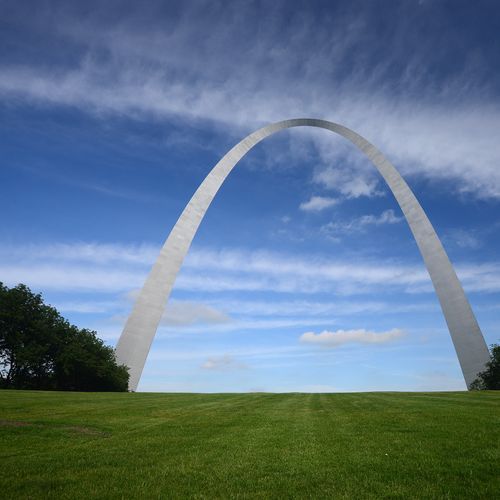
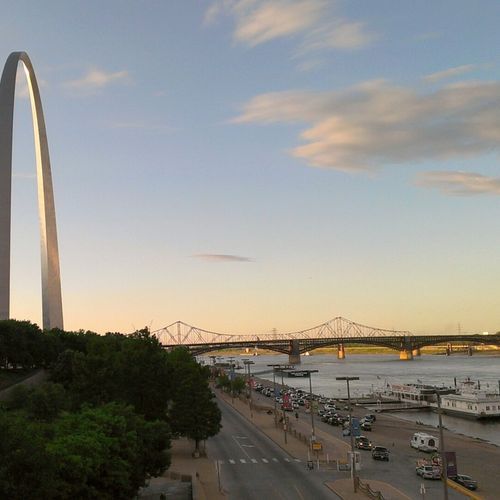
The Gateway Arch rises 630 feet beside the Mississippi River in Saint Louis, Missouri, and it is as wide as it is tall.
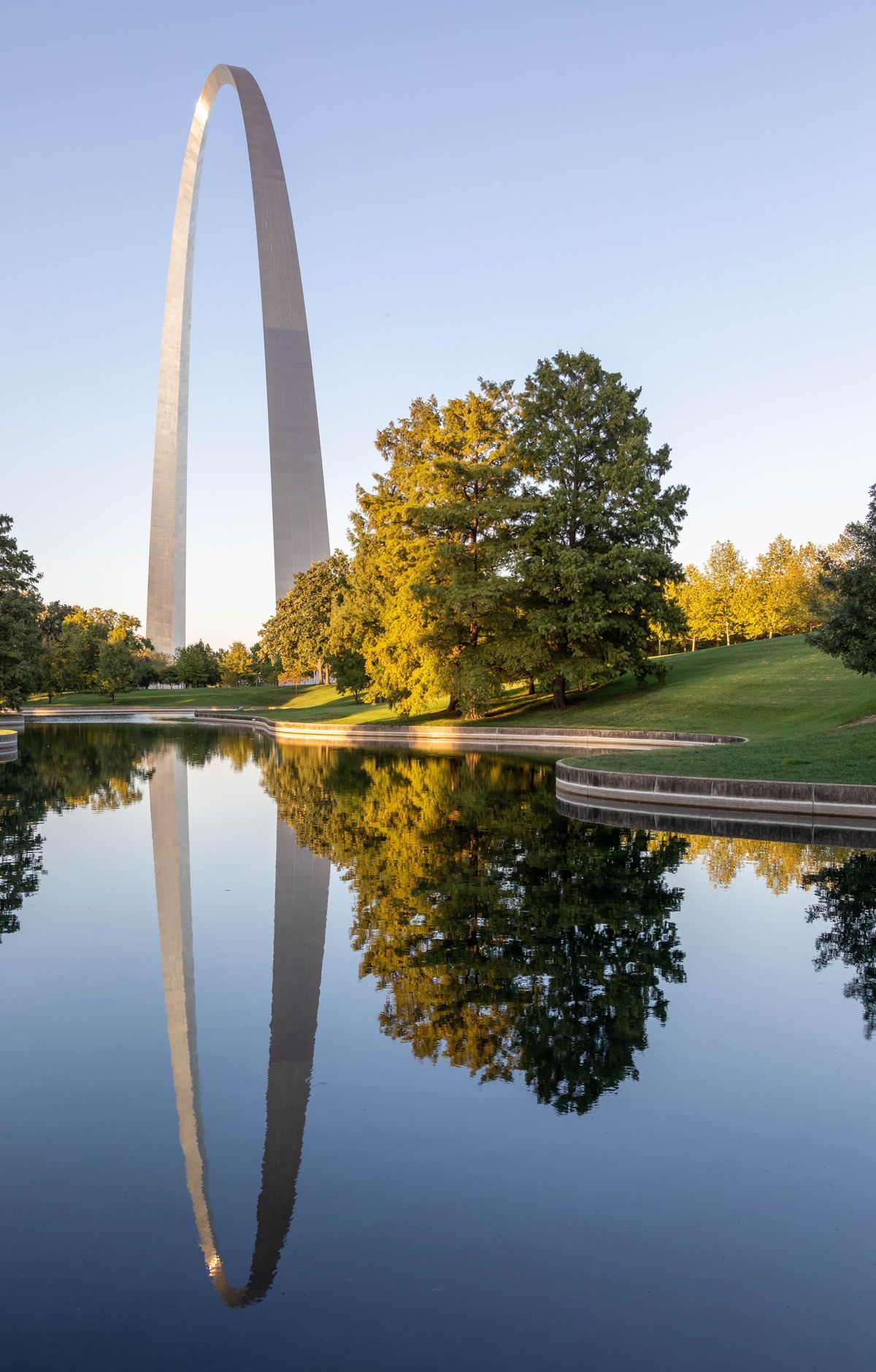
Its outer skin is stainless steel, and its form follows an inverted catenary curve, a shape chosen for both its look and its strength. Each leg is built from stacks of double-walled steel triangles, all equilateral, welded together. From the ground, only the skin shows.
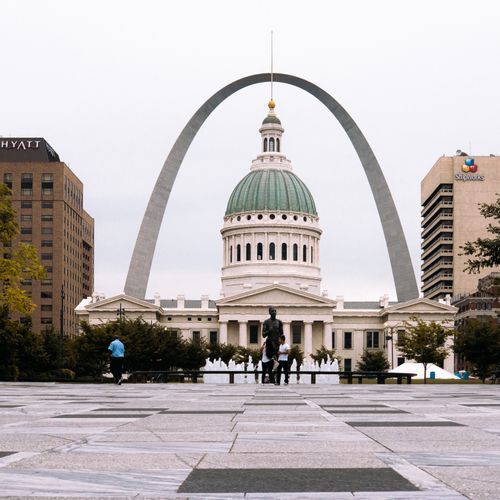
The Arch is the tallest monument in the United States and has become an emblem of Saint Louis recognized worldwide. It commemorates the westward expansion of the nation in the 1800s, reflecting Thomas Jefferson's vision and the city's part in that story. Finnish-American architect Eero Saarinen won the 1947 design competition for the memorial. Structural engineer Hannskarl Bandel, a German-American, worked alongside him on the design.
The site on the old Saint Louis riverfront was chosen in 1935, and about 40 city blocks were cleared before World War II halted work. Construction took place from 1963 to October 1965. Saarinen hoped visitors would do more than look up at the Arch from below, but climbing 1,076 steps is a lot to ask.
A tram carries riders from inside the structure up to an observation deck at the top. The ride takes about four minutes, and the cars turn as they climb so that riders stay upright along the curve. The problem of moving people through the Arch's curved interior took real ingenuity.
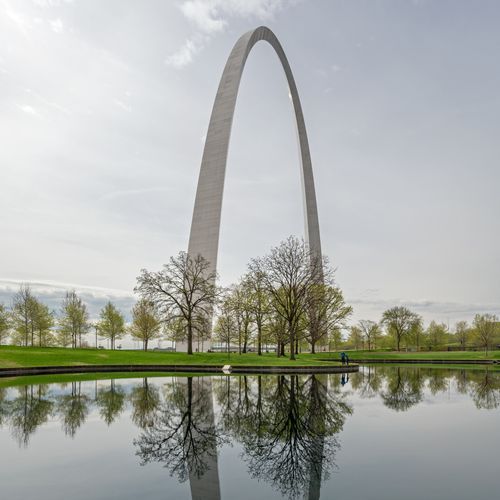
Beneath the Arch lies an underground visitor center that houses the Museum of Westward Expansion. Its exhibits trace the opening of the West during the 1800s, and theaters in the center show films about westward expansion and the Arch's construction. Above ground, the park grounds have walking trails covering five miles and an S-shaped reflecting pond, where the Arch, sky and trees are mirrored in the water.