Glacier National Park guide · 2 min read
Grizzlies, Lynx and an Intact Ecosystem
More than a thousand grizzly bears roam the region around Glacier, and black bears live here too.
Grizzlies and Canada lynx are both listed as threatened. Their populations here hold steady at historical levels, but across almost every other part of the country outside Alaska they have become extremely rare or vanished.
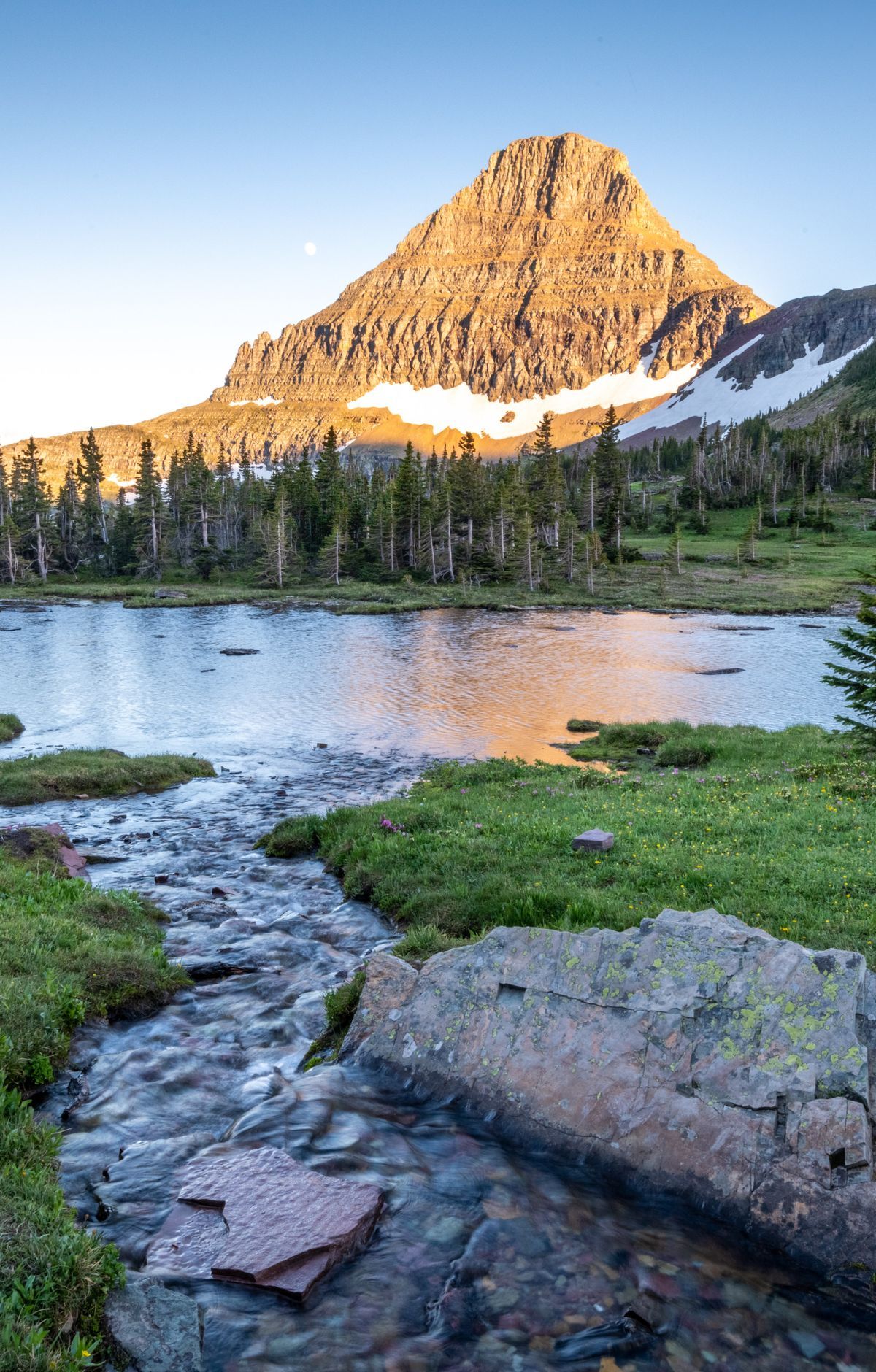
Glacier still holds virtually every plant and animal species known from its past. Only bison and woodland caribou are missing, which gives biologists a nearly complete ecosystem to study. Habitats run from prairie to tundra, with the easternmost western redcedar and hemlock forests growing in the park's southwest corner. Bighorn sheep, elk, moose, mountain goats, gray wolves and mountain lions all live here.
Lynx look a lot like bobcats, but their coats are grayer with fainter spots, their paws are much bigger, their ear tufts are longer, and the tip of the tail is solid black. Wolverine sightings are rare. They stick to alpine country and den under deep snow, and some rangers spend decades on Glacier's trails without a single sighting.
Mornings and evenings usually bring the most animal activity. Mountain goats and bighorn sheep favor the high country, bears and elk turn up in open meadows, and moose and deer tend to stay near creeks. A telephoto lens gives a close view without crowding the animals.
Stay at least 100 yards from bears, and never feed any animal in the park. Color and size won't identify the species. A grizzly has a shoulder hump, a dished face, rounded ears and long pale claws. A black bear has a raised rump, a straight muzzle, pointed ears and dark claws. If a lynx comes close, keep your group together, pick up small children and make noise. Don't run. Face the cat, raise your arms to look bigger and back away slowly. If it attacks, fight back and use bear spray.