Mojave National Preserve guide · 2 min read
Kelso Depot: A 1924 Railroad Station Reborn
Kelso Depot Visitor Center, the preserve's main museum and its central stop for visitor information, is closed indoors while its heating and cooling system is rehabilitated, and the NPS expects to reopen in 2026.
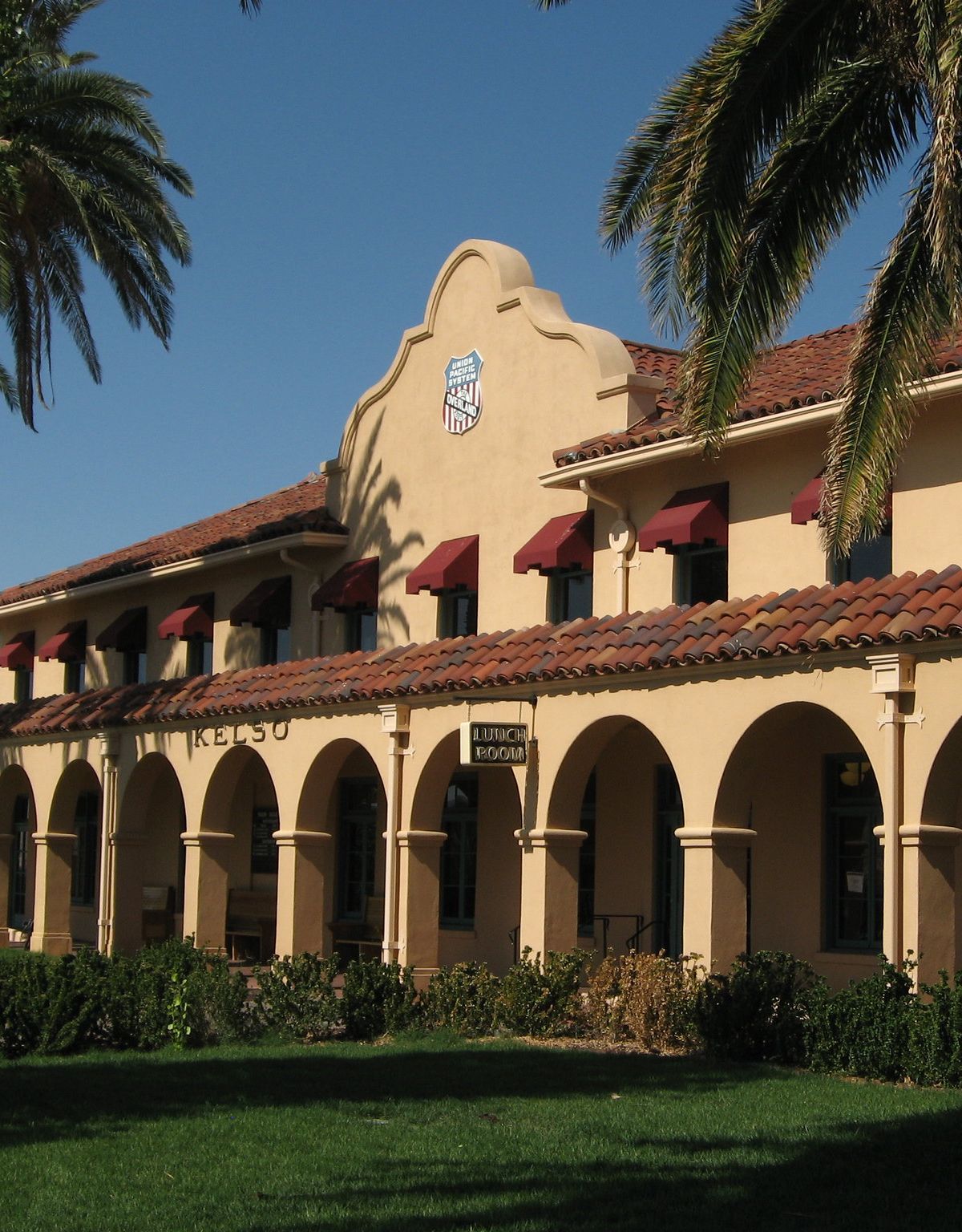
It stands in the historic railroad community of Kelso, where Kelbaker Road meets Kelso Cima Road, 34 miles southeast of Baker. Inside are exhibits, an orientation film, an art gallery and a bookstore, all closed for now. The restrooms, water filling station, picnic area and parking lot stay open, and Wi-Fi calling works in the lot. Hole-in-the-Wall Information Center is the staffed stop in the meantime.
The Los Angeles and Salt Lake Railroad opened Kelso's first depot in 1905. Work on the present building began in 1923, and it opened the following year on the Los Angeles and Salt Lake route of the Union Pacific Railroad. The depot was a train station, a restaurant and housing for railroad employees, and a water stop for steam locomotives. Trains through Kelso carried passengers, freight and ore from nearby mines, especially the Vulcan Mine.
Several rooms are set up as they might have looked when the depot was a working railroad stop, from its opening through the 1940s. The baggage room and the ticket office are furnished with period pieces, and two dormitory rooms show where railroad workers once stayed.
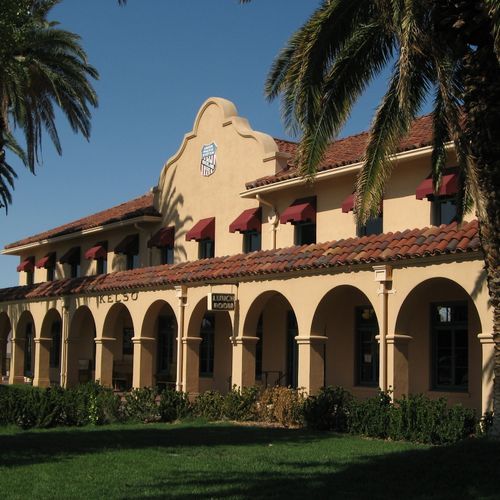
The firm of John and Donald Parkinson designed the depot in the Mission Revival and Spanish Colonial Revival styles. Outside, look for the three-color Mission tile roof, the parapets with the Union Pacific emblem on the southern one, and the arcade of pillars along the front. Next to the building is a picnic area, where the shade trees flower in spring.
The building nearly disappeared. In 1985, Union Pacific proposed tearing down the unused depot, and preservation efforts led to its transfer to the Bureau of Land Management in 1992 and then to the National Park Service when the preserve was created in 1994. It joined the National Register of Historic Places in 2001, and after a restoration that began in 2002, it reopened as a visitor center in 2005.