Petrified Forest National Park guide · 1 min read
Ancestral Puebloans and 13,000 Years of People
Human history in what is now Petrified Forest National Park reaches back more than 12,000 years.
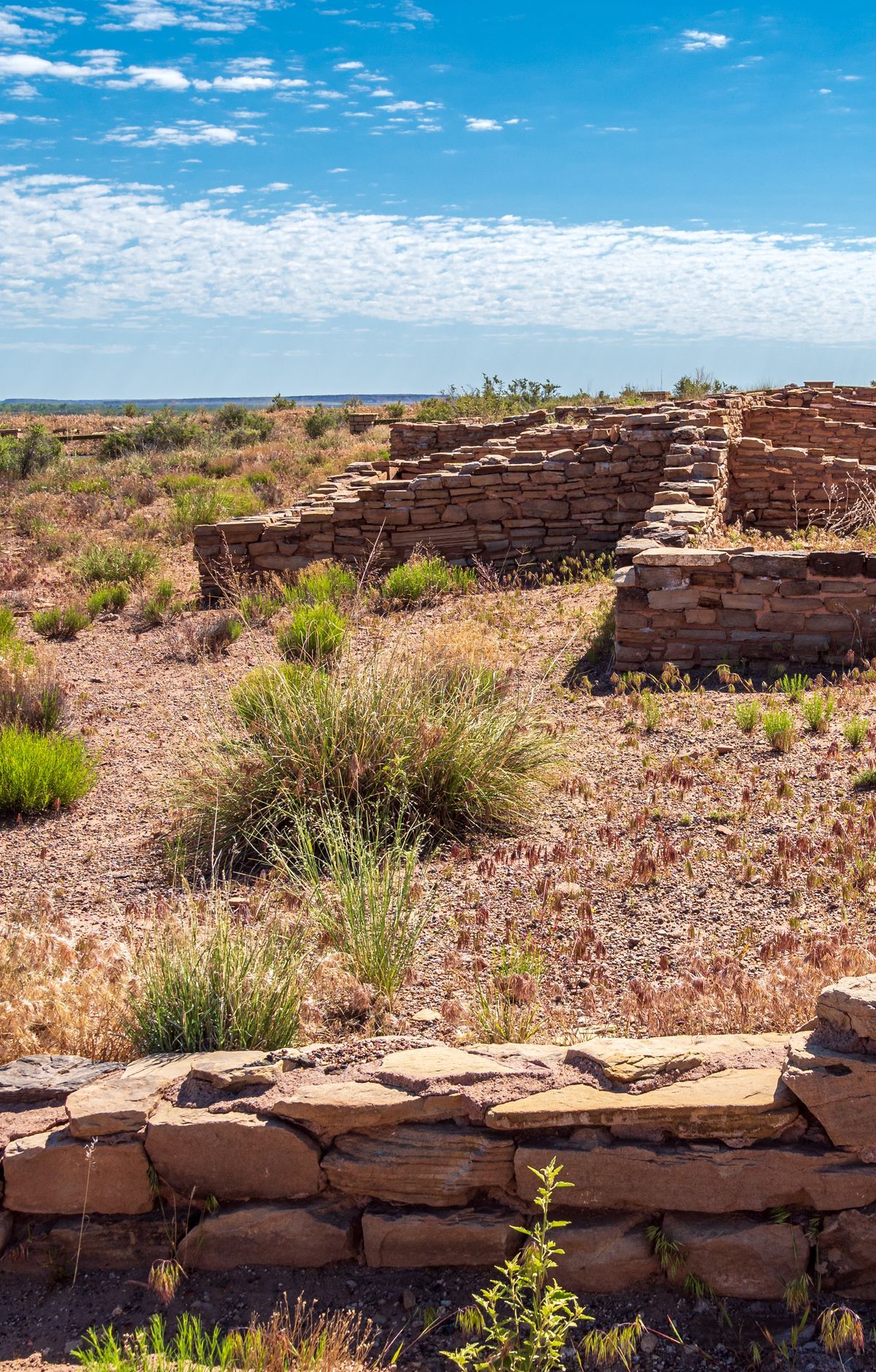
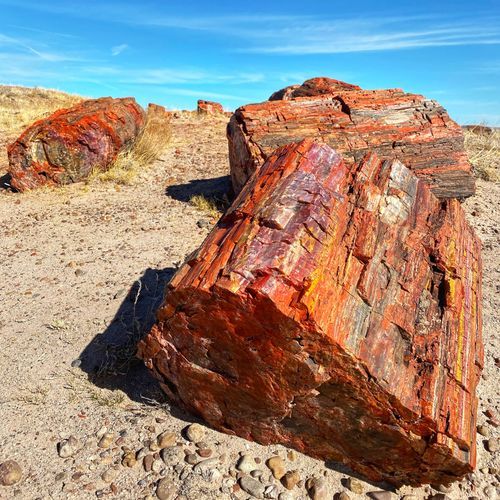
Among the oldest objects left behind are spear points of the Clovis and Folsom styles, which Paleoindian hunters shaped out of petrified wood. So far, researchers have recorded more than 1,200 archeological sites within the park's boundaries, and together they tell of people who hunted, gathered, and settled here over many generations.
Later, Ancestral Puebloan farmers lived in the area. Puerco Pueblo, one of the park's ancestral sites, held roughly 200 people at its peak, and remnants of its building foundations can still be seen. Certain rooms lacked both windows and doorways, so the only way in was by ladder, through an opening cut in the roof.
Puerco Pueblo is reached by a loop walk of three-tenths of a mile that starts at the parking area and leads out to the excavations. Stone Axe Ruin is another site in the park, and decorated bowls have been recovered there.
Petroglyphs, which are images, symbols, or designs cut into rock, appear at Puerco Pueblo and at many other places in the park. Carvers worked the rock surfaces by scratching, pecking, and cutting into them, often on a dark coating that forms on rock. Most of these carvings were likely made somewhere in the span from 650 to 2,000 years before the present.
Over time, many Ancestral Puebloan families migrated to growing towns at the Hopi Mesas of northern Arizona and the Pueblo of Zuni in northern New Mexico. Their descendants still live in those communities today. Some researchers propose that a persistently dry climate drove the move, and Puerco Pueblo stood empty by around 1380.