Red Rock Canyon National Conservation Area guide · 1 min read
Aztec Sandstone: Red Rock's Fossil Dunes
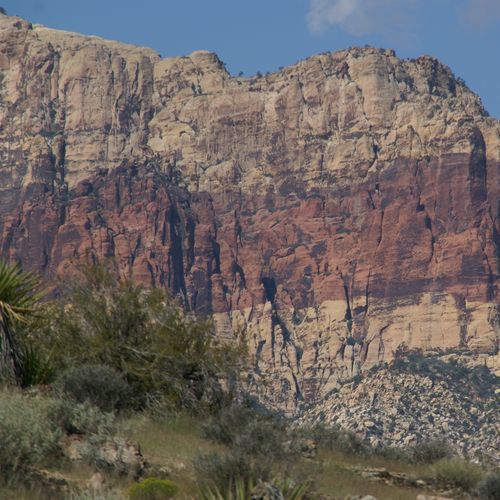
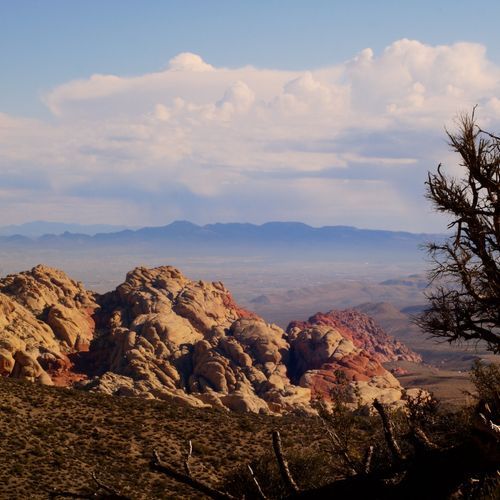
The red and cream cliffs above the Mojave Desert are made of Aztec Sandstone, a rock that began as sand.
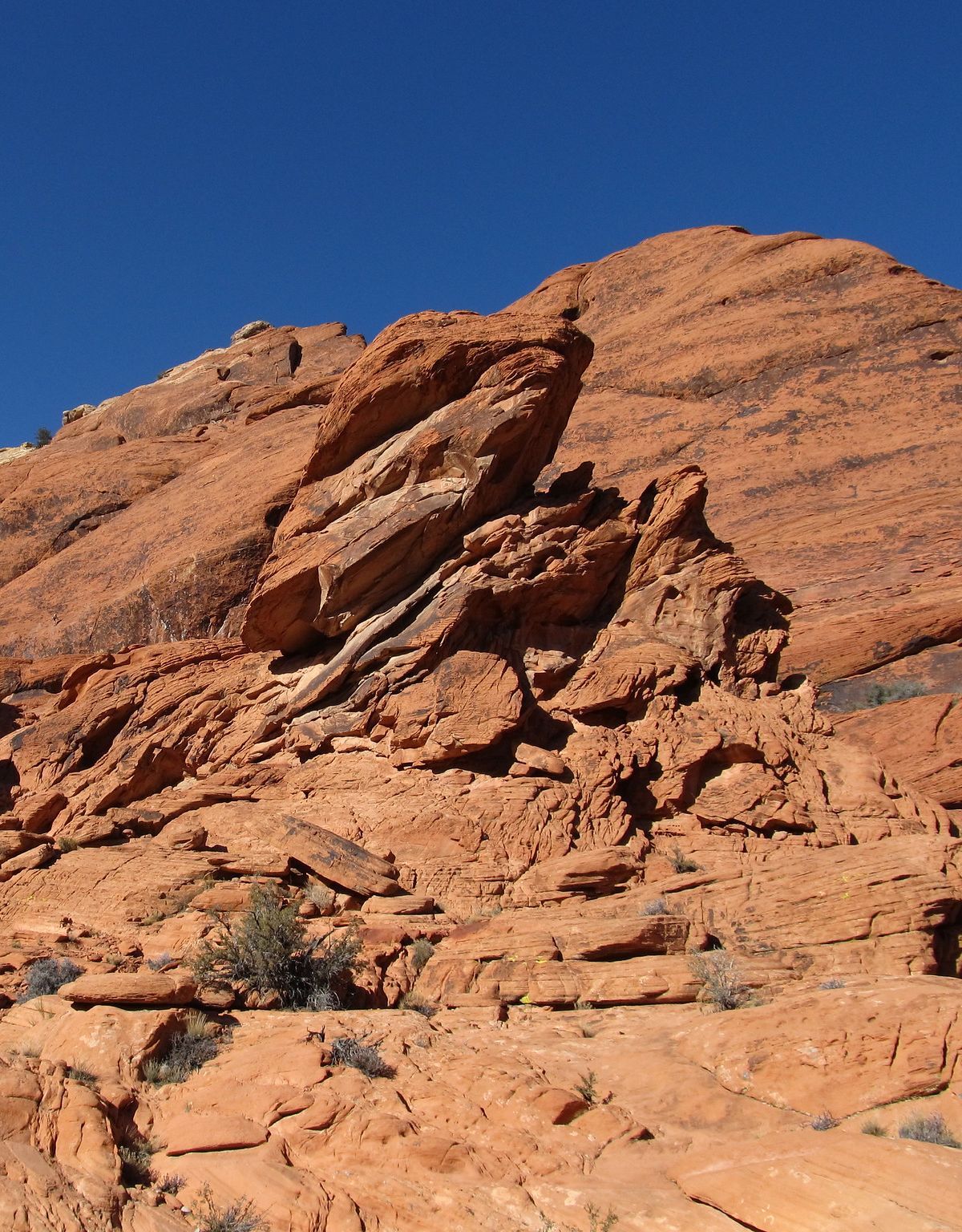
About 180 million years ago, this land was a desert, and dunes that kept moving covered much of it. Those dunes piled up across a wide stretch, reaching half a mile thick in places before other sediments buried them and cemented them into stone. The rock is quite hard, and locals know the formation by this name.
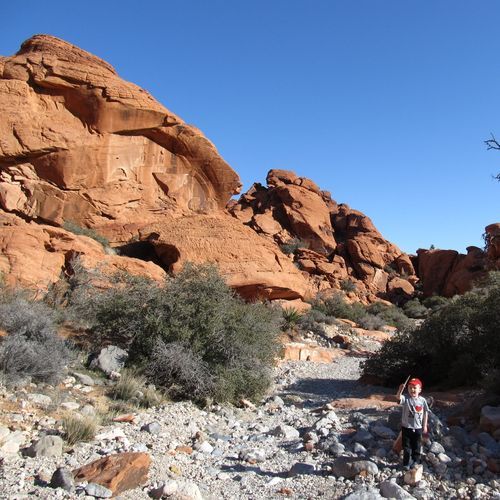
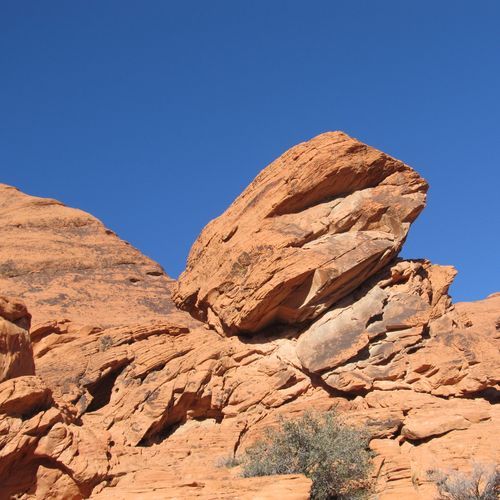
Look closely at the rock and you will see crossbeds, curving and angled lines that trace where the sand was leveled and new layers built up. Each line is a record of dunes that kept shifting. The red color comes from iron oxide. Where the iron minerals have been reworked and gathered together, the stone turns red.
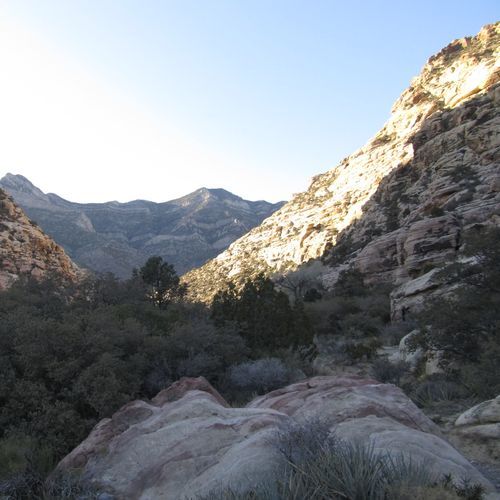
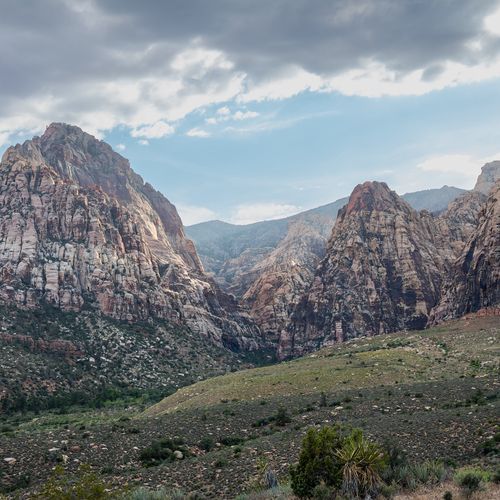
The prominent cliffs of Aztec Sandstone make up the Red Rock escarpment. Calico Hills has its own trail through the sandstone. The 13-mile one-way paved Scenic Drive winds through the canyons and sandstone hills. It has 12 trailheads and parking areas, and it begins at a visitor center that explains the area's natural and cultural history.
Sport climbers focus on the rock at Calico 1 and 2 and at Sandstone Quarry. Sandstone is more crumbly than a dependable stone like granite, so climbing it takes extra caution. Plan on letting the rock dry for 24 to 48 hours after heavy rain or snowfall before you climb. The darkest, varnished surfaces are generally the toughest, though they are still sandstone.
Among the area's geology, the Keystone Thrust Fault stands out. It formed when compressional forces drove one crustal plate over another, starting about 65 million years ago. Gray carbonate rock from an ancient sea now sits on top of the tan and red sandstone.