Saguaro National Park guide · 2 min read
The Iconic Saguaro Cactus
Few plants are as closely linked to the American West as the giant saguaro, the namesake of Saguaro National Park.
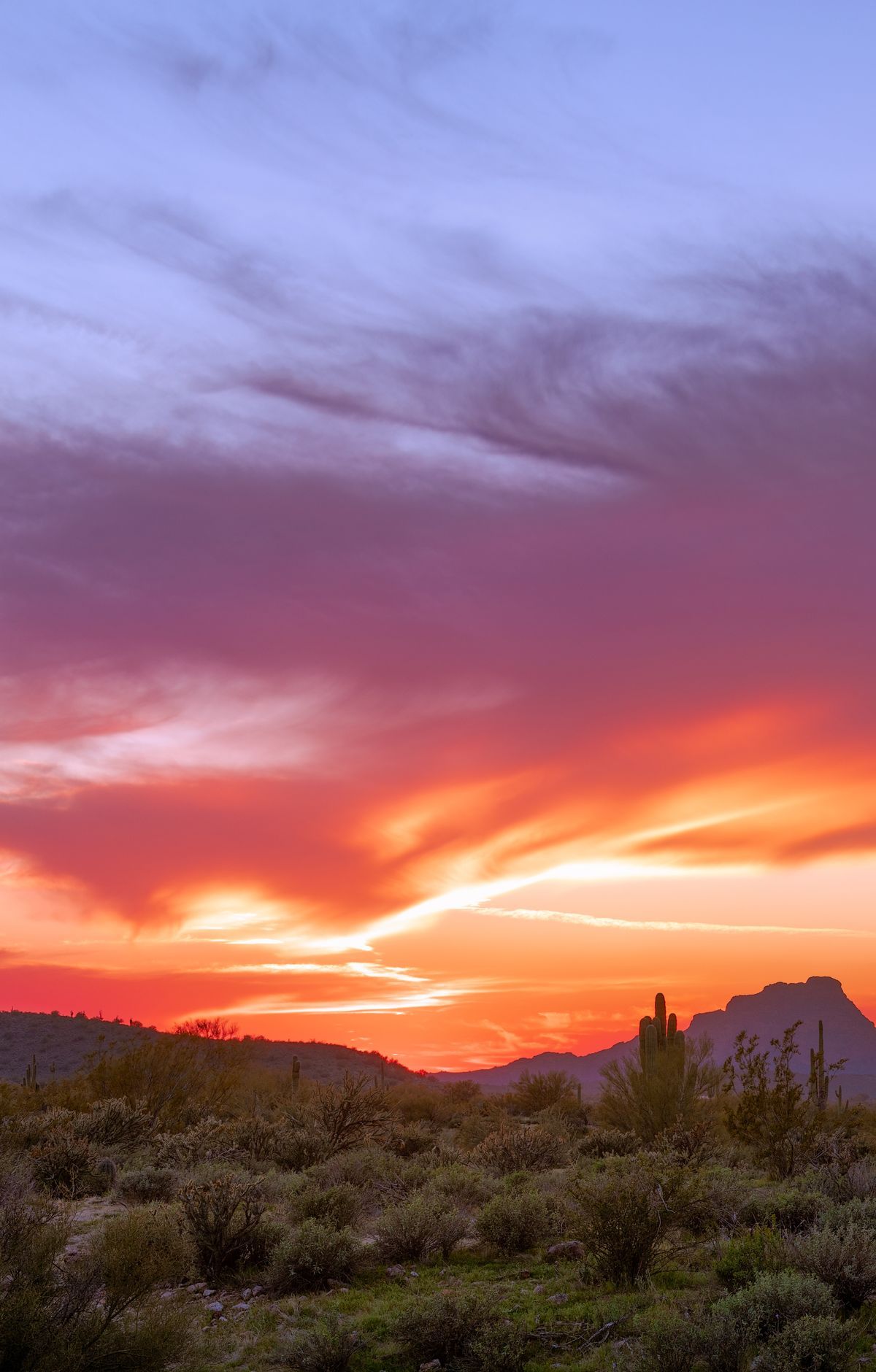
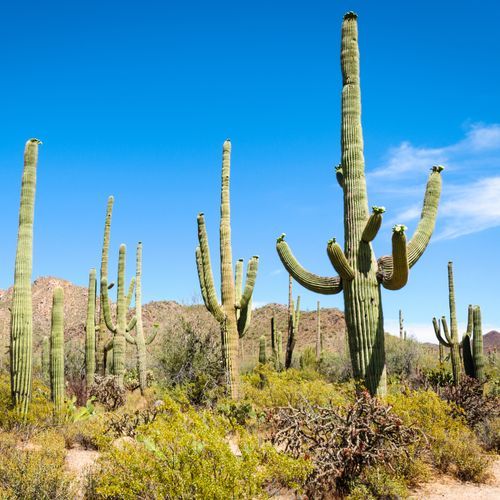
Wild saguaros occur nowhere else but within the Sonoran Desert, a region spanning southern Arizona, a corner of southeastern California and part of northern Mexico. Near Tucson, the park protects these cacti in two areas, one on each side of the city. Mature plants can rise more than 50 feet and weigh over 10 tons, and they may live as long as 200 years.
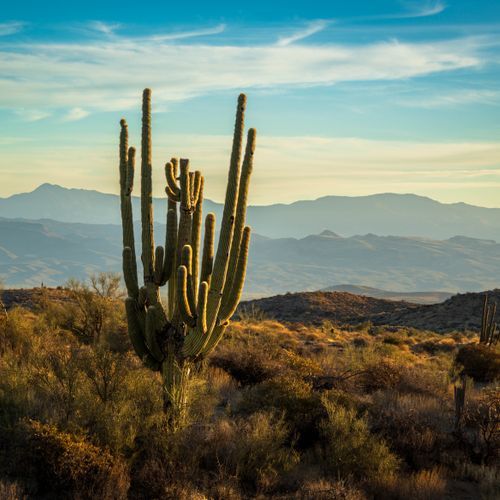
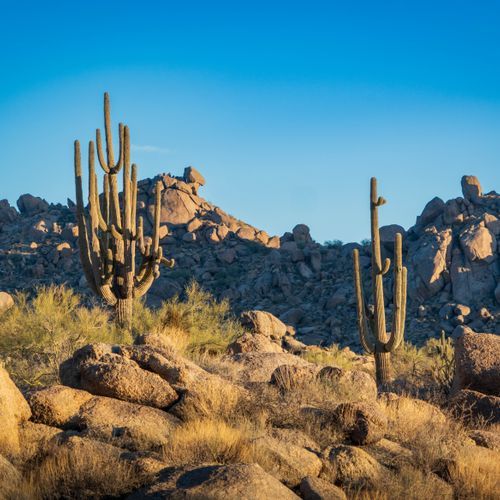
Saguaros grow very slowly, and reaching 10 feet can take between 50 and 80 years. A ten-year-old plant may stand only about two inches tall. Many, though not all, eventually grow the upward-curving arms that give the cactus its familiar shape.
Their bodies are built for dry heat. Ridged skin swells when the plant takes in water after rain and contracts as it uses that store. The cactus has no leaves, and its waxy outer layer slows evaporation, while the green trunk carries out photosynthesis. Its roots stay shallow, typically no deeper than three inches, and fan outward about as far as the cactus is tall, so the plant can soak up rain from the surrounding ground. Inside, wooden ribs give the trunk its frame.
White blossoms appear from mid-May into early June, and each one lasts less than a day. The blossom is also Arizona's state flower. In the evening, stay to watch the cacti turn into dark outlines as the sky goes red at sunset.
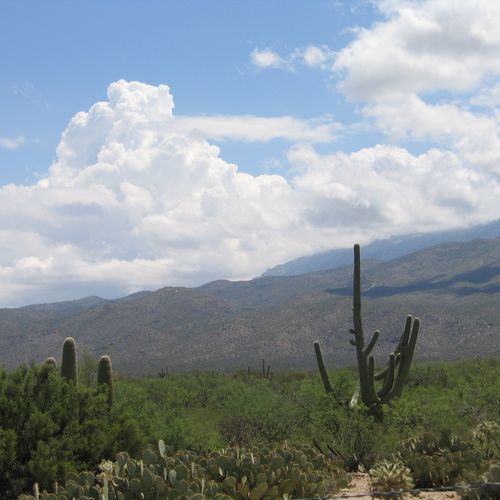
The park began in 1933 as a national monument, the earliest federal site set aside to protect a single plant. President Bill Clinton signed the bill that made it a national park in 1994. The Tucson Mountain District, also called Saguaro West, lies west of the city and has a denser stand of cacti. The Rincon Mountain District, or Saguaro East, sits east of town, where cacti grow more sparsely but the Rincon Mountains rise behind them for photographs, and it holds the park's only campground.