Acadia National Park guide · 1 min read
Summit to Tide Pool: Acadia's Ecological Zones
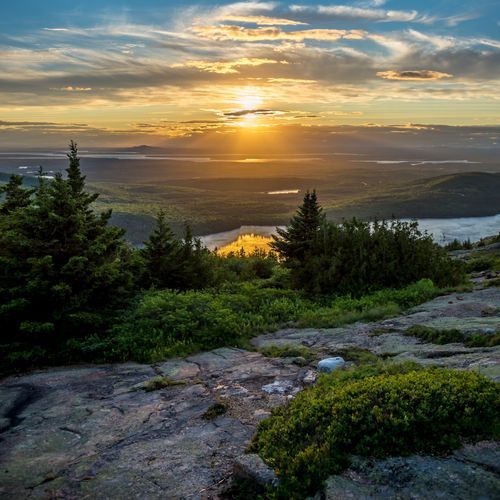
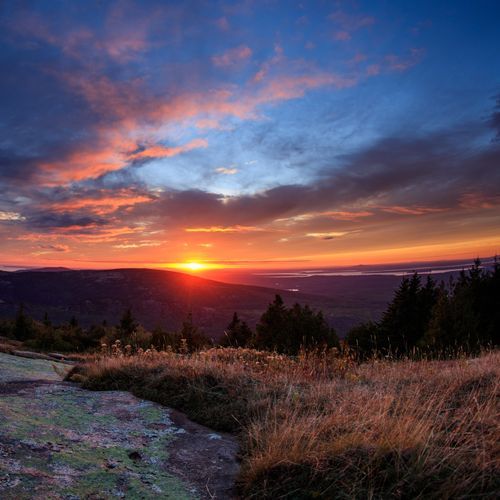
On Acadia's bare granite summits, life holds on in the cracks. Tiny subalpine plants root in the joints of the rock and shelter on the downwind side of boulders.
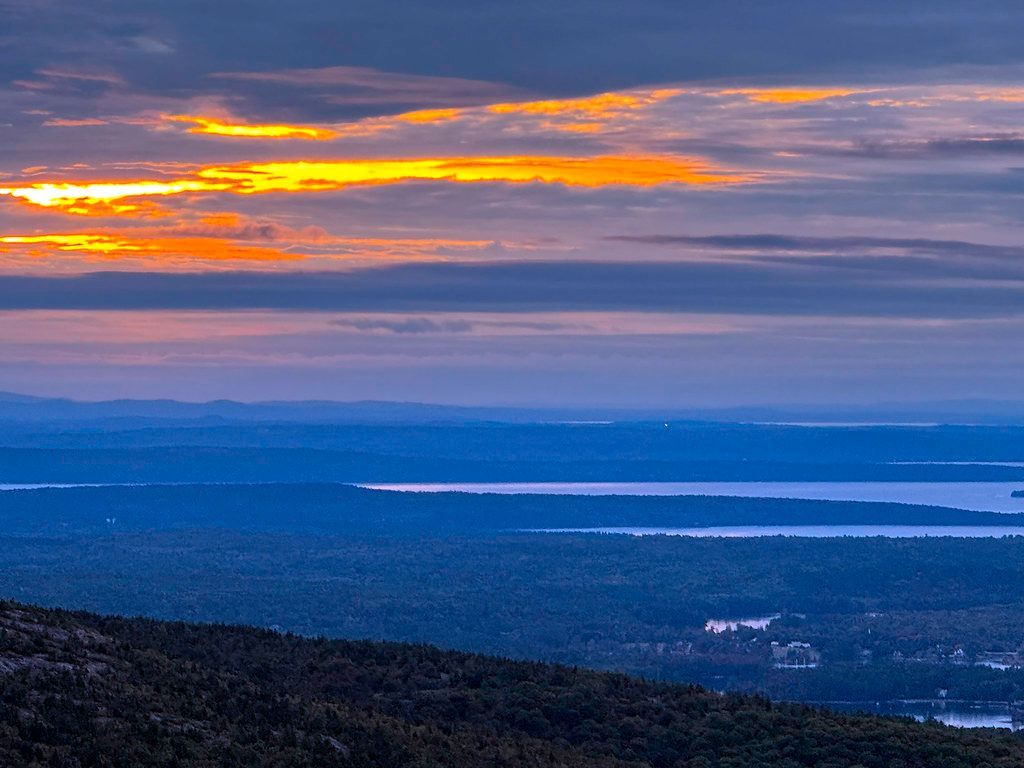
A few trees survive near the tops too, though they grow short and twisted. Cadillac Mountain reaches 1,530 feet, the tallest point along the eastern seaboard.
Lower on the mountainsides, forest takes over. Spruce and fir, the trees of the northern boreal woods, cover much of the park. Mixed in are oak, maple, beech and other hardwoods familiar across New England. Isolated stands of pitch pine and scrub oak grow here at the northeastern edge of their range, while jack pines go no farther south than Acadia.
Water fills the valleys between the mountains. Fourteen great ponds and ten smaller ones support many kinds of fish and waterfowl. Wetland covers more than a fifth of the park, and its marshes and swamps bridge dry land and open water.
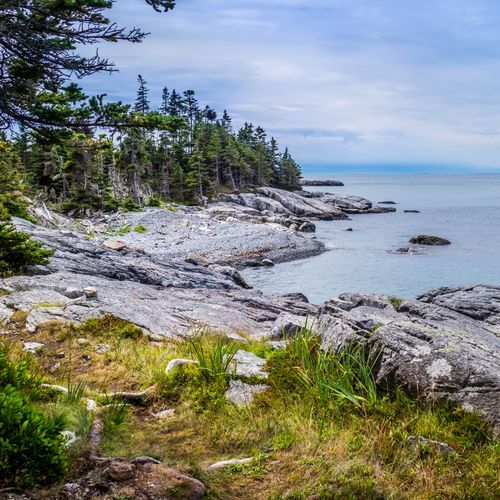
At the Atlantic edge, sandy and rocky beaches meet the intertidal zone, which the tide alternately floods and exposes, and the subtidal zone below, which stays submerged. Twice a day the falling tide leaves seawater trapped in rock hollows, revealing the plants and animals inside. Jonah crabs live on both sides of that low-tide line. At Schoodic, the tide can rise and fall 10 to 12 feet, and the pools appear only at low tide. The Wonderland Trail, on Mount Desert Island's western side, winds through coastal forest and ends at rocky tidepools.
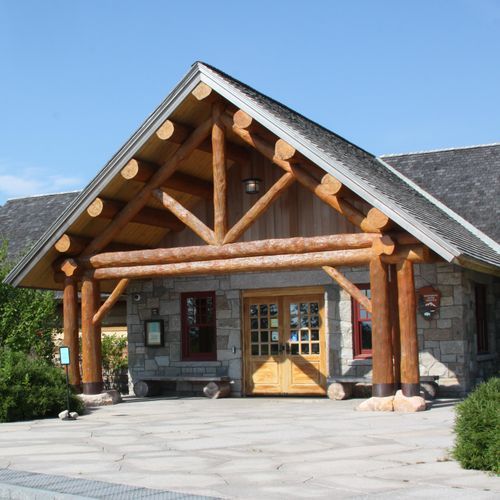
Across all these zones, plant life runs deep. The Mount Desert Island portion of the park alone holds over half of Maine's vascular plant species. At Sieur de Monts, the Wild Gardens of Acadia gather more than 400 native species from every part of the park.