Arches National Park guide · 1 min read
Salt Beds, Fins, and Entrada Sandstone
Arches National Park sits above a salt bed laid down more than 300 million years ago, when a sea flowed into the Paradox Basin of the Colorado Plateau and eventually evaporated.
In some places this salt layer is thousands of feet thick. Over millions of years it was buried under debris eroded from the Uncompahgre Uplift to the northeast. Later, the vast Navajo Sandstone formed in the desert conditions of the Early Jurassic, and then the Entrada Sandstone, roughly 140 million years old, was deposited on top of it.
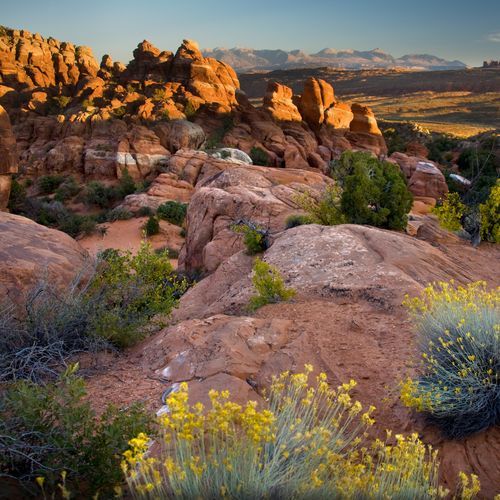
The Entrada Sandstone is the rock layer where most of the park's arches are found. As rock at the edge of the salt bed eroded and shifted, it formed tall, upright walls of sandstone known as fins. Sand gathered between these walls, and rainwater, which is slightly acidic, reacted with carbon dioxide in the atmosphere to produce carbonic acid. That acid dissolved the calcium carbonate holding the sandstone grains together.
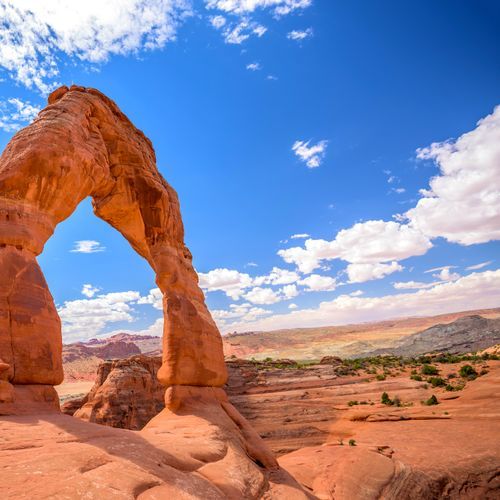
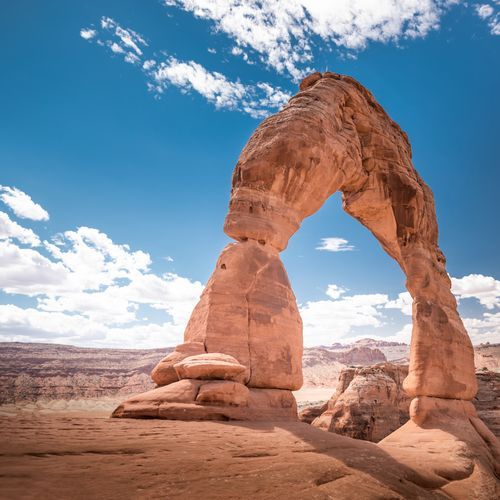
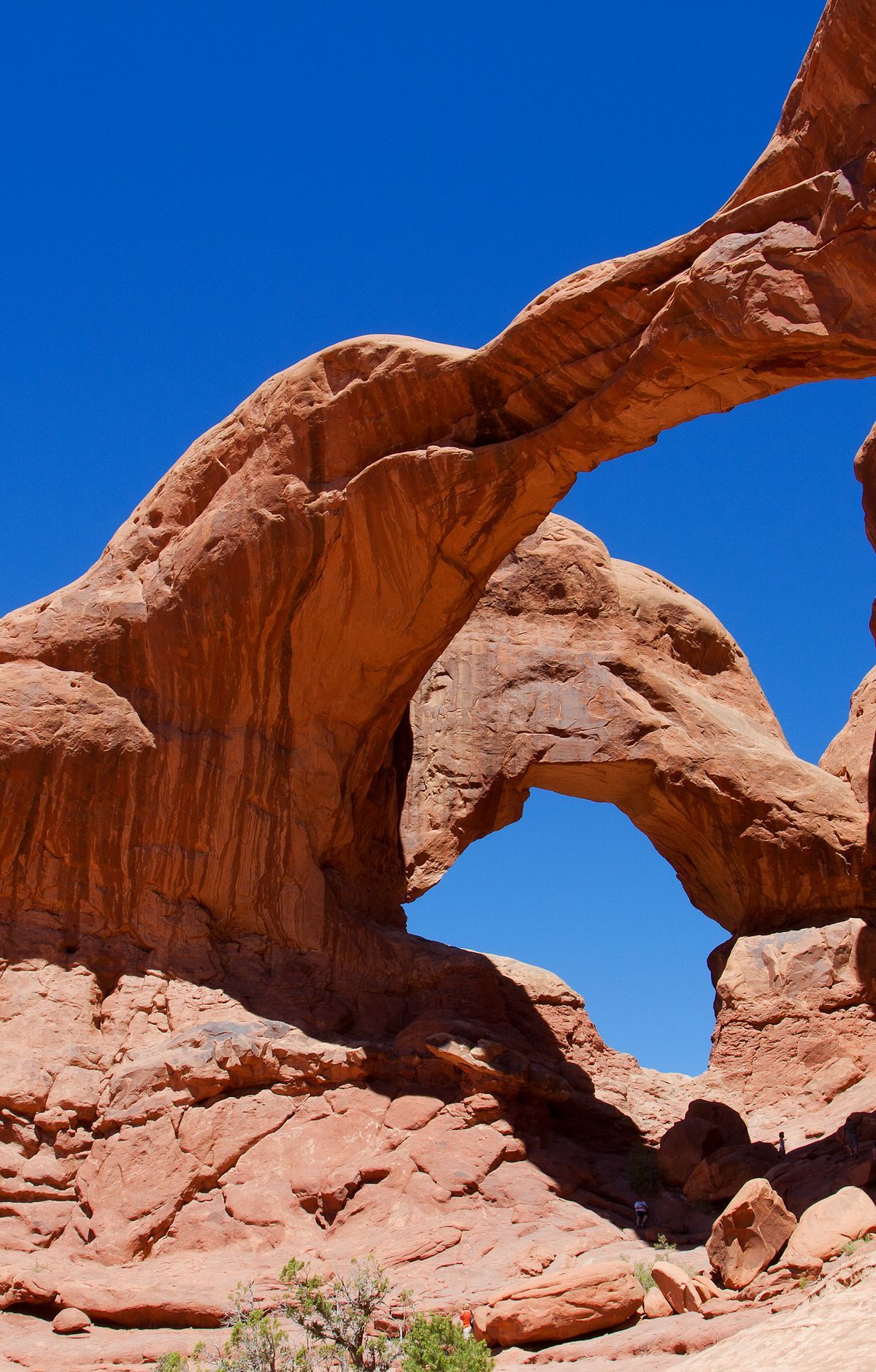
Arches form where weaker rock lies beneath stronger layers. The weaker layers wear away first, opening gaps, and gravity then brings down pieces of the harder layer above until an arch is left standing. Fins can be seen in Devils Garden, and the park holds more than 2,000 natural sandstone arches, the largest concentration of arches anywhere in the world.
Hiking offers a close look at many of these formations. The Devils Garden Trail is a hike that passes eight arches and follows a primitive trail. Visitors who prefer less walking can reach the Windows and Double Arch with just a short stroll.