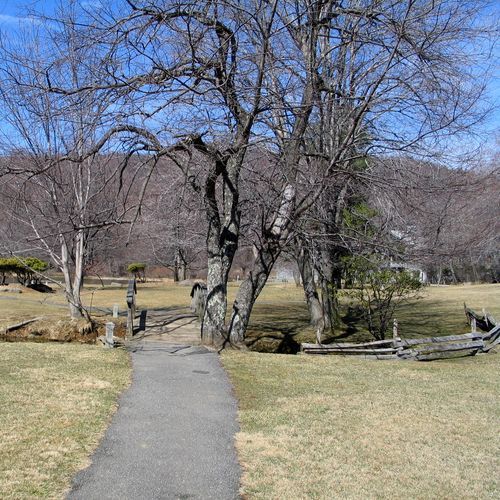
Set among mountains and open meadows in the area once called The Bluffs, this campground offers mostly tent sites along with RV-only and group sites, with a few sites reservable in advance. Summer brings wildflowers to the surrounding fields, and flame azalea and rhododendron put on colorful shows. Watch for white-tailed deer, foxes and bobcats, and walk to the nearby Caudill and Brinegar cabins to learn about early mountain settlers.
Camping in Blue Ridge Parkway
Camping on the Blue Ridge Parkway means sleeping beside one of America's great scenic drives, with eight developed campgrounds strung along its 469 miles between Shenandoah and the Great Smokies. Each has its own personality. Otter Creek sits near the James River at the road's lowest point, while Peaks of Otter spreads out beneath Sharp Top close to Abbott Lake and the historic Johnson Farm. Rocky Knob puts you near Rockcastle Gorge and a short drive from Mabry Mill, and Doughton Park is ringed by an extensive trail network. Julian Price Park, the largest on the Parkway, is handy for Blowing Rock, Boone, and the Moses Cone Estate. Farther south, Mount Pisgah rests at Milepost 408 in the high country near Asheville, with 125 sites and hot showers that make it a perennial favorite. For a quieter experience, primitive backcountry sites are open all year with a permit.
Campgrounds here are classic, low-key affairs. Most sites come with a picnic table, a fire ring with a grill grate, and a lantern post, and many loops welcome tents, trailers, and RVs alike. Hookups are generally not available, and some campgrounds offer flush toilets and water without showers, so check what each one provides before you go. Seasonal ranger programs and self-guided nature trails fill the days, but the real draw is simple: evenings around the fire, cool mountain air, and sunrise views from a ridge that climbs from roughly 600 feet to above 6,000 feet. Black bears are common, so make full use of the food lockers and bear-proof trash cans wherever you find them.
The developed campgrounds typically open from May through October, depending on conditions. Reserve on Recreation.gov, where some sites can be booked up to six months ahead, though many campgrounds also hold first-come, first-served sites for spontaneous travelers. Sites hold no more than six people. Stays are capped at 30 consecutive days at any one campground and 30 days per calendar year across the Parkway. Holders of Interagency Senior and Access passes get half off the base nightly fee. Groups should look at the group sites at Linville Falls, Doughton Park, and Rocky Knob. Backcountry permits cover no more than three consecutive nights, and once you print a permit you can no longer change or cancel it, so wait until your plans are firm.

Set beside Price Lake with rolling mountains beyond, this is one of the largest and most popular campgrounds on the Parkway, with shady sites for both tents and RVs. Canoes are available to rent on the lake, and a dock is good for fishing. Trails such as Boone Fork, Green Knob and Tanawha start close by, and campers may spot bears, wild turkeys, grouse, owls or hawks in the surrounding forest.
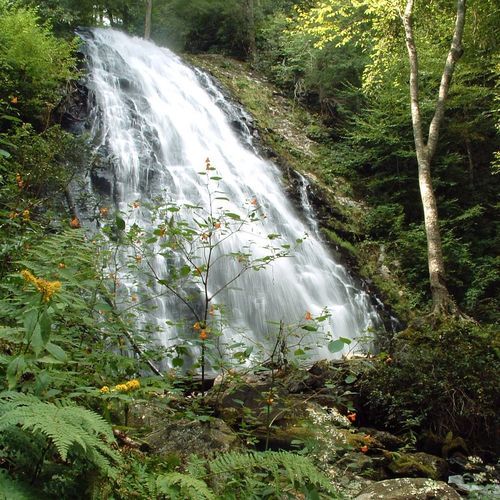
This wooded campground sits at the trailhead for a loop that drops through oak-hickory forest and rhododendron thickets to a waterfall spilling over a sheer rock cliff. With 92 sites, it makes a good base for exploring the Parkway between Linville Falls and Mount Mitchell, and nearby overlooks open onto distant mountain ridges. A picnic area is close by, autumn brings golden foliage, and a handful of accessible campsites are available.
Forest-edge sites in the Linville Falls area put you within walking distance of the visitor center and close to several waterfalls. The campground offers a mix of tent-only and RV-only sites, plus two group sites and two accessible sites with accessible grills. An arched stone bridge spans the river near the picnic area, and the Linn Cove Viaduct is a short drive away. In autumn, red foliage lines the roads.
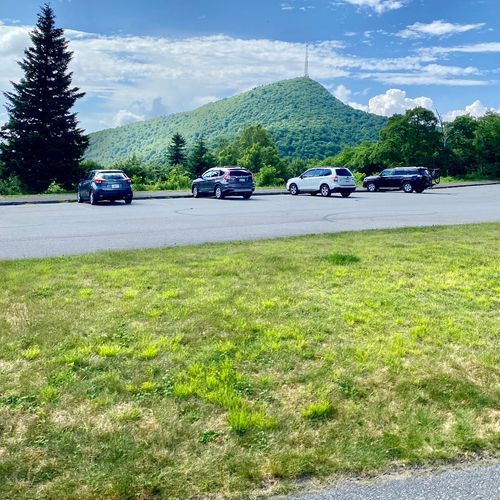
High in the mountains of western North Carolina, this camping area stays cool through summer, when fog often drifts through and wildflowers bloom in the surrounding hardwood forest. Sites are split between tent-only and RV-only areas, with no electric hookups. A connector trail links camp to the picnic area and the path up the nearby summit, and the restaurant at the neighboring inn is a short walk away. Autumn brings bright red, orange and yellow leaves.
Set within some 4,000 acres of forest in the Rocky Knob Recreation Area, this campground offers a traditional, no-hookup stay with a mix of tent-only, RV-only and shared sites, plus a group site. The Rock Castle Gorge Trail is close at hand, looping through a deep ravine cut by Rock Castle Creek. A short walk leads to The Saddle Overlook for sunrise views, and the surrounding hardwoods turn gold in fall.
Set at the foot of two mountains in Virginia's rolling hills, this campground has a stream running through it and frequent sightings of deer and wild turkey. Sites are split between tent-only and RV-only loops, with no electric hookups. Nearby Abbott Lake holds smallmouth bass and bluegill and has a flat lakeside path, while the trailhead for the steep climb up Sharp Top is a short walk away, as are the visitor center and restaurant.
Set where a creek runs down toward the James River, this campground sits near the Parkway's lowest point, well below the high ridges seen elsewhere. Plentiful water and milder temperatures support plants and wildlife different from those at the Parkway's mountaintop sites. The Trail of Trees makes a short stroll, and a path follows the clear, cool stream. Most sites are tent-only, with a smaller set reserved for RVs and no electric hookups.
Get real-time campsite availability alerts in the Parka app
Download Parka — It's Free