Bryce Canyon National Park guide · 1 min read
Freezing Nights from October to May at Bryce
From October to May, temperatures at Bryce Canyon drop below freezing nearly every night. The park's high elevation, around 8,000 feet, shapes these conditions through the cooler months.
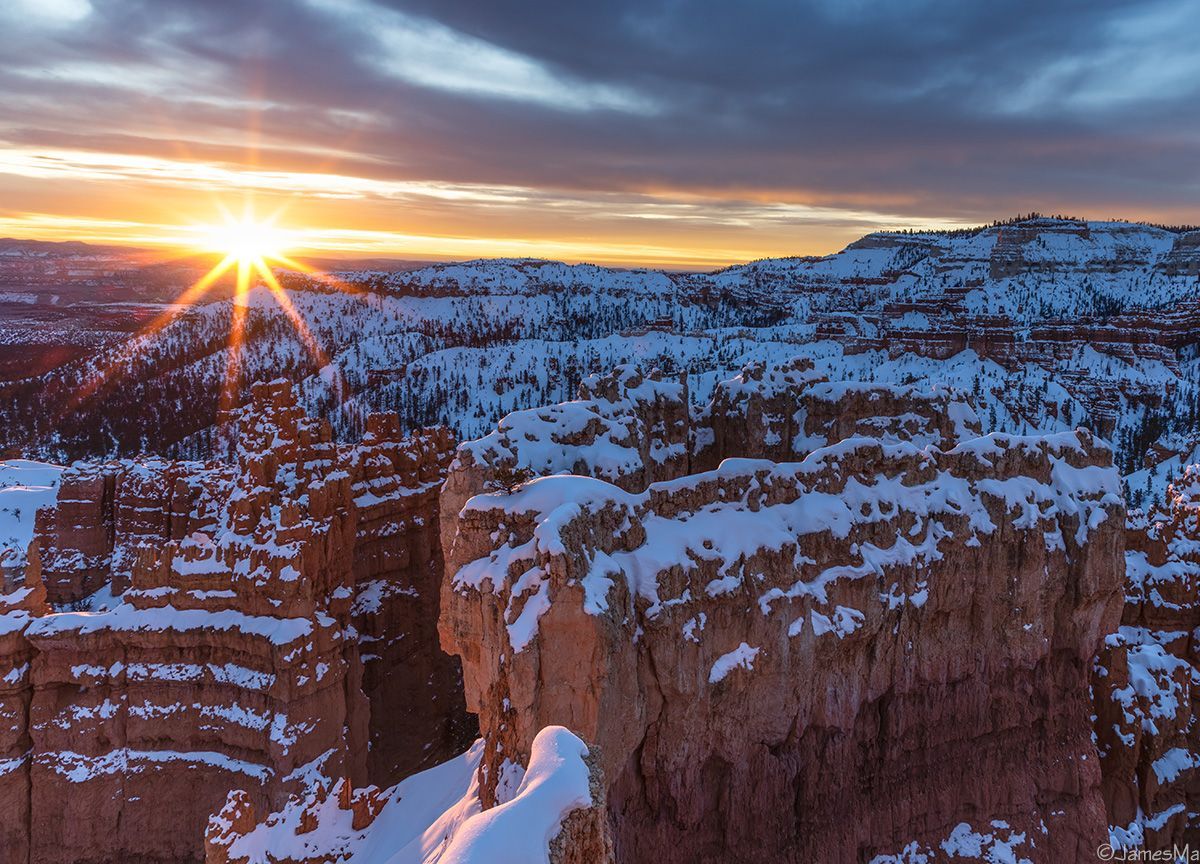
North Campground remains open for camping all year, so anyone staying there should bring warm sleeping gear and layers. October can bring snowstorms, yet many autumn days that month are sunny and pleasant.
December through February is the coldest and snowiest stretch of the year. Daytime highs usually sit in the 30s, and lows often fall into the teens. Snowfall can reach 18 to 20 inches in a single month. Visitation is also at its lowest of the year, and the snow that settles on the hoodoos makes the red rock stand out in sharp white contrast.
Spring storms in March and April can still bring heavy snow that may affect travel in the region, so check current conditions before driving. By the end of March, average highs reach about 50 degrees, and by early June they climb toward 70.
Snow also opens up a range of winter outings. Snowshoers and cross-country skiers have several groomed trails to choose from, and rangers lead snowshoe walks when conditions allow. Gear can be rented at Ruby's Inn, just outside the park entrance. Each February, the Bryce Canyon Winter Festival takes place there, with demonstrations, guided tours, craft booths, contests, and food.
Summer days are pleasant, with highs usually in the 70s and 80s in July and August. Afternoon thunderstorms are common in those months. They tend to be brief but bring heavy rain and frequent lightning, so when thunder sounds, get into a building or a vehicle right away. Lightning is a danger all year.