Carlsbad Caverns National Park guide · 2 min read
Sulfuric Acid and the Birth of Carlsbad
Speleogenesis is the term for how the caves here formed, and it started with sulfuric acid eating into limestone.
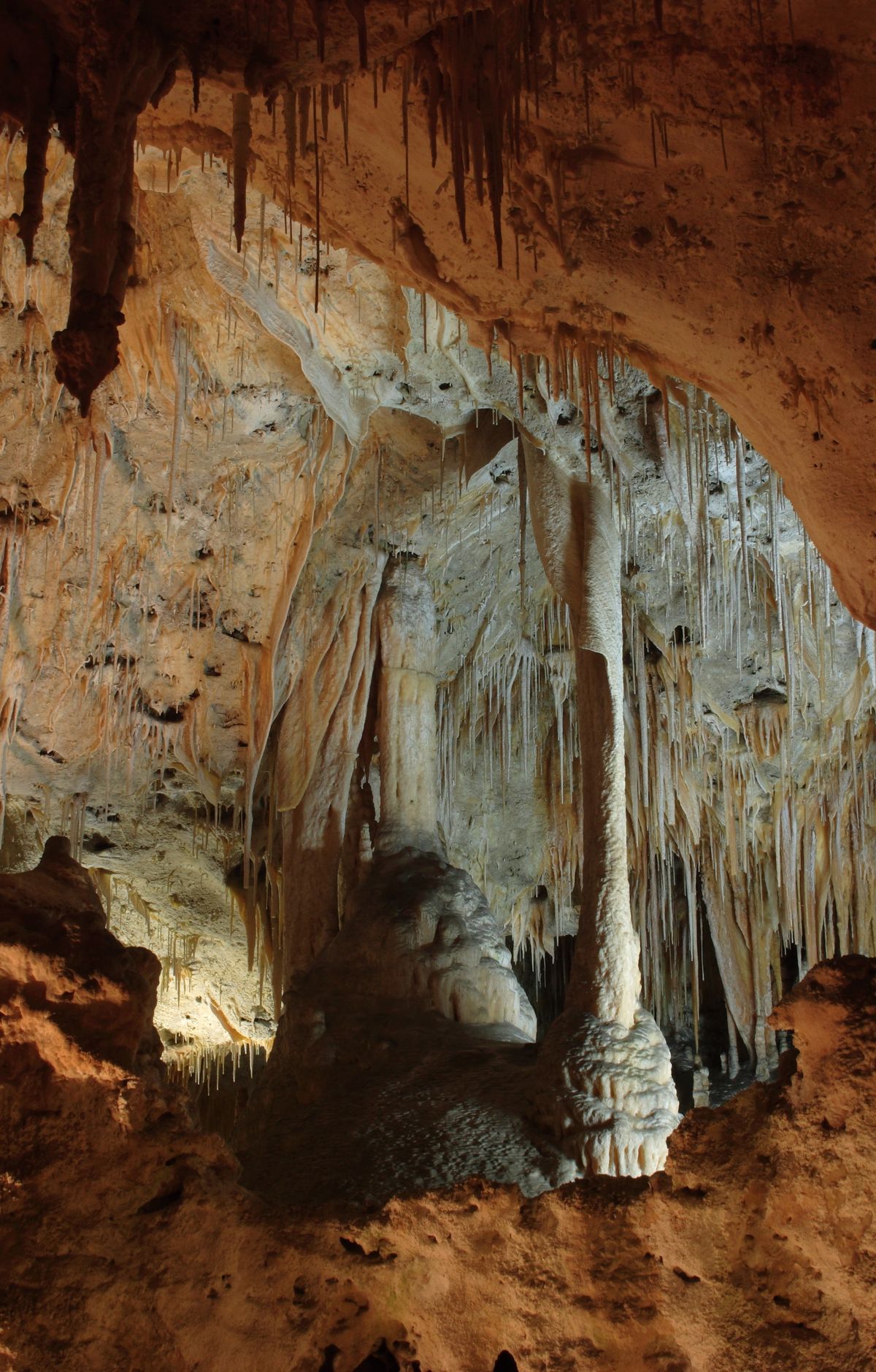
Beneath the rock lie petroleum reserves, part of the Mid-Continent Oil Field. Near the end of the Cenozoic era, hydrogen sulfide began rising from that oil into groundwater. Once it met oxygen from the water, it became sulfuric acid, which moved upward and dissolved limestone into caverns.
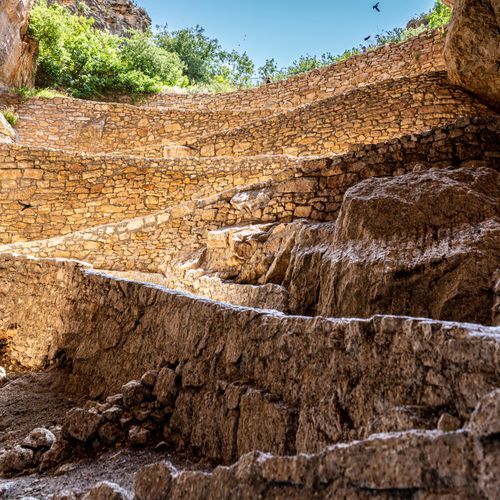
Gypsum in the cave offers a clue to this chemistry. When sulfuric acid reacts with limestone, gypsum is one of the leftover materials, so finding it underground points back to the same process. Erosion above ground later opened the natural entrance, within the last million years.
The limestone itself started as a reef. About 250 million years ago, this area was a coastline along an inland sea, and marine life such as bryozoans, sponges and microorganisms built the Capitan Reef. As most of the water dried up, evaporites and other sediments buried the reef. In the late Cenozoic, tectonic movement lifted it above ground, and erosion carved the Guadalupe Mountains into their present shape.
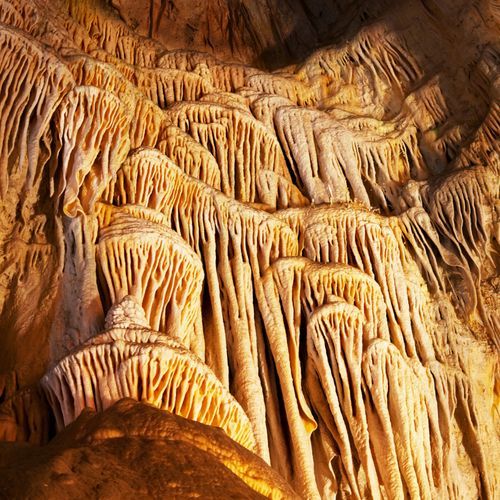
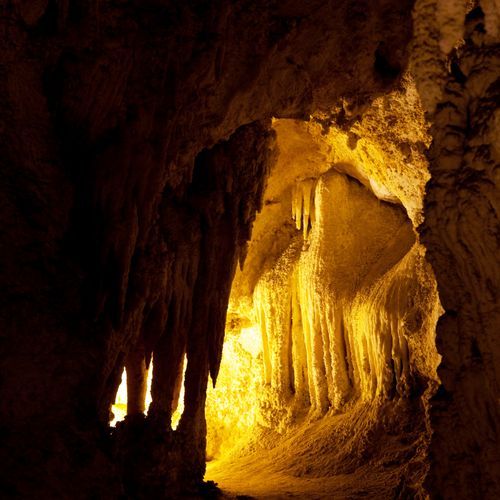
Speleothems, the mineral decorations of the caves, began forming after acidic groundwater drained out of the caverns. Stalactites, stalagmites, draperies and soda straws built up as water seeped through the rock. The Big Room, which Jim White named when he explored in 1898, is still among the largest cave rooms in the world, though it no longer holds the title of largest natural underground chamber.
Three caves are open to public tours. Carlsbad Caverns has electric lights, paved trails and elevators, while Slaughter Canyon Cave and Spider Cave have marked paths for guided adventure caving tours. Lechuguilla Cave, the second deepest limestone cave in the United States, is mapped to 1,600 feet. Only permitted scientific expeditions may enter it, which protects its delicate formations.