Channel Islands National Park guide · 2 min read
Coreopsis Blooms and Island-to-Island Weather
The yellow coreopsis usually peaks from late January through March. After a year of normal rainfall, the islands turn green, and wildflowers reach their height in late winter and spring.
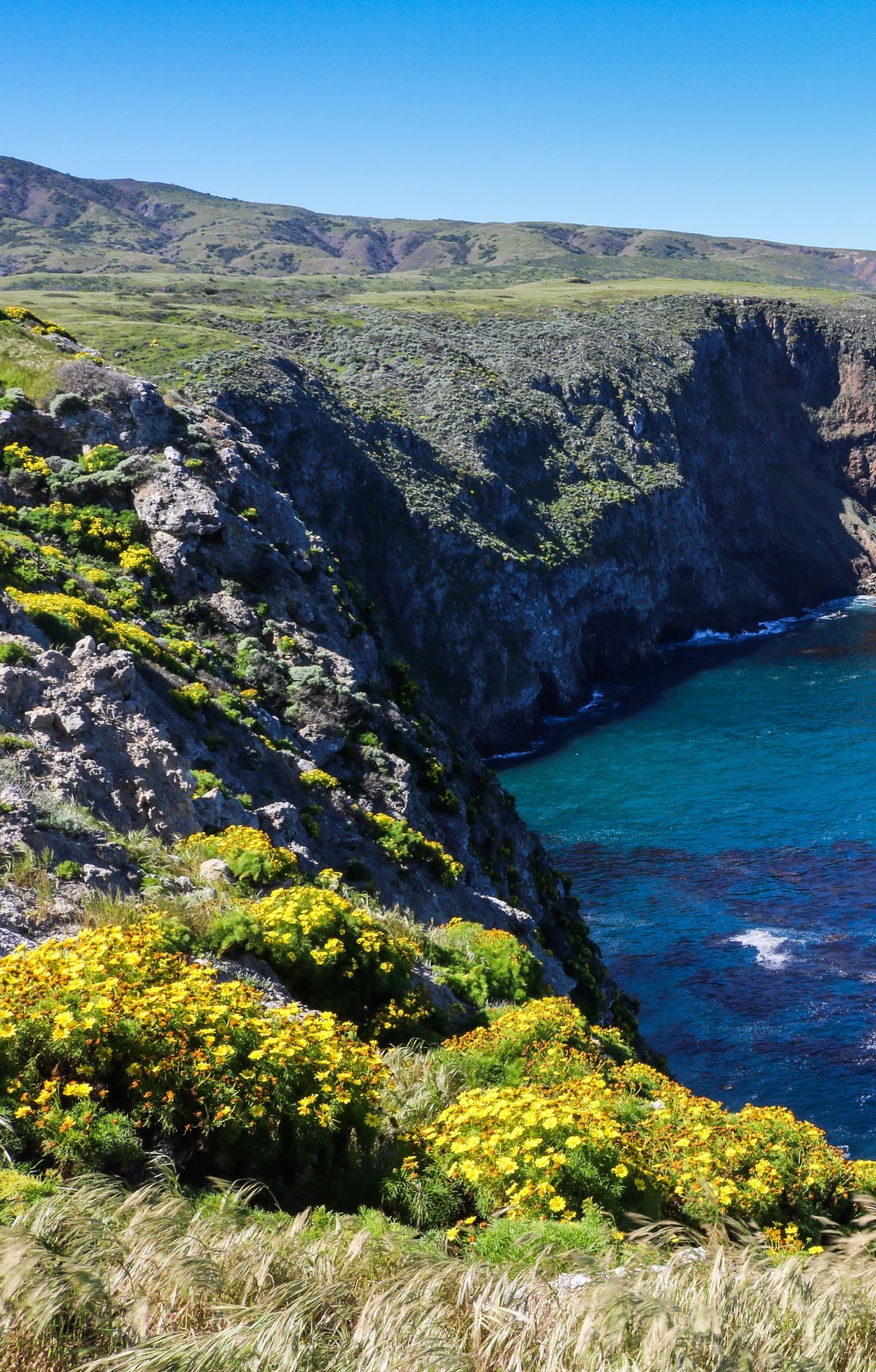
Blooming tends to begin and end earlier on islands farther east and south. The best coreopsis viewing is found on Santa Barbara, Anacapa and San Miguel Islands.
More than 800 plant species grow in the park. Each island has its own mix, shaped by how far it sits from the mainland and its neighbors, how large it is, the local climate, the height of its highest point and the lay of its land. The Arch Point Hike is a one-mile round trip from the visitor center, rated moderate in difficulty. Its reward is coastal views and sunsets, plus wildflowers around an arch in a steep sea cliff when they are in season.
The islands have a Mediterranean climate all year, and temperatures stay fairly level. Average highs sit in the mid-60s and lows in the low-50s. Ocean and weather conditions can change a good deal from one day to the next and from one island to the next. That unpredictability is part of why the islands have stayed remote and protected while the mainland has changed quickly.
Fog, strong winds, choppy seas and spray off the ocean can all arrive at any time, regardless of the forecast. Early mornings tend to be calm, with winds building through the afternoon. On the outer islands of Santa Rosa and San Miguel, winds near 30 knots are not unusual. Anacapa, eastern Santa Cruz and Santa Barbara tend to have milder winds.
Check the marine forecast and the land area forecast for each island on your list. Forecasts are published for Anacapa and Santa Cruz, San Miguel and Santa Rosa, and Santa Barbara Islands. The Channel Islands National Marine Sanctuary also runs an internet weather kiosk.