Channel Islands National Park guide · 2 min read
Blue, Gray and Humpback Whales of the Channel
Whales, dolphins and porpoises, known together as cetaceans, are a big part of life in the waters around these islands.
North of the islands lies the Santa Barbara Channel, where 27 species have been recorded, roughly a third of all the cetacean species on the planet. The list runs from blue, gray and humpback whales to minke, sperm and pilot whales, along with orcas, Dall's porpoises, and bottlenose, common, Risso's and Pacific white-sided dolphins. With that much variety, whale watching is worthwhile in every season.
Timing shapes what you are likely to see. Gray whales are a regular sight as they pass through on their yearly migration, from mid-December to mid-March. Blue and humpback whales show up mostly in summer, from June through September. Common dolphins are present throughout the year, and the channel also serves as a route many marine mammals use while migrating.
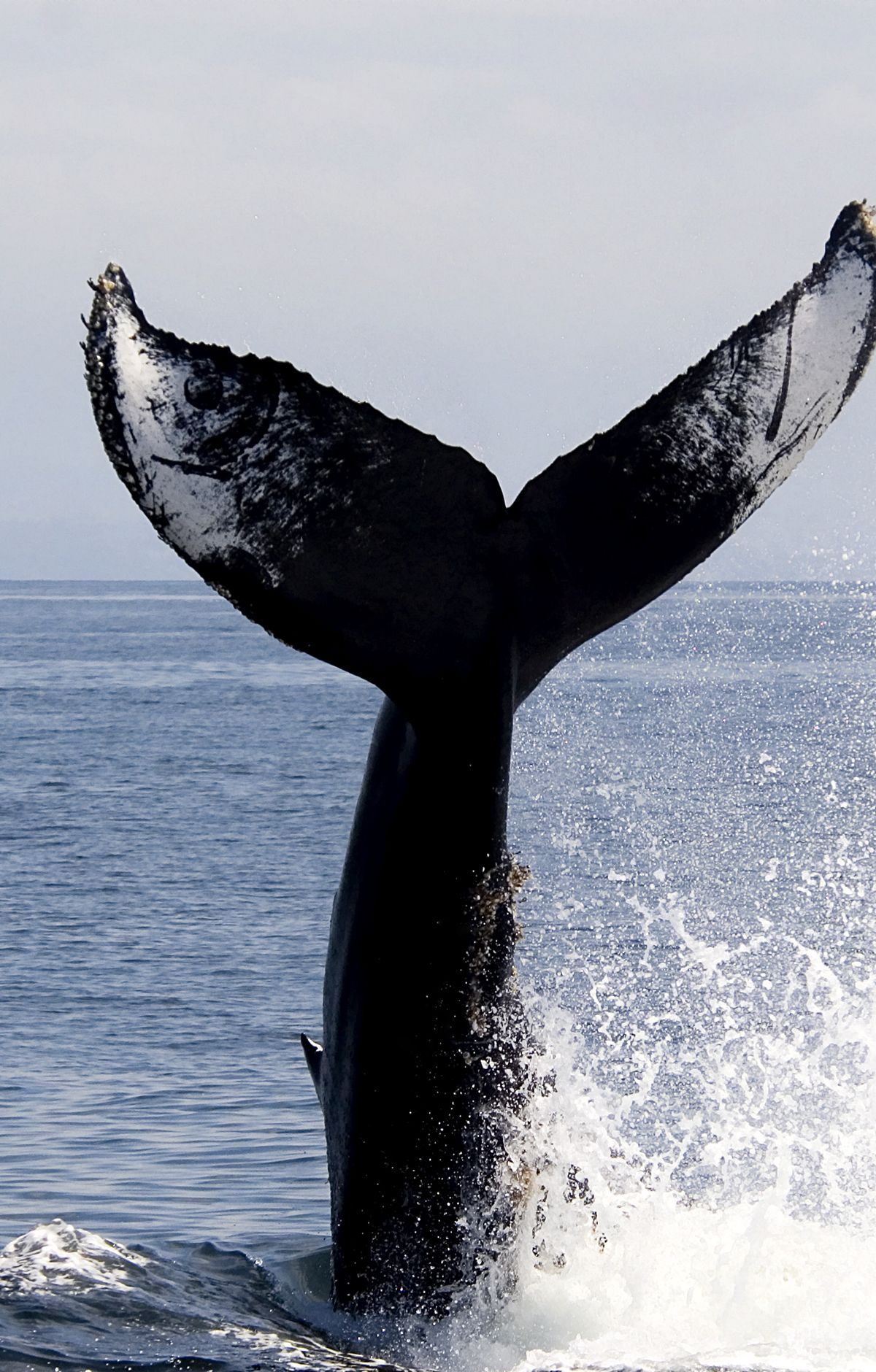
Whales give away much of what they are doing through a few telltale movements. Before a deep dive, a whale usually makes several shallow ones, then raises its tail flukes clear of the water. As it sinks, the strong up and down strokes of its tail leave smooth ripples on the surface known as footprints. In spyhopping, a whale pushes its head straight up out of the sea, eight to ten feet high, and may stay there half a minute or longer, turning slowly, then sinks back down.
Sightings are possible from shore as well as from a boat. Many visitors spot whales simply while riding the ferry out to the islands, and on one return trip a large pod of common dolphins raced alongside. Island Packers runs whale watching trips throughout the year, and its whale and wildlife cruises stay offshore rather than landing on the islands, which suits people with limited time. Additional operators head out from Santa Barbara, Ventura and Channel Islands Harbors.