Crater Lake National Park guide · 1 min read
41 Feet of Snow: Crater Lake Winters
Crater Lake receives an average of 41 feet of snow each year, carried in by storms that roll off the Pacific Ocean.
The park sits along the crest of the Cascade Mountains, which helps explain why the snow piles up so deeply. Winter runs from November through April, and snow covers the landscape for most of the year. Those long months shape nearly everything a visitor can do here.
The official weather station at park headquarters records the snowfall that defines the park's climate. Observations are taken each morning and passed to the National Weather Service. Anyone curious about recent conditions can find daily snow depth and snow totals from the same station online.
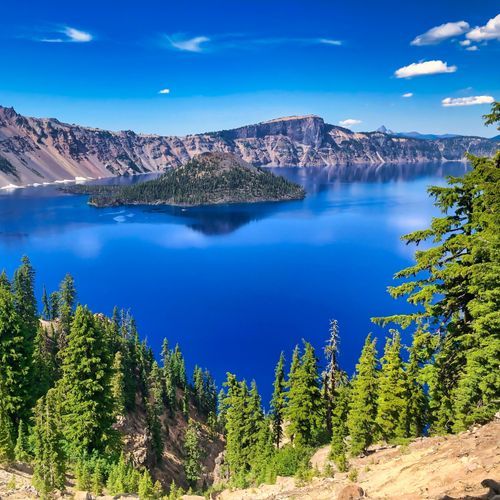
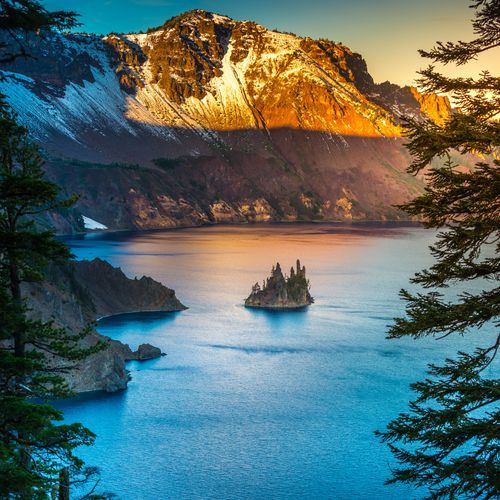
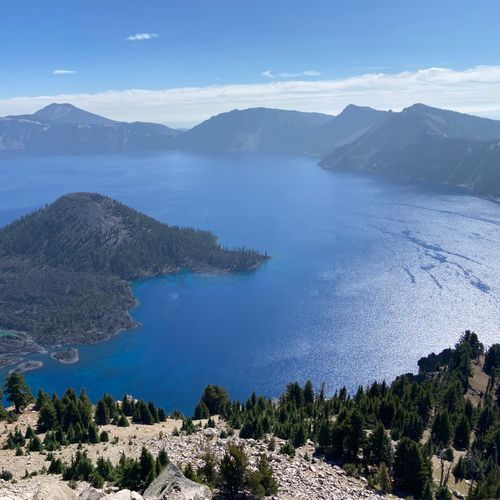
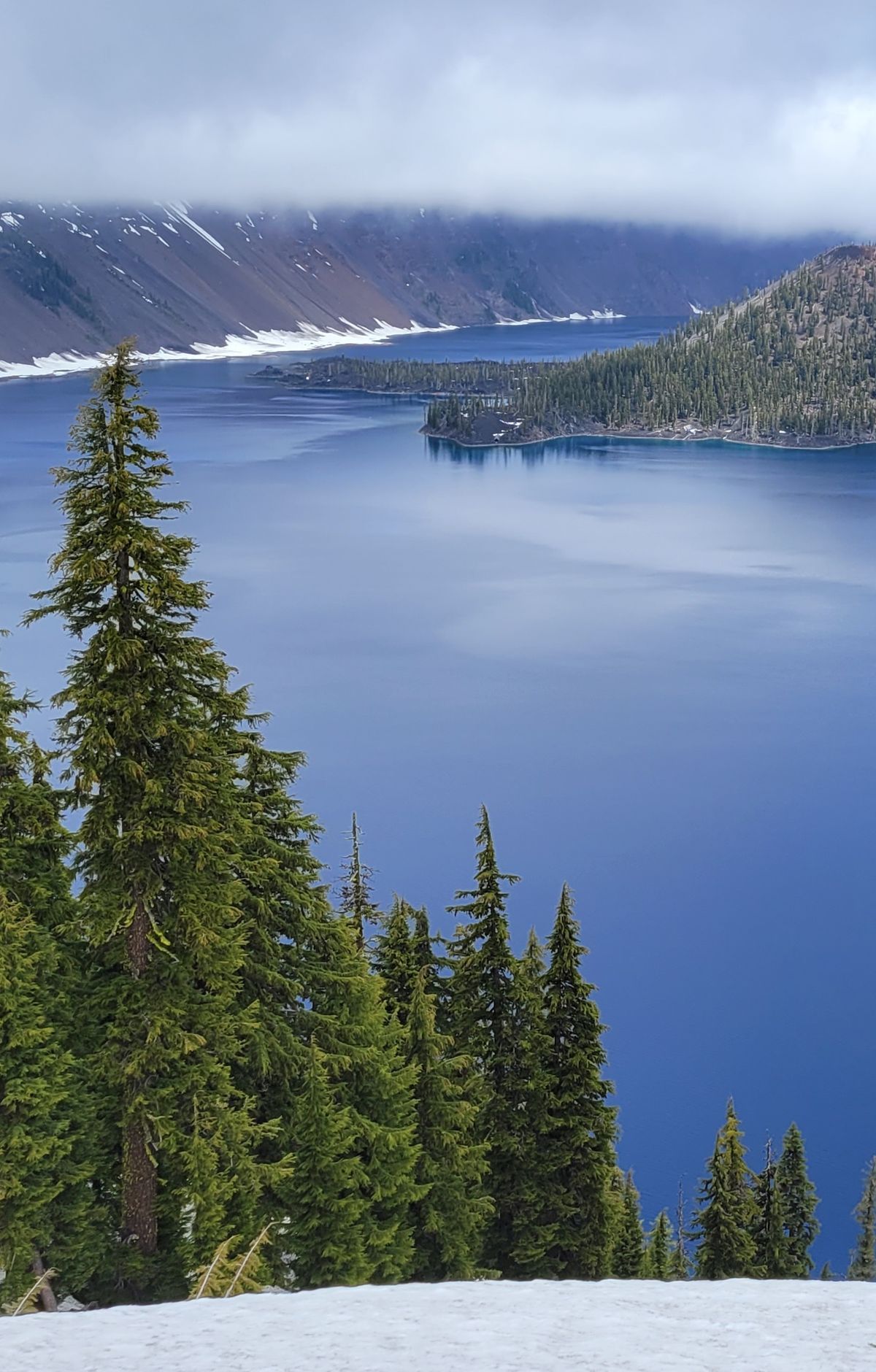
Winter weather also changes what visitors see of the lake. When it is raining or snowing, clouds usually hide the water, and the lake is completely out of sight about half the time in winter. Clear stretches are worth watching for. Rim Village, perched above the lake, becomes a high-elevation landscape of snow-covered meadows beneath tall conifers.
Snowshoeing and Nordic skiing are popular ways to explore once the trails are buried. At Rim Village, visitors also sled, photograph the scenery, and warm up with hot cocoa. East Rim Drive becomes a winter route for skiers, snowshoers, and backcountry campers.
Road access depends on snowfall, melt, and the timing of snow removal, so it can change from one year to the next. Check the park's Current Conditions page before you set out, and carry tire chains. Wear boots and layers, and drink plenty of water.