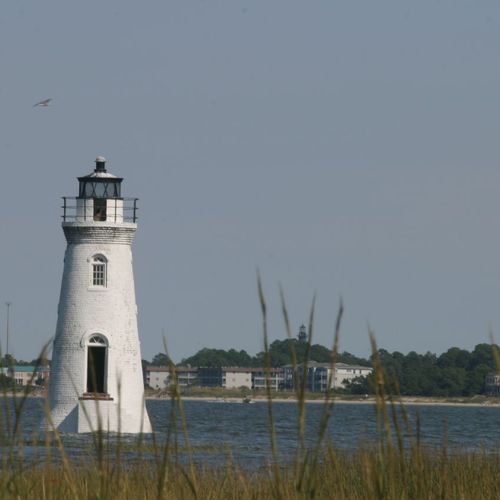
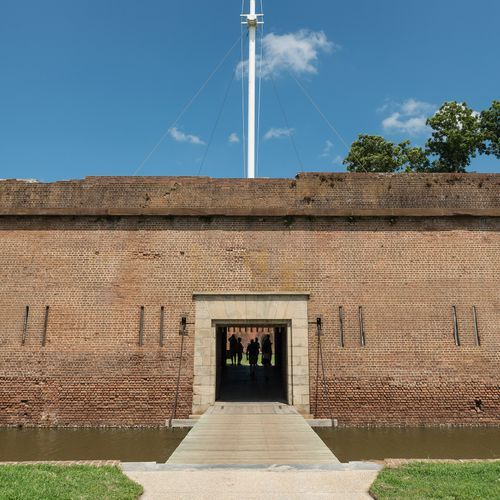
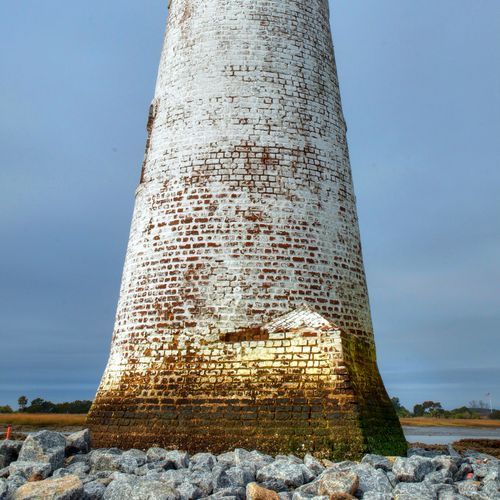
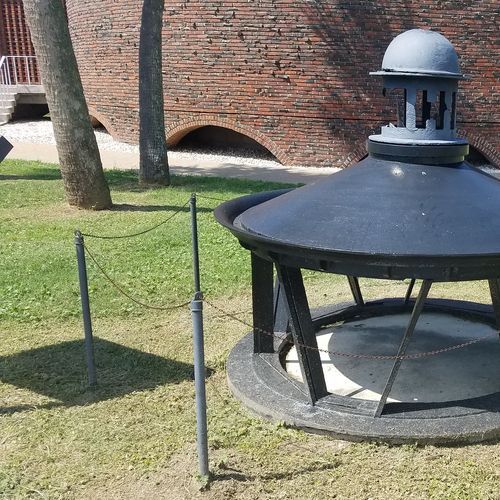
Fort Pulaski National Monument rewards visitors who come for more than a walk in the woods. The centerpiece is the fort itself, a massive brick citadel rising from Cockspur Island at the mouth of the Savannah River. Begun in 1829 and finished nearly two decades later, it was designed to guard the approach to Savannah, and because its Civil War siege in April 1862 lasted only about thirty hours, and the post was abandoned in the 1870s without ever being modernized, the structure survives remarkably intact. Cross the drawbridge over the moat, wander the casemates, and climb to the ramparts for sweeping views of salt marsh, river channels, and passing ships. Look closely at the walls and you can still see scars left by the rifled cannon that changed military engineering forever. The fort is open daily from 9:00 AM to 4:30 PM, and ranger-led programs bring its stories of engineers, soldiers, and laborers to life.
Start at the Visitor Center, open 9 AM to 5 PM, where exhibits trace the fort's construction and the battle that sealed its fame. Highlights include original artifacts, a cross-section model of the fort built in the 1930s, and a park film that sets the scene. The building is also one of the few climate-controlled spots on the island, which makes it a welcome stop on a sweltering Georgia afternoon or a raw winter day. Families should pick up a Junior Ranger booklet at the desk and check the daily schedule of ranger talks, some of which begin right here.
Beyond the walls, the monument's 5,600-plus acres of marsh and waterways open up a quieter side of the coast. Birders can chase more than 200 recorded species, from wading egrets to migrating shorebirds, while anglers find plenty of action in the tidal creeks. Paddlers can launch a kayak to explore the maze of marsh channels at water level, and cyclists can roll along the park's grassy and levee trails. Shoreline areas near the river give you room to watch the tide and the shipping traffic heading in and out of Savannah, and with Tybee Island's beaches just down the road, it's easy to pair a morning of history with an afternoon on the sand.