Parka
Gettysburg National Military Park

Things to Do in Gettysburg National Military Park

Gettysburg rewards visitors who come to understand rather than simply walk, and the best place to begin is the Museum and Visitor Center off Baltimore Pike. Rangers at the information desk will hand you a park map, sketch out touring options, and point you toward seasonal ranger-led and living history programs. Set aside two to three hours if you plan to go deeper: the orientation film, the museum galleries, and the enormous Battle of Gettysburg cyclorama, a sweeping circular painting that wraps viewers in the chaos of the fighting, are ticketed and well worth the price. Passport stamp collectors will find stamps for both the battlefield and nearby Eisenhower National Historic Site at the desk.

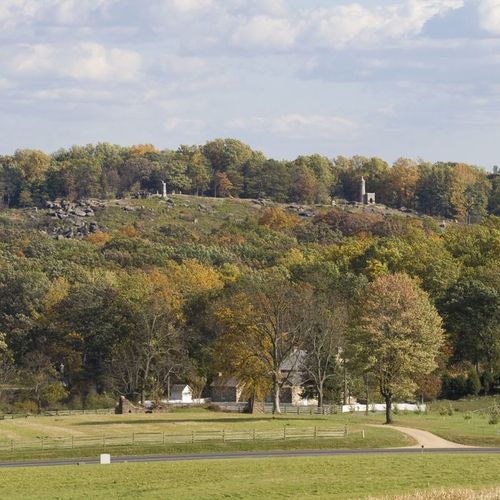
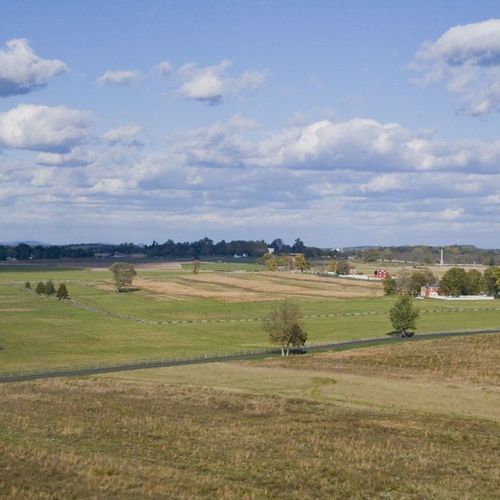
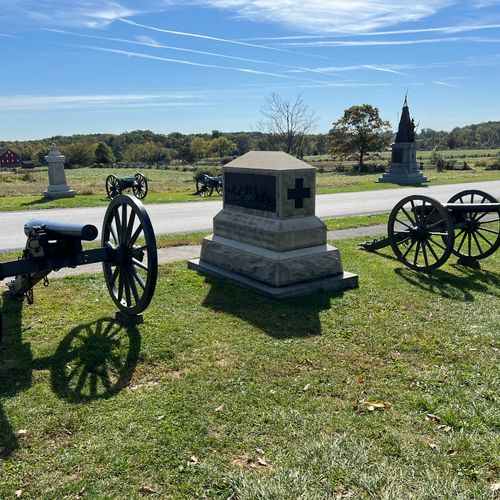
From there, the battlefield unfolds by car. More than 40 miles of park roads trace the three days of July 1863, when Lee's Army of Northern Virginia collided with Meade's Army of the Potomac in what became a turning point of the Civil War. The auto tour links dozens of stops, from the artillery lines on Seminary Ridge to the high ground around Little Round Top, with broad vistas over farm fields, stone walls, and the town itself. Monuments are everywhere, more than a thousand of them, and the towering Pennsylvania Memorial is a standout, offering one of the finest panoramas in the park. Guide stations at the west and south ends of the tour route make convenient pause points, and the roads open at 6 a.m. and stay open into the evening, so early morning and golden hour light are yours to enjoy.

Don't leave without a quiet visit to Gettysburg National Cemetery, where Lincoln delivered his famous address and where rows of headstones lend the battlefield its deepest weight. Those curious about the fringes of the fight can seek out East Cavalry Field or the modest site of the first shot on Knoxlyn Ridge west of town. There are no beaches here, but the sheer density of history across more than 6,000 acres, set within two national heritage areas, makes Gettysburg one of the most absorbing places in the entire park system, open year-round and different in every season.

ViewpointLittle Round Top & Devil's Den

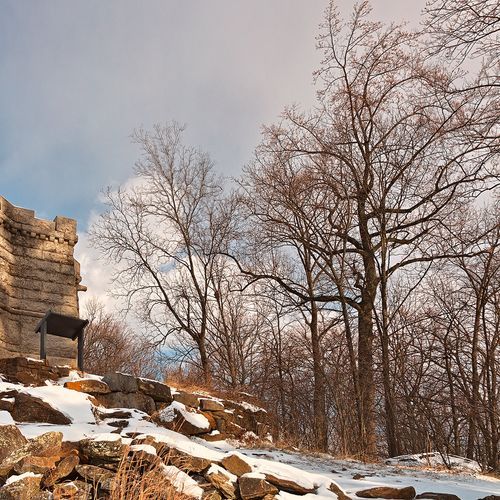
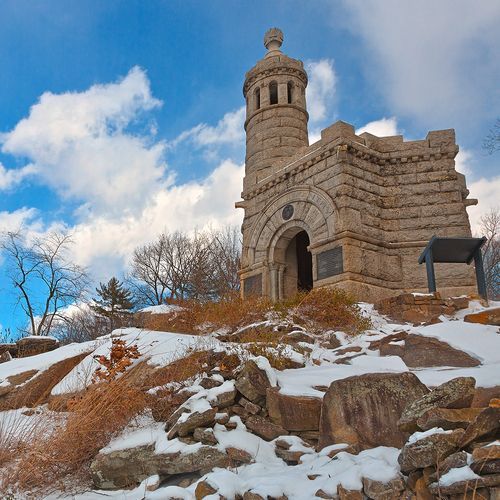
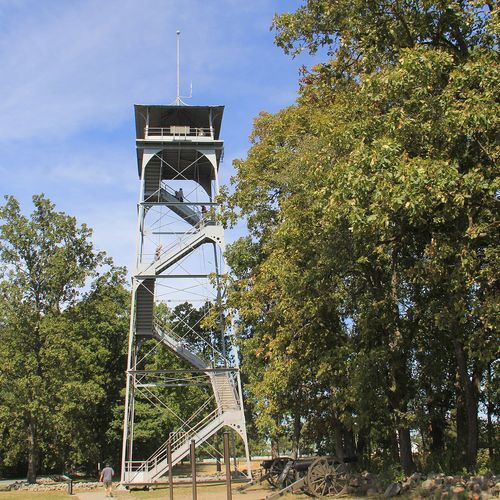
Raised by the War Department in 1895, this observation tower is one of five built across the Gettysburg battlefield. It stands on South Seminary Ridge near Pitzer Woods, along the Confederate line from which the July 2 attacks were launched. After the nearby Eisenhower farm was bought in 1950, Secret Service agents kept an eye on the visitors at its top. The Georgia, South Carolina, Mississippi and Louisiana memorials and the James Longstreet Monument are a short walk away.

ViewpointFirst Day's Battlefield

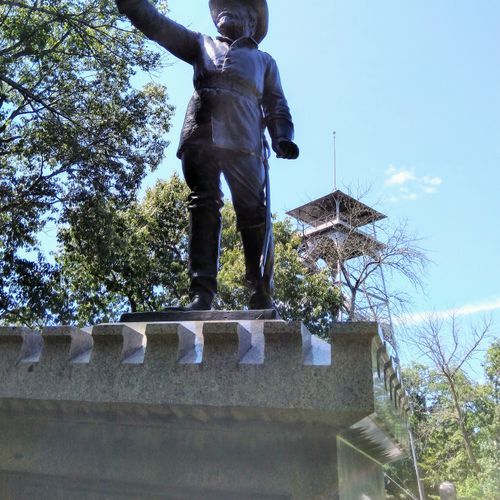
Built by the Gettysburg Battlefield Commission in 1896 and cut down to a lower height in the 1960s, this metal tower lifts you above the fields where fighting raged on July 1, 1863. Two flights of stairs lead to a flat platform with views along Oak Ridge and south toward the town of Gettysburg. Regimental monuments line Doubleday Avenue nearby, and Iverson's Pits and the Sallie monument are a short walk away.

ViewpointCulp's Hill & Spangler's Spring

Built in 1896 by the Gettysburg Battlefield Commission, this metal tower atop Culp's Hill lets you take in most of the battlefield at once. Climb seven flights of stairs to a roofed platform for views of the First Day's Battlefield to the north and west, the Union line from the Round Tops along Cemetery Ridge to Cemetery Hill, and the Confederate position on Seminary Ridge. The George S. Greene monument stands steps away.

ViewpointLittle Round Top & Devil's Den

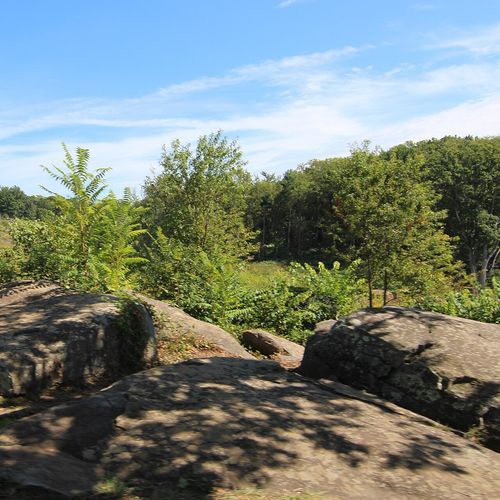
Set among the boulders of Devil's Den, this spot is linked to one of the most famous photographs of the Civil War. Days after the fighting in July 1863, Alexander Gardner and Timothy O'Sullivan moved the body of a young Confederate soldier about 40 yards to stage their image of a fallen sharpshooter. Confederate marksmen did fire from these rocks at Union troops on Little Round Top, striking officers including General Stephen H. Weed.

ViewpointCemetery Ridge & Visitor Center

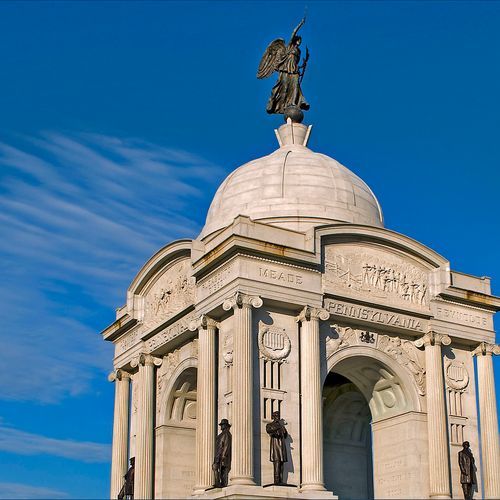
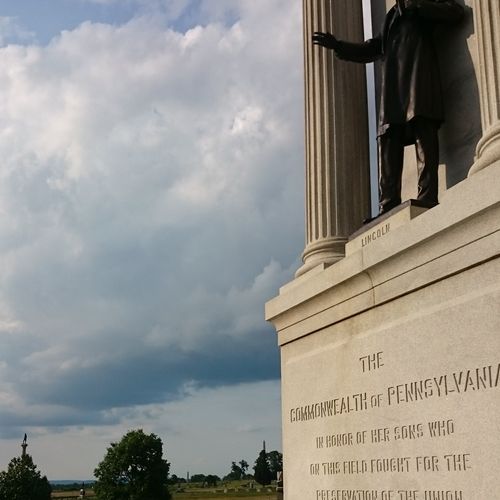
This deck sits atop the largest state monument on the Gettysburg battlefield, a domed granite memorial completed in 1914 along Cemetery Ridge, where the Union line held on July 2, 1863. Oversized granite reliefs decorate the parapet walls around you, and the deck looks out over nearby landmarks such as the Copse of Trees and the Codori Farm. Below, bronze tablets list the 34,530 Pennsylvania soldiers who fought here.

Point of interestCemetery Hill & Soldiers' National Cemetery

More than 3,500 Union soldiers killed at Gettysburg rest on this hillside, reburied here from hasty battlefield graves beginning in the fall of 1863. President Lincoln gave his Gettysburg Address at its dedication that November. Landscape architect William Saunders laid out the grounds, with graves arranged by state in arcs around the Soldiers' National Monument. Nearby stand the Lincoln Address Memorial and the New York State Monument, and Evergreen Cemetery's gatehouse is a short walk away.

Point of interestCemetery Ridge & Visitor Center

Painted in the 1880s by French artist Paul Philippoteaux, this enormous 360-degree oil painting surrounds you with Pickett's Charge, the Confederate assault on the battle's third day. Philippoteaux researched on the field with veterans and a photographer before he and his assistants spent over a year on the canvas. A canopy overhead, a foreground diorama of stone walls, splintered trees and a cannon, plus light and sound effects pull you into the scene.

Point of interestCemetery Ridge & Visitor Center

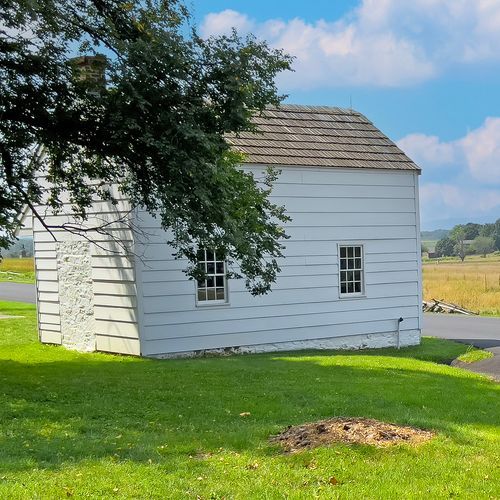
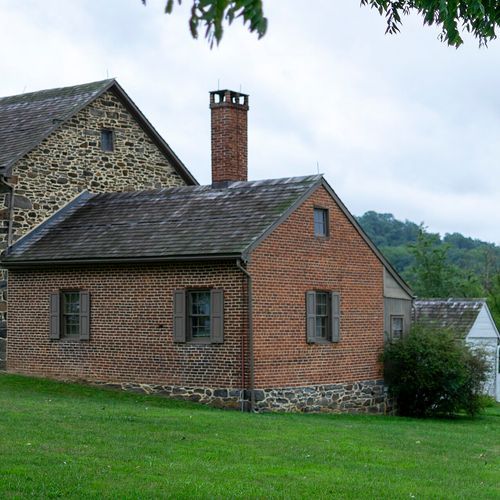
This small farmstead belonged to Abraham Brien, an African American farmer who bought the land in 1857, and its house stood directly on the Union line that faced Pickett's Charge. After the battle Brien sought payment for damage to his property but recovered only a small part of it. The site sits along Cemetery Ridge near The Angle and Meade's Headquarters, and the National Park Service restored its outdoor bake oven in the 1930s.

Point of interestLittle Round Top & Devil's Den

This farmstead saw some of the heaviest fighting on July 2, 1863. Union skirmishers held it first, then Confederate soldiers sheltered inside the thick granite barn walls as shells struck around them. Afterward the house, barn and outbuildings served as Confederate field hospitals, and many of the dead were buried nearby. The stone farmhouse still shows interior battle damage, and the Rose family's land stretched to the nearby Wheatfield and Rose Woods.

Point of interestSeminary Ridge

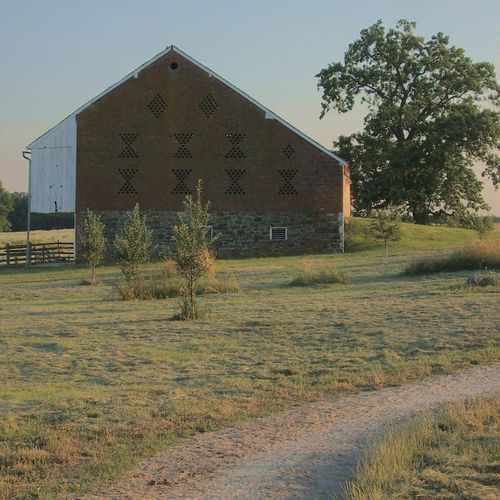
This historic farmstead stands on the Gettysburg battlefield a short walk from the Peach Orchard and the Wentz House ruin. It makes a convenient stop on a walking loop through this part of the field, which also takes in the Trostle and Rose farms and the Louisiana and Mississippi memorials. Longstreet Tower in Pitzer Woods is also nearby.

Point of interestLittle Round Top & Devil's Den

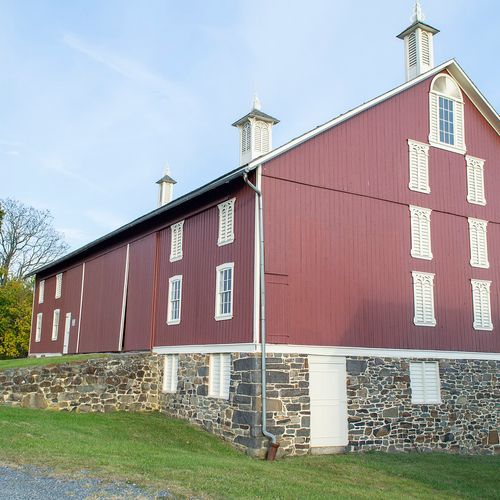
Dating to 1808, this two-story stone farmhouse with a brick addition sits near the neighboring Slyder Farm, with Little Round Top rising in the distance. On July 2, 1863, Confederate General John Bell Hood's troops crossed the property to strike Devil's Den and Little Round Top, and the barn served as a key aid station for his wounded. Returning afterward, the Bushman family found their home looted and eight soldiers buried beside the barn.

Point of interestCemetery Ridge & Visitor Center

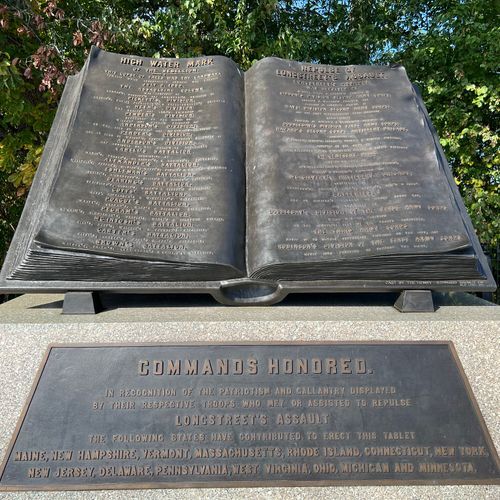
Raised in 1892, this bronze tablet beside the fenced Copse of Trees marks where Pickett's Charge peaked and was turned back on July 3, 1863. Battlefield historian John B. Bachelder designed it to honor units of both armies that took part in the assault. Nearby markers for Armistead, Cushing and the 72nd Pennsylvania, along with the stone wall at The Angle, let you trace the climax of the attack on foot.

Point of interestCemetery Ridge & Visitor Center

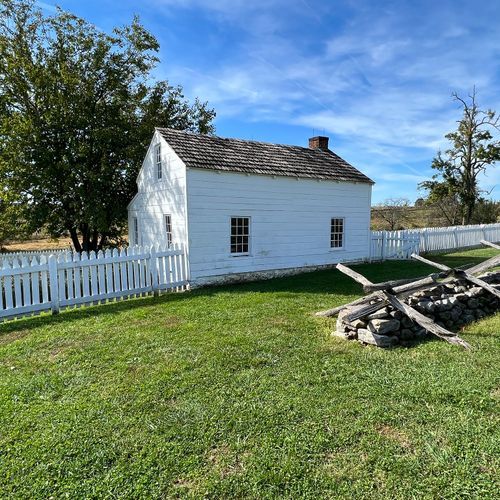
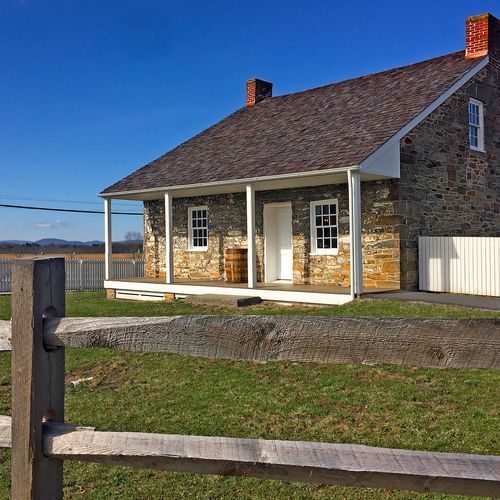
This small farmhouse belonged to widow Lydia Leister and her four children, who fled before the fighting. Its central spot behind the Union lines made it Union General George G. Meade's headquarters, and on the night of July 2 he gathered his senior generals in the main room, where they agreed to hold their ground. The next afternoon, overshooting Confederate artillery battered the house. Reproduction furnishings recreate that council room, to the right of the porch.

Point of interestCemetery Ridge & Visitor Center

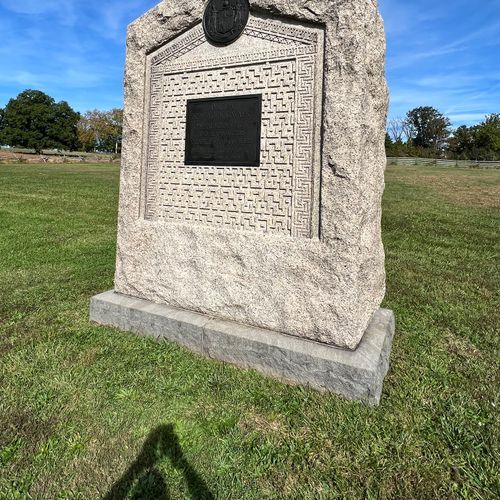
Honoring the soldiers Delaware sent to Gettysburg, this gray stone monument carries a bronze relief plaque and was dedicated in 2000 after a campaign led by the Delaware Civil War Society. The state's First Delaware Volunteer Infantry was on the field July 2-3, 1863. The memorial stands on Cemetery Ridge right beside the Maryland Memorial, a short walk from Meade's Headquarters at the Leister House and the Abraham Bryan Farm.

Point of interestCemetery Ridge & Visitor Center

Marylanders fought on both sides at Gettysburg, more than 3,000 of them, and this memorial honors that divided legacy. Representing the aftermath of the battle and the wider war, it recalls how men from the same state faced each other, most painfully on the slopes of Culp's Hill. A bronze tablet on the back of the base lists the Maryland commands from both armies.

Point of interestCemetery Ridge & Visitor Center

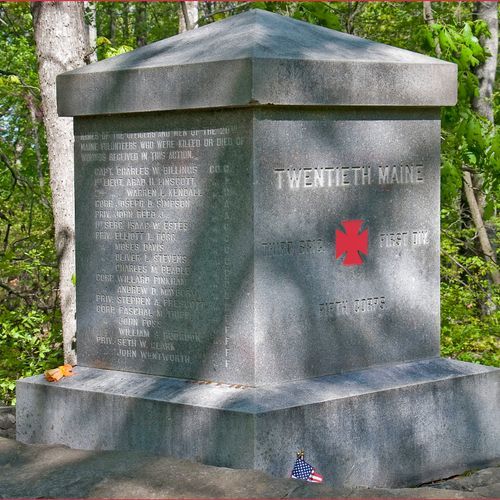
This monument on Cemetery Ridge honors the 1st Minnesota Infantry, a Union regiment that fought at Gettysburg. It stands a short walk from the Pennsylvania Memorial, whose observation deck gives a wide look over the ground, and near the Vermont Memorial and the Father William Corby Statue. The regiment is also remembered by a marble urn in the National Cemetery, dedicated in 1867.

Point of interestLittle Round Top & Devil's Den

This regimental monument stands among the memorials clustered on Little Round Top, with the 20th Maine and the 44th and 12th New York monuments only a short walk away. Stopping here pairs easily with a loop past the Gouverneur K. Warren Statue and down toward the Valley of Death, The Slaughter Pen and Big Round Top, all within walking distance.

Point of interestSeminary Ridge

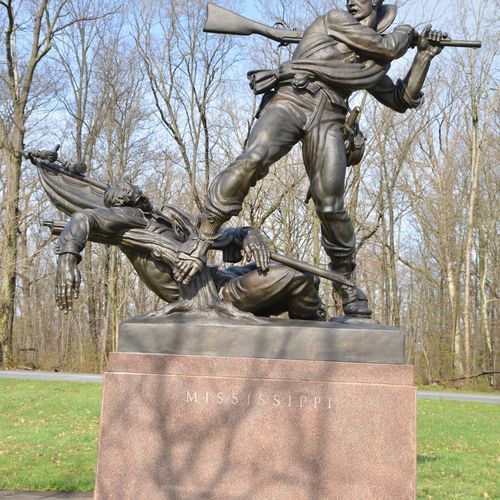
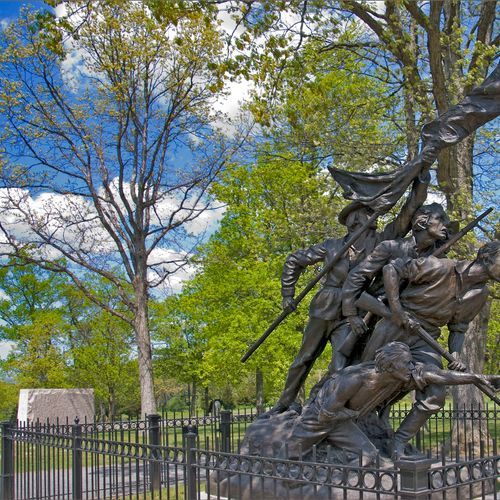
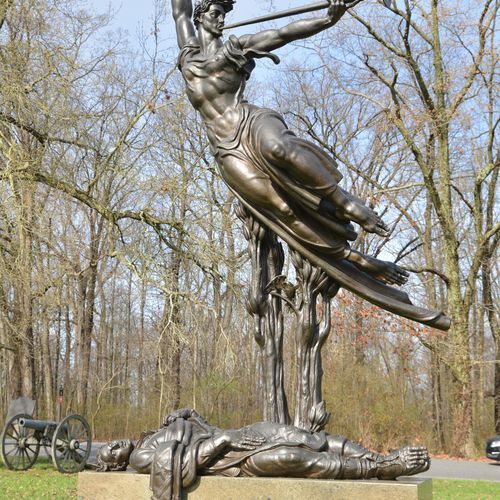
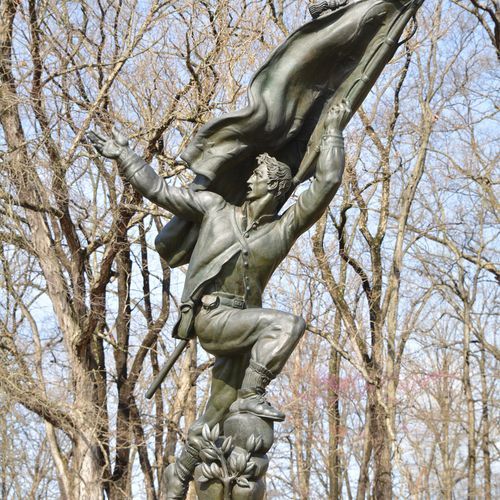
This Confederate state memorial on Seminary Ridge shows a group of Mississippi soldiers surging forward with weapons raised and a flag carried in their midst. It came well after most battlefield monuments, following a proposal from the Sons of Confederate Veterans in the 1960s. The Louisiana Memorial stands just steps away, and Longstreet Tower and the Georgia Memorial are a short walk along the ridge.

Point of interestLittle Round Top & Devil's Den

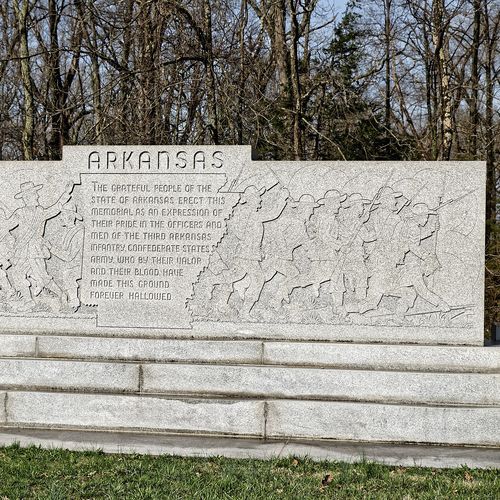
This state memorial honors the Arkansas soldiers who fought at Gettysburg, including the 3rd Arkansas, and stands on the Confederate line of position, in keeping with the park's practice of placing monuments along each army's main lines. Approved in the mid-1960s, its site was chosen for a clear view across the battlefield. The Texas Memorial and Warfield Ridge are a short walk away, so it fits easily into a tour of nearby Confederate monuments.

Point of interestSeminary Ridge

Dedicated in 1917 as the first Southern state monument on the battlefield, this memorial stands close to where Robert E. Lee watched Pickett's Charge fall back on July 3, 1863. Its design, inscription and location stirred heated debate among surviving veterans. It's a stop on the auto tour, with a small parking area off West Confederate Avenue, and a path from here retraces the charge across open fields to the Angle beyond the Emmitsburg Road.

Point of interestSeminary Ridge

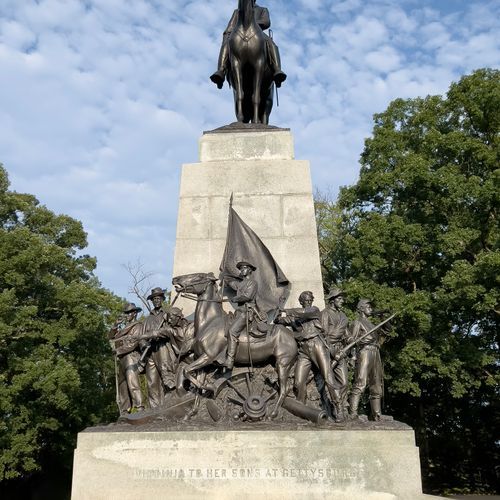
Dedicated on July 3, 1929, this state memorial on Seminary Ridge honors North Carolina's soldiers at Gettysburg. Its large granite inscription slab stirred debate at the time, when the park superintendent questioned whether its wording met the rule that battlefield text be strictly historical, a dispute the Virginia monument had also faced. Restored in the 1980s, the memorial stands steps from the Tennessee Memorial, with the Virginia Memorial and The Angle within walking distance.

Point of interestFirst Day's Battlefield

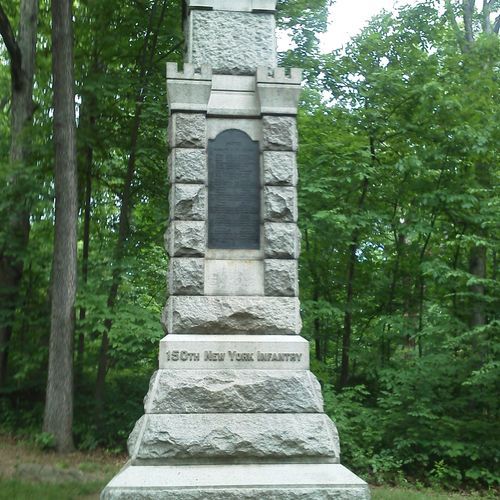
This farm building west of town stood amid heavy fighting on July 1, 1863, as Confederate troops pushed toward Gettysburg against Union cavalry and the arriving soldiers of the First Corps. Wounded men soon sought shelter inside, and after the battle the barn and farmhouse served as a hospital for so long that the family could not live there for months. To reach it, use the walking trail near the 150th Pennsylvania monument.

Point of interestFirst Day's Battlefield

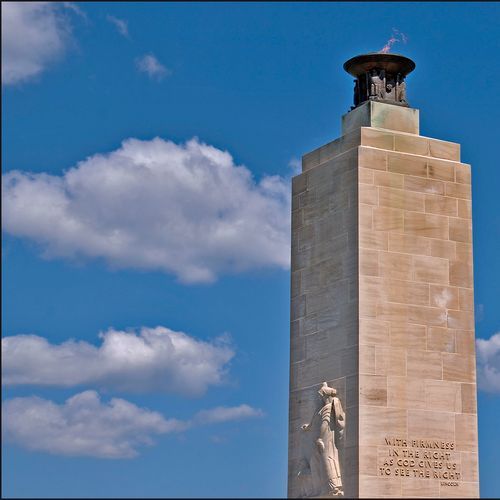
Dedicated in 1938, this stone monument honors the 1913 reunion that marked the battle's 50th anniversary. A natural gas flame burns in a bronze urn at the top of its tower, and relief carvings of two women and an American eagle decorate the stone. From the terrace on the hilltop, views reach across a wide sweep of countryside. The Oak Ridge sites and observation tower are a short walk away.

Point of interestFirst Day's Battlefield

This low rise on the First Day's Battlefield was one of the combat areas of the Battle of Gettysburg's opening day. It makes a natural stop when exploring the northern part of the field, with Oak Ridge, its observation tower and the Eternal Light Peace Memorial all within walking distance for a broader look at where the first day's fighting unfolded.

Point of interestLittle Round Top & Devil's Den

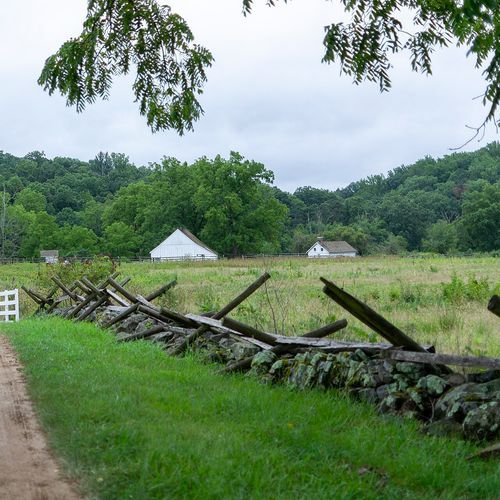
This farm at the base of Big Round Top found itself in the path of the fighting on July 2, 1863. Union sharpshooters used its fences and stone walls as cover, and those same barriers slowed Confederate troops pushing toward the Round Tops. The stone farmhouse, built in 1852, still stands among later barns and outbuildings, and the family also ran a blacksmith shop here. The restored house can be reserved for overnight stays.

Point of interestSeminary Ridge

This state memorial on Seminary Ridge honors the Louisiana troops who fought at Gettysburg and was dedicated in 1971, with the park helping to organize the ceremony. It stands just steps from the Mississippi Memorial, part of a cluster of Confederate state monuments along this stretch of the ridge. The James Longstreet Monument and the observation tower in Pitzer Woods are a short walk away, so it fits easily into a tour of the area.

Point of interestLittle Round Top & Devil's Den

The remains of a house mark this spot near the Peach Orchard, a short walk from the Sherfy Farm buildings. It sits among the farmsteads where fighting swept across the fields, with the Rose and Trostle farms and several state memorials, including those of Mississippi and Louisiana, nearby. Combine a stop here with a stroll through the surrounding farm sites and monuments.

Point of interestLittle Round Top & Devil's Den

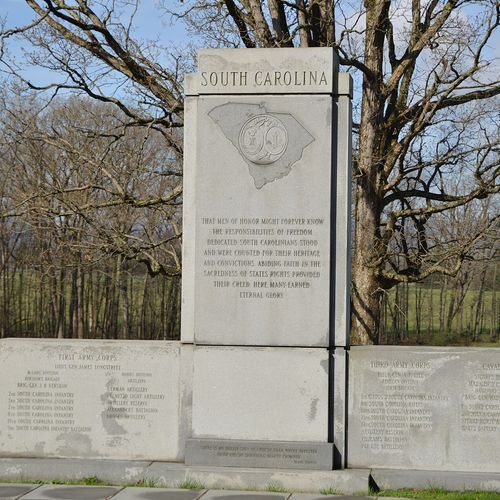
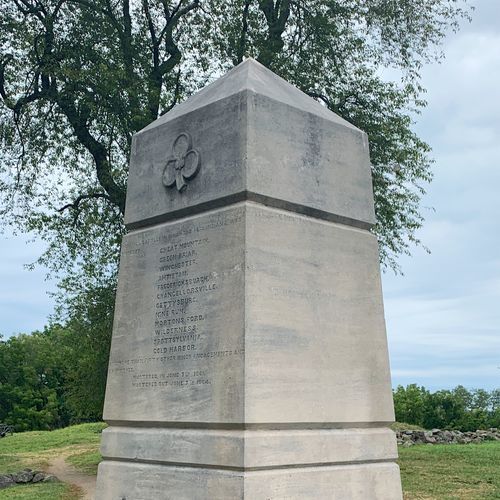
Raised for the battle's centennial in 1963, this stone monument honors the nearly 5,000 South Carolina soldiers who fought at Gettysburg, and its face carries an etched image of three soldiers. It stands along the Confederate line near the Georgia Memorial and Warfield Ridge, with the observation platform of Longstreet Tower a short walk away for a wider view across the southern battlefield.

Point of interestLittle Round Top & Devil's Den

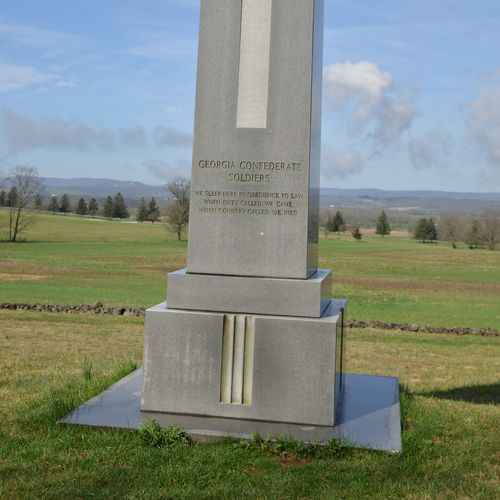
Georgia's state tribute to its Confederate soldiers stands among a row of Southern memorials, a short walk from the South Carolina Memorial and the Longstreet Tower in Pitzer Woods. It was dedicated in 1961, with a Marietta, Georgia, firm producing the stone and Georgia's state archives department organizing the ceremony. From here you can continue on foot to Warfield Ridge and toward the Peach Orchard and Rose Farm.

Point of interestCemetery Hill & Soldiers' National Cemetery

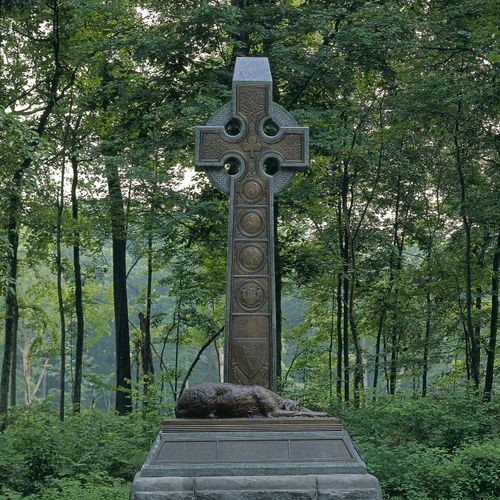
This memorial was dedicated in 1993 by the Grand Lodge of Pennsylvania, honoring the Masonic bonds among soldiers at Gettysburg. It sits in the annex of Soldiers' National Cemetery, steps from the cemetery grounds and the New York State Monument. A visit pairs well with a walk past the Soldiers' National Monument and the equestrian statues of Generals Hancock and Howard on Cemetery Hill.

Point of interestCemetery Hill & Soldiers' National Cemetery

This state memorial honors the New York soldiers who fought at Gettysburg and stands on Cemetery Hill beside Soldiers' National Cemetery. It's a convenient stop while exploring the cemetery grounds, with the Soldiers' National Monument, the Evergreen Cemetery Gatehouse and the Friend to Friend Masonic Memorial all a short stroll away. The equestrian statues of Generals Hancock and Howard and the Lincoln Address Memorial are also nearby.

Point of interestCulp's Hill & Spangler's Spring

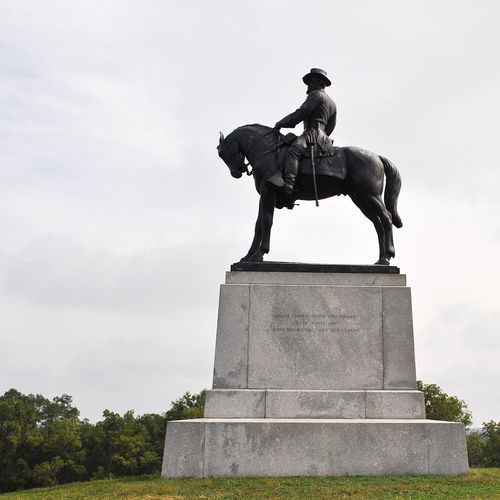
This horseback statue stands in the Culp's Hill area, a short walk from the summit of Culp's Hill and its observation tower. Nearby are the George S. Greene Statue and East Cemetery Hill, so it fits easily into a walking loop of this part of the field. The Hancock and Howard equestrian monuments are also close by for comparing mounted memorials.

Point of interestCemetery Ridge & Visitor Center

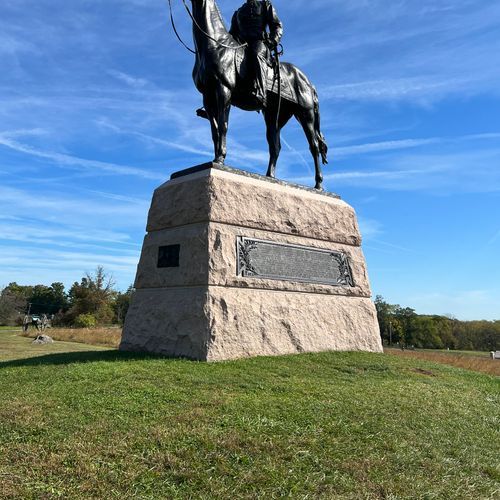
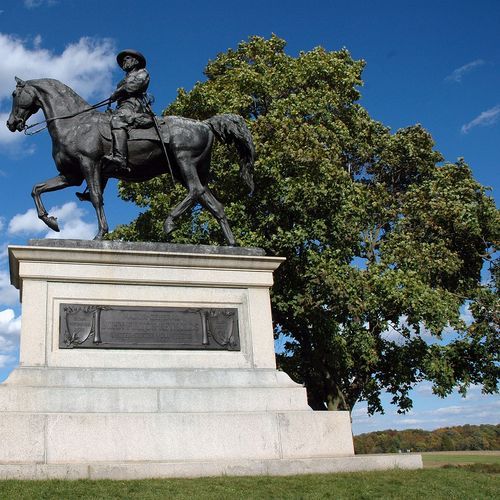
This statue shows the Union commander on horseback astride Old Baldy, his favorite mount, on Cemetery Ridge. Meade, a West Point-trained career officer, took over the Army of the Potomac just three days before the battle, and his quick temper earned him the nickname "old snapping turtle." The domed Pennsylvania Monument stands beside it, and The Angle, the Copse of Trees and his Leister House headquarters are a short walk away.

Point of interestCemetery Hill & Soldiers' National Cemetery

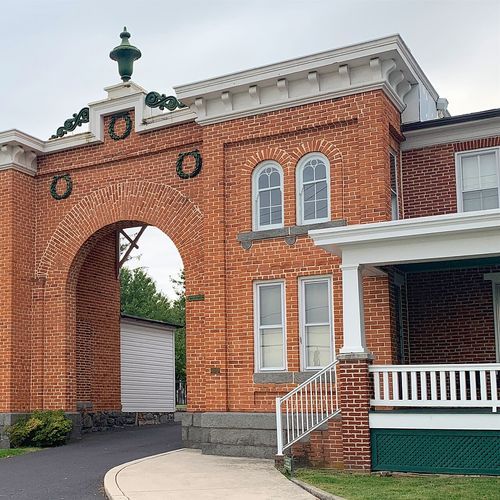
Built in 1855 at the crest of Cemetery Hill, this brick gatehouse to the town's civilian cemetery saw the battle up close. On the night of July 1, caretaker's wife Elizabeth Thorn served supper to Generals Howard, Sickles and Slocum here. The building later sheltered wounded soldiers and was damaged in the fighting of July 2, and Mathew Brady photographed it about two weeks after the battle. Soldiers' National Cemetery and the Hancock and Howard equestrian monuments stand a short walk away.

Point of interestCemetery Hill & Soldiers' National Cemetery

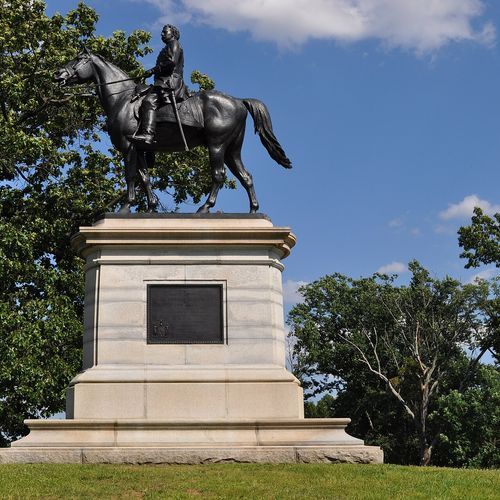
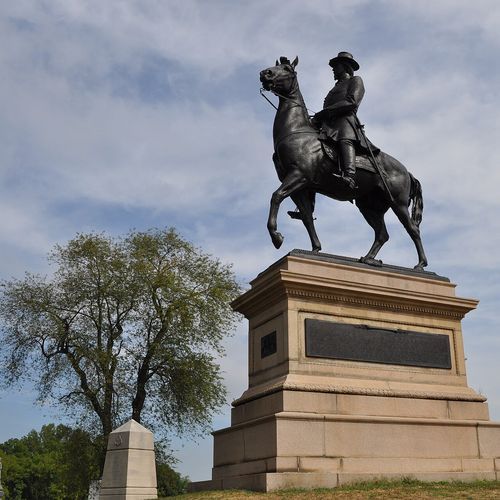
This statue of the general on horseback stands near the crest of Cemetery Hill, the high ground rising just south of downtown Gettysburg. A mounted statue of General Winfield S. Hancock is a few steps away, and East Cemetery Hill and the Evergreen Cemetery Gatehouse are close by. The Soldiers' National Cemetery is also a short walk away, so this makes a natural stop on a tour of the hilltop.

Point of interestLittle Round Top & Devil's Den

This farmstead saw desperate fighting on the afternoon of July 2, 1863, when the 9th Massachusetts Battery, known as Bigelow's Battery, held out against Confederate brigades under Kershaw and Barksdale before being overrun. Their stand bought time for Union reinforcements to form on Cemetery Ridge. A well-known wartime photograph shows dead artillery horses in the farmyard, and the site sits a short walk from the Peach Orchard and the Wheatfield.

Point of interestCemetery Ridge & Visitor Center

This historic farm sits on the Gettysburg battlefield in the Cemetery Ridge area, a short walk from some of the field's best-known landmarks. The Copse of Trees, The Angle, the Armistead Marker and the High Water Mark of the Rebellion Monument are all close by, along with the Vermont and Pennsylvania memorials. That makes the farm a natural addition to a walking tour of the monuments clustered along the ridge.

Point of interestCemetery Hill & Soldiers' National Cemetery

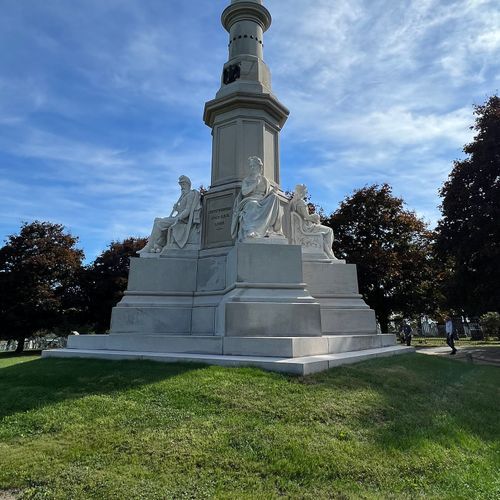
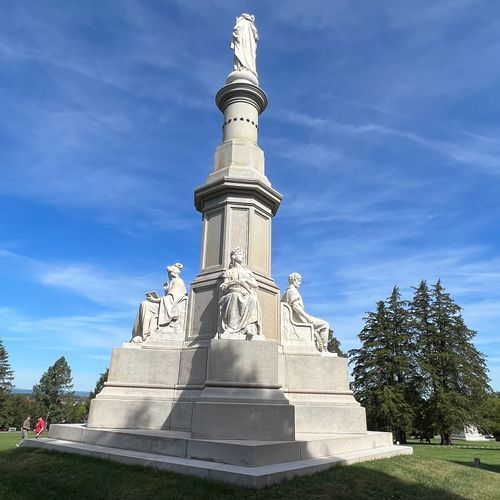
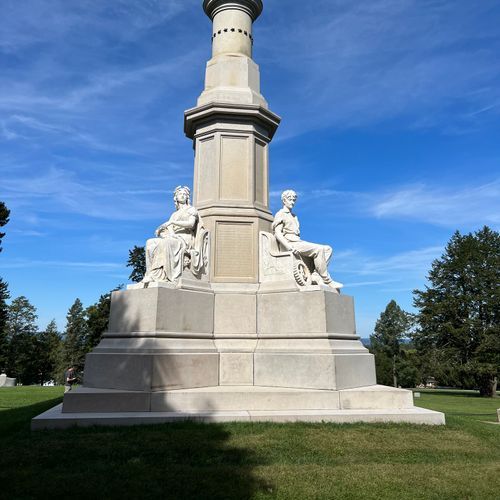
Rising at the heart of Soldiers' National Cemetery, this granite monument from 1869 was designed by sculptor Randolph Rogers and architect George Keller. Graves of Union dead spread around it in concentric semicircles, grouped by state, with separate sections for US Regulars and unknown soldiers. It's a quiet place to reflect on the cemetery Lincoln helped dedicate in 1863, and the Lincoln Address Memorial and New York State Monument are a short walk away.

Point of interestCemetery Hill & Soldiers' National Cemetery

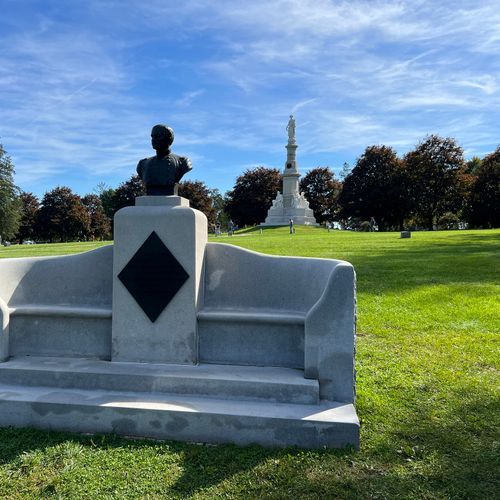
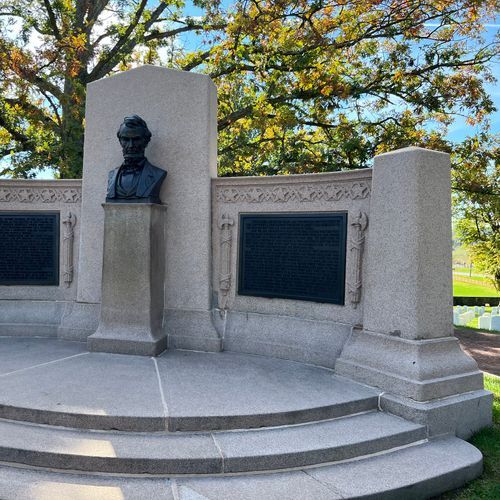
Set within Soldiers' National Cemetery, this granite memorial pairs a bronze bust of Abraham Lincoln with bronze tablets, one carrying the full text of the Gettysburg Address. It's a quiet place to read the speech near the ground it dedicated. Lincoln actually spoke a short walk away on the crest of the hill, just past the iron fence in neighboring Evergreen Cemetery, not at the Soldiers' National Monument as long believed.

Point of interestCemetery Ridge & Visitor Center

This state memorial stands on Cemetery Ridge, part of the Union line that held during the final day of fighting at Gettysburg. It sits in a cluster of monuments near the Copse of Trees and the High Water Mark, where Pickett's Charge was turned back. Pair a stop here with a walk to the Pennsylvania Memorial, whose observation deck looks out across the open fields the Confederate assault crossed.

Point of interestCemetery Ridge & Visitor Center

The largest state monument on the Gettysburg battlefield honors the more than 34,000 Pennsylvania soldiers who fought here in July 1863. It rises along Cemetery Ridge, where the Union line held on July 2, and bronze tablets around its base list the soldiers' names by regiment. Stairs inside lead up to an observation deck with wide views across the field toward the Codori Farm and the Copse of Trees.

Point of interestSeminary Ridge

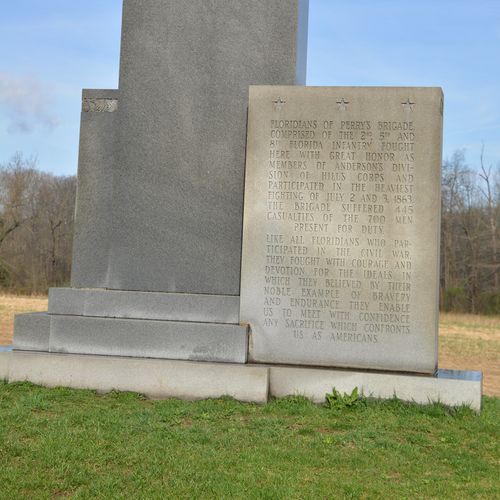
This tall monument on Seminary Ridge honors the Florida soldiers who fought at Gettysburg. It was a late addition to the battlefield: Florida chapters of the United Daughters of the Confederacy, joined by local supporters, pushed to raise it in the 1960s, around the battle's centennial. It sits a short walk from the Virginia Memorial and the James Longstreet Monument, so it fits easily into a stroll along the Confederate line.

Point of interestSeminary Ridge

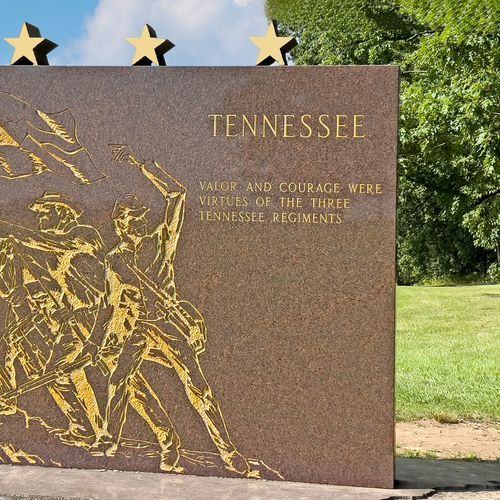
Soldiers etched into granite, one figure on the front and one on the back, mark Tennessee's memorial among the Confederate monuments on Seminary Ridge. Backed by years of effort from Tennessee organizations and carved in Italy, it was dedicated in 1982 in a heavy downpour that kept the planned speeches from being read. The North Carolina Memorial stands just steps away, and the Virginia Memorial is a short walk along the ridge.

Point of interestLittle Round Top & Devil's Den

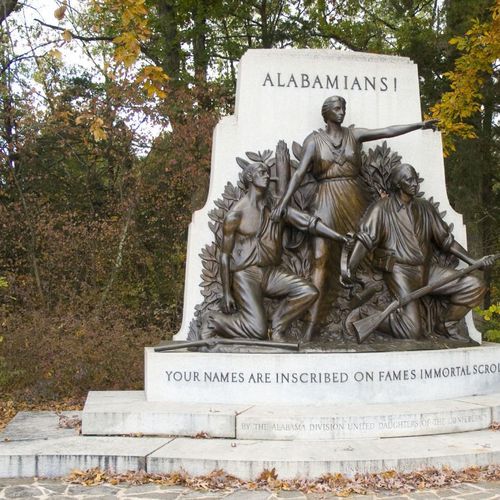
This stone state memorial honors the Alabama troops who fought at Gettysburg, its face marked with the outlines of soldiers. It was dedicated in 1933 after the Alabama chapter of the United Daughters of the Confederacy worked with park staff to place it on the field. Nearby stand other Confederate memorials, including those for Texas and Arkansas, along with the Bushman Farm and the Soldiers and Sailors of the Confederacy Monument.

Point of interestLittle Round Top & Devil's Den

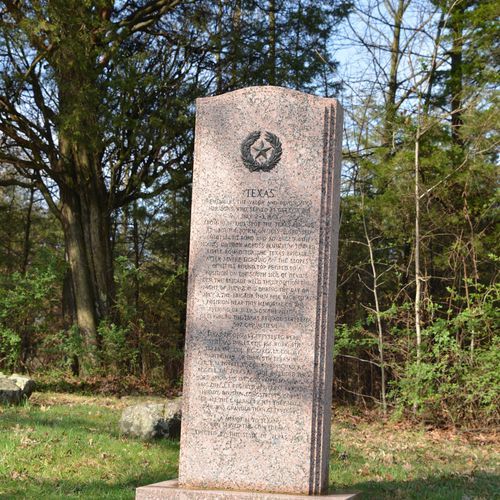
Set along the Confederate line near Warfield Ridge, this state memorial honors the Texas troops who fought at Gettysburg. It was placed during the Civil War Centennial, and its inscription was approved on the condition that it offer neither praise nor censure. Nearby Arkansas and Alabama memorials and the Bushman Farm make it a natural stop on a walk through the southern end of the battlefield.

Point of interestCulp's Hill & Spangler's Spring

Indiana's state tribute to its soldiers at Gettysburg stands in the lowland near Rock Creek, a short walk from Spangler's Spring. It came late, dedicated in 1971 after a Knox County choral group began asking in the 1960s why the state had no monument on the field, and planners weighed the risk of creek flooding when choosing its site. It pairs well with a stop at the spring and nearby Culp's Hill.

Point of interestCemetery Ridge & Visitor Center

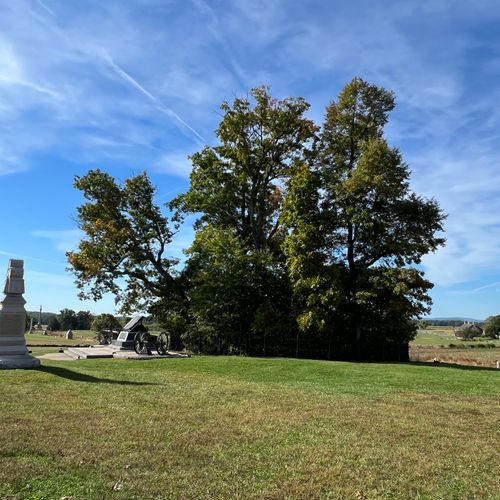
This cluster of trees on Cemetery Ridge stands at the center of one of the battlefield's most significant combat areas, closely tied to the fighting at the Angle and the spot remembered as the high-water mark. The High Water Mark of the Rebellion Monument sits right beside it, and the Armistead Marker, Cushing's Battery Monument and 72nd Pennsylvania Monument are all a short walk away. That makes it a natural starting point for exploring this part of the field.

Point of interestCemetery Ridge & Visitor Center

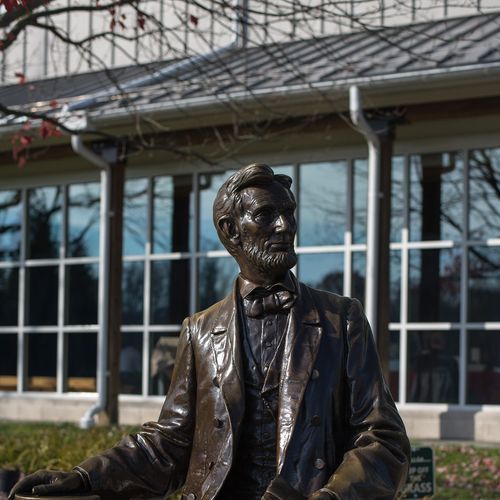
Steps from the museum and visitor center, this statue honors the president whose brief speech here gave the battlefield lasting meaning. Lincoln came to Gettysburg on November 19, 1863, to help dedicate the new cemetery for Union dead, delivering the Gettysburg Address that afternoon. It makes a convenient stop on your way to the museum, the Cyclorama painting or the Refreshment Saloon next door.
Point of interestLittle Round Top & Devil's Den

This granite monument with engraved text honors the soldiers and sailors of the Confederacy, and its placement on the battlefield required approval from the National Park Service. It stands among other Confederate memorials on the southern part of the field, a short walk from the Alabama Memorial and near the Texas and Arkansas memorials. The Bushman and Slyder farms, Warfield Ridge and Devil's Den are all within walking distance.

Point of interestLittle Round Top & Devil's Den

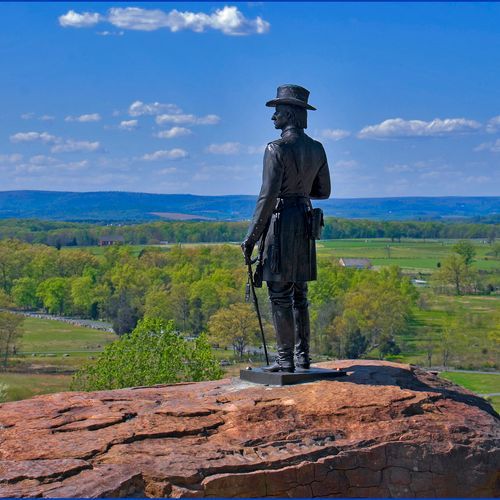
Standing on a big boulder that crowns Little Round Top, this statue honors the Army of the Potomac's chief engineer. While surveying the Union left, the general saw Confederates advancing toward the unoccupied hill and called for reinforcements, sending Colonel Strong Vincent's brigade and later General Stephen Weed's to hold it. His quick action helped save the Union line. Nearby monuments and Devil's Den are within a short walk.

Point of interestCemetery Ridge & Visitor Center

This small marker in the Angle on Cemetery Ridge notes where Confederate Brig. Gen. Lewis A. Armistead fell during Pickett's Charge. Leading his brigade of Virginia regiments over the stone wall, he ran forward on foot with his hat raised on the tip of his sword before he was mortally wounded and captured. It stands steps from Cushing's Battery Monument, the Copse of Trees and the High Water Mark of the Rebellion Monument.
Point of interestLittle Round Top & Devil's Den

This monument stands on the southern part of the Gettysburg battlefield, just steps from the Wheatfield. Rose Farm and the Peach Orchard are a short walk away, and Devil's Den and the Valley of Death are also within reach on foot. That makes it a convenient stop while exploring the fields and farms around Little Round Top.

Point of interestLittle Round Top & Devil's Den

This monument on Little Round Top marks where Col. Patrick Henry O'Rorke fell on July 2, 1863, while leading the 140th New York Infantry. Gen. Gouverneur Warren had pulled the regiment off its march toward Sickles' Third Corps and sent it up the hill to shore up the Union defense. Warren's statue stands a short walk away, and the 44th and 12th New York Monument is right next door.

Point of interestLittle Round Top & Devil's Den

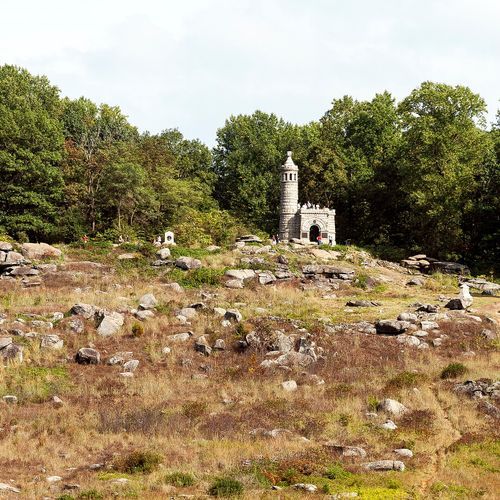
Dedicated in 1892, this stone monument on Little Round Top honors two New York regiments and includes an observation deck that offers a raised vantage over the surrounding battlefield. Below the hill lie the Valley of Death and Devil's Den, both a short walk away. The 140th New York Monument stands just steps off, and the Gouverneur K. Warren Statue and 20th Maine Monument are nearby, so it fits easily into a stroll around the summit.

Point of interestCemetery Ridge & Visitor Center

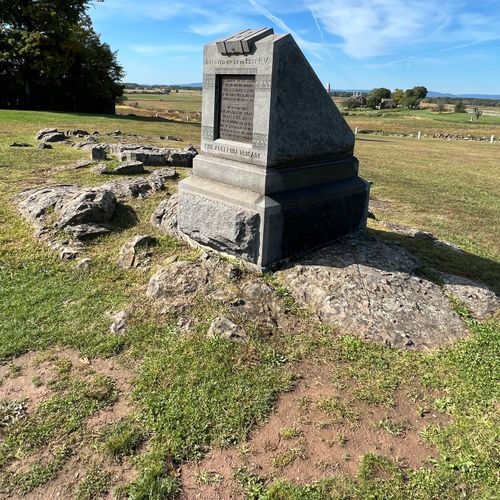
This monument marks the 72nd Pennsylvania's stand during Pickett's Charge, steps from The Angle and the Copse of Trees. Held in reserve at first, the regiment pushed up to the ridge crest and endured heavy fire from Confederates behind the stone wall, losing 44 killed and 146 wounded before helping retake the Union line. Its placement was disputed for years, since veterans wanted it near the wall where they had fought.

Point of interestCemetery Ridge & Visitor Center

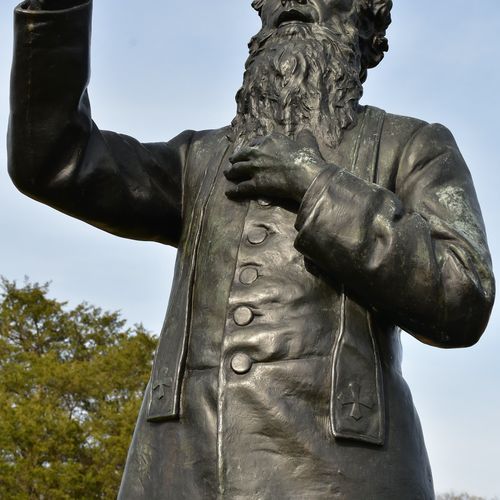
This bronze figure of a Civil War priest stands along Cemetery Ridge, the Union line at the center of the battlefield. It sits a short walk from the 1st Minnesota Monument and the Pennsylvania Memorial, whose observation deck gives a wide view over the ridge, with The Wheatfield and Trostle Farm farther south. Pair it with these nearby monuments on a walk along the ridge.

Point of interestLittle Round Top & Devil's Den

This monument stands where the 20th Maine's colors flew near the center of its line at the far left end of the Union position on Little Round Top. On July 2, 1863, Col. Joshua L. Chamberlain's men held off the 15th and 47th Alabama, and when their ammunition ran low they fixed bayonets and charged downhill, keeping the Union flank from being turned. Chamberlain himself spoke at its dedication in the late 1880s.

Point of interestLittle Round Top & Devil's Den

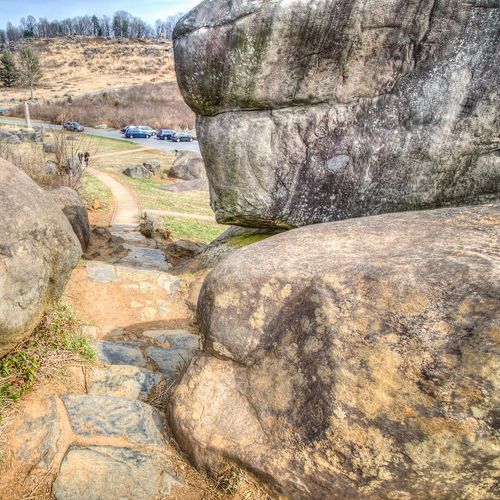
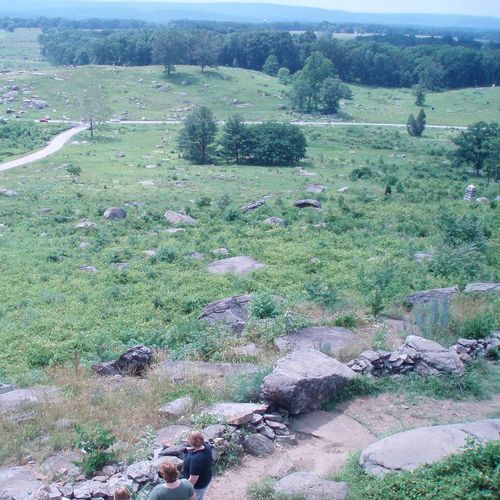
This jumble of giant boulders caps the southern end of Houck's Ridge, facing Little Round Top to the east. The rocks are ancient diabase split apart by frost, and the area's ominous nickname predates the battle, drawn from local tales of a huge snake living in the crevices. Union and Confederate troops fought fiercely among these rocks on July 2, 1863, and a Confederate sharpshooter's position and the Slaughter Pen are steps away.

Point of interestLittle Round Top & Devil's Den

This boulder-strewn stretch of the Plum Run valley lies just below Devil's Den, in the shadow of Little Round Top. On July 2, 1863, the 40th New York fought here and pushed Georgia regiments of Benning's Brigade back toward the rocks of Devil's Den. Photographs taken after the battle show Confederate dead among these boulders, and enough of the rocks remain unchanged that you can match the old images to the scene today.

Point of interestLittle Round Top & Devil's Den

This low ground between Houck's Ridge and Little Round Top saw some of the last fighting on the battle's second day. Around dusk, exhausted Confederate brigades pushed through from the Wheatfield until Pennsylvania Reserves under Samuel Crawford counterattacked and drove them back to Stony Hill. Today the valley is best taken in from the summit of Little Round Top, looking west past Devil's Den, or up close from the nearby Slaughter Pen.

Point of interestLittle Round Top & Devil's Den

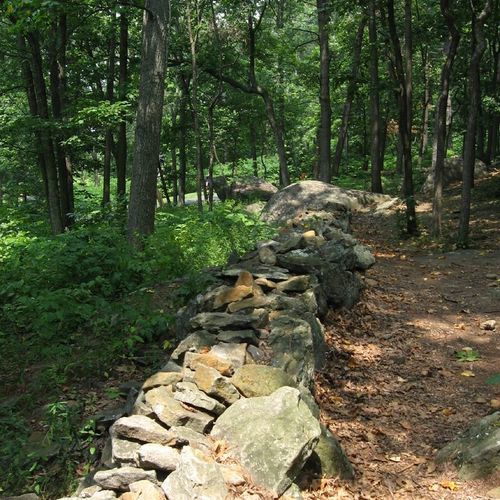
This boulder-strewn hill anchored the far left of the Union line on July 2, 1863, when Strong Vincent's brigade turned back repeated Confederate assaults up its rocky slope, including the 20th Maine's well-known stand against the 15th Alabama. Monuments to the 20th Maine, 140th New York and others stand close by, along with a statue of Gouverneur K. Warren. Stone breastworks built after the fighting still line the hill, and the crest looks out over Devil's Den and the Valley of Death.

Point of interestSeminary Ridge

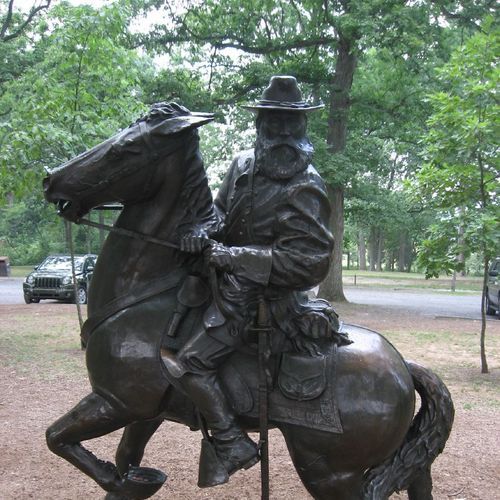
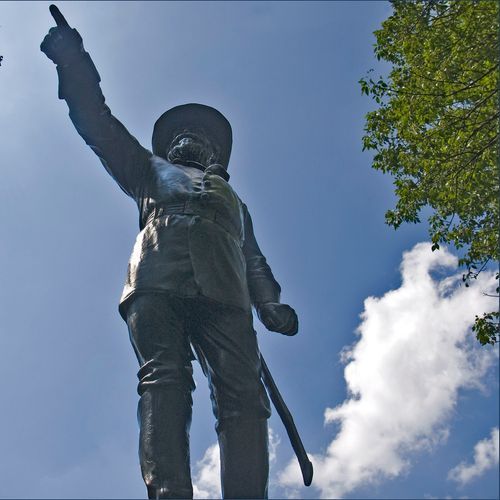
This bronze equestrian statue shows the Confederate general astride his horse, with both rider and mount facing east. Unusually, it rests directly on the ground with no pedestal or visible supports. Added in 1998, long after most of the battlefield's monuments, it is still listed on the National Register. The Louisiana and Mississippi memorials and the observation tower in Pitzer Woods are a short walk away.

Point of interestLittle Round Top & Devil's Den

This 20-acre field on the Rose family farm saw some of the most confused fighting of July 2, 1863, as eleven brigades traded attacks and counterattacks for about two hours, earning it the name "Bloody Wheatfield." Rose Woods and the low rise of Stony Hill border it to the west, with Devil's Den to the south. Nearby stand the Irish Brigade Monument and paths toward the Valley of Death and The Peach Orchard.

Point of interestCemetery Ridge & Visitor Center

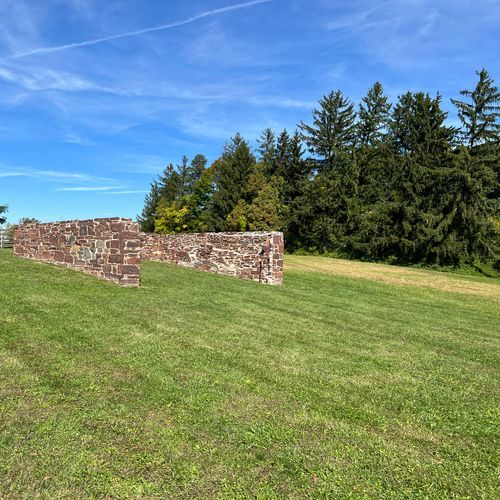
A low farmers' stone wall on Cemetery Ridge bends twice at right angles here, and Union troops sheltered behind it on July 3. During Pickett's Charge, about 200 Confederates under Brig. Gen. Lewis A. Armistead crossed the wall to exploit a break in the line before converging fire stopped them. Today you can walk the wall among regimental monuments, the Armistead Marker and the nearby Copse of Trees.

Point of interestCemetery Ridge & Visitor Center

This monument marks where Battery A, 4th U.S. Artillery, led by 22-year-old Lt. Alonzo Cushing, held the center of the Union Second Corps line on Cemetery Ridge. After the Confederate bombardment wrecked the battery, the wounded Cushing and a few surviving gunners pushed their last usable cannon up to the stone wall at the Angle and fired canister into Pickett's advancing infantry. The Copse of Trees and the Armistead Marker stand just steps away.

Point of interestFirst Day's Battlefield

This marker stands on the First Day's Battlefield where Union Major General John F. Reynolds was killed early in the fighting on July 1, 1863. It sits close to McPherson Barn and McPherson Ridge, so it pairs well with a walk among the nearby first-day sites, including the John Burns and John Buford monuments. Reynolds is also honored with an 1872 bronze statue in the national cemetery and a portrait on the Pennsylvania State Memorial.

Point of interestFirst Day's Battlefield

This monument stands on the ground where the first day of fighting at Gettysburg took place, steps from McPherson Ridge and the McPherson Barn. The John F. Reynolds Death Monument and the John Buford Monument are a few minutes away on foot, and the Railroad Cut lies a little farther on, so it fits easily into a walking tour of the battle's opening day.

Point of interestFirst Day's Battlefield

This spot sits on the First Day's Battlefield, where the opening clashes of the battle unfolded. It lies a short walk from McPherson Barn, McPherson Ridge and the John Buford Monument, and the John F. Reynolds Death Monument and John Burns Monument are also close by. Stopping here pairs easily with a walk among these nearby monuments and landmarks of the first day's fighting.

Point of interestFirst Day's Battlefield

This stop marks the headquarters of Gen. Robert E. Lee, commander of the Confederate Army of Northern Virginia at Gettysburg. His staff here included aides such as Lt. Col. Walter H. Taylor and Maj. Charles Marshall, along with artillery chief Brig. Gen. William N. Pendleton. The site sits on the First Day's Battlefield, a short walk from the Railroad Cut, McPherson Ridge and the John F. Reynolds Death Monument, so it fits easily into a tour of the opening day's fighting.

Point of interestFirst Day's Battlefield

This monument stands on the ground where the first day of fighting at Gettysburg unfolded, just steps from McPherson Barn and the open slope of McPherson Ridge. Nearby you'll also find the Railroad Cut, the John Burns Monument and the marker where General John F. Reynolds fell, so it fits naturally into a walk exploring the battle's opening hours.

Point of interestFirst Day's Battlefield

This stop lies on the First Day's Battlefield, close to Oak Ridge and its observation tower, where you can climb for a wider view over the fields where the battle opened. It pairs well with a walk to the nearby 11th Pennsylvania Monument, known for its statue of the regiment's dog Sallie, and the Eternal Light Peace Memorial a little farther on.

Point of interestFirst Day's Battlefield

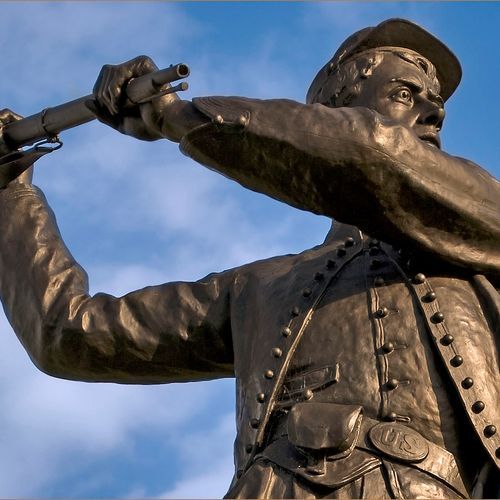
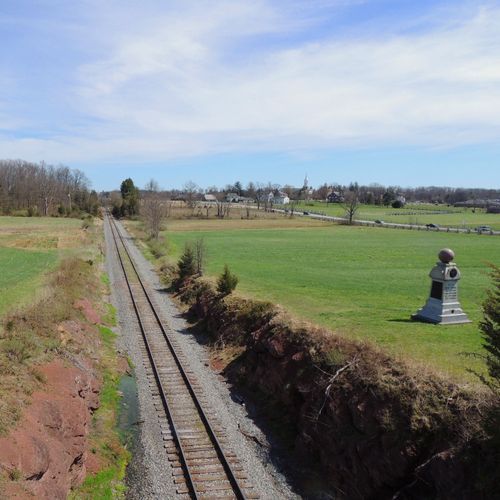
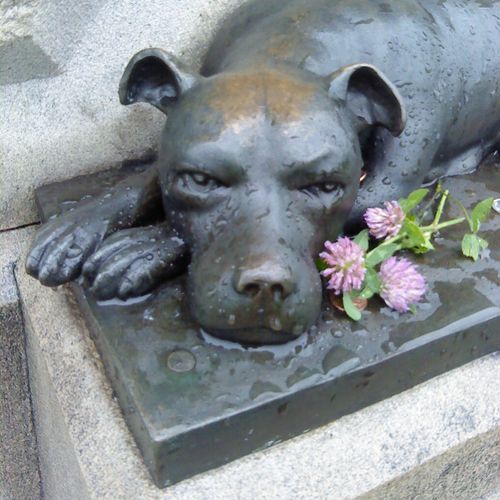
This regimental monument near Oak Ridge also honors Sallie, a terrier the soldiers adopted as a puppy in 1861 and made their mascot. She attended roll call and drills, marched near the front of parades, twice passing before Abraham Lincoln, and charged ahead barking in battles from Antietam to Gettysburg. The Oak Ridge Observation Tower is a short walk away for a wider look at the first day's battlefield.

Point of interestLittle Round Top & Devil's Den

The densely wooded, boulder-strewn summit just south of Little Round Top is the highest ground on the Gettysburg battlefield, and the fighting on its slopes in 1863 earned Medals of Honor. A wooded trail from South Confederate Avenue climbs past regimental monuments to the top, where an old observation tower once stood. Look for the Devil's Kitchen, a rock formation with a small cave, on the lower slopes.

Point of interestCulp's Hill & Spangler's Spring

This wooded, boulder-strewn hill anchored the Union right flank, where Brig. Gen. George S. Greene's brigade held strong breastworks against Confederate assaults on July 2 and 3, 1863. Remains of the Union earthworks run along the slope toward Spangler's Spring, and recent clearing of brush has opened views closer to the battle-era landscape. An observation tower and a statue of Greene stand near the summit.

Point of interestCulp's Hill & Spangler's Spring

This bronze portrait statue stands near the top of Culp's Hill, just steps from the observation tower, so it pairs easily with a climb for a wider view of the battlefield. From here, short walks lead to the Henry W. Slocum Equestrian Monument, Pardee Field and Spangler's Spring, making it a convenient stop while exploring the Union line on this end of the field.

Point of interestCulp's Hill & Spangler's Spring

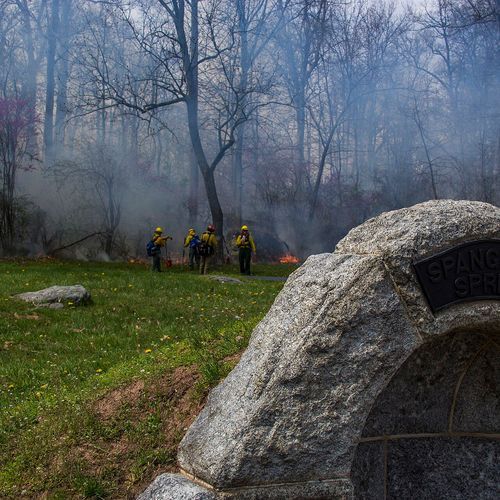
This open hillside near Spangler's Spring was cleared ground at the time of the battle, and the park works to keep it that way. Shrubs and invasive plants had crept back over the slope until crews used prescribed fire to clear them, letting native grasses return to hold the soil and shelter wildlife. Standing here gives a sense of how open the terrain was in 1863, with Culp's Hill and its observation tower a short walk away.

Point of interestCemetery Hill & Soldiers' National Cemetery

The Baltimore Pike crosses a shallow saddle here, splitting this steeper eastern slope from the rest of Cemetery Hill above Gettysburg's town center. For several weeks after the battle, state militiamen camped in tents on the slope, guarding the field from looters, gathering abandoned weapons and helping the area's hospitals. The equestrian statues of Generals Howard and Hancock, the Evergreen Cemetery Gatehouse and Soldiers' National Cemetery are all a short walk away.

Point of interestCemetery Hill & Soldiers' National Cemetery

This bronze statue shows Union general Winfield S. Hancock on horseback atop Cemetery Hill, the high ground just south of town. It stands a short walk from the matching equestrian statue of Oliver O. Howard and the arched Evergreen Cemetery Gatehouse. It pairs well with a stroll to East Cemetery Hill or into Soldiers' National Cemetery, where the Soldiers' National Monument rises among semicircles of graves.

Point of interestEast Cavalry Field

This monument rises on open fields midway between the opposing cavalry lines, where the final Confederate mounted charge under Lee and Hampton was turned back. Union horsemen led by McIntosh and Custer struck the advancing columns from the front and both flanks, and the fight became a bloody hand-to-hand melee before the Confederates fell back to Cress Ridge. Standing here, you can trace the ground where the day's heaviest fighting ended.

Point of interestEast Cavalry Field

This memorial column stands on East Cavalry Field, where on the afternoon of July 3, 1863, Union cavalry under General David Gregg kept Jeb Stuart's Confederate horsemen from swinging around the Federal flank toward Meade's rear. Gregg's troopers, joined by George Armstrong Custer's Michigan Brigade, clashed with Stuart's men around the nearby Rummel Farm. The Michigan Cavalry Brigade Monument is a short walk away, so this makes a good starting point for exploring the field.

Point of interestEast Cavalry Field

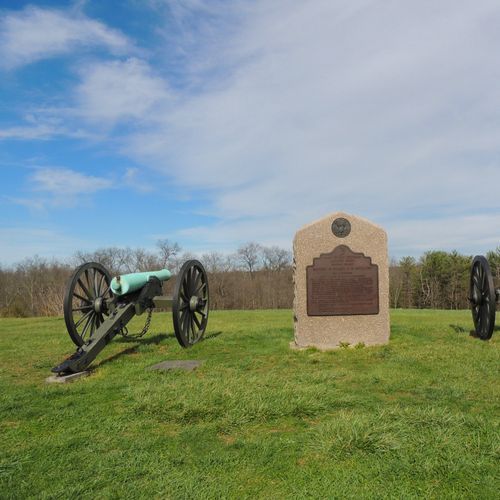
On the afternoon of July 3, 1863, Union cavalry under Gen. David Gregg clashed here with Jeb Stuart's Confederate horsemen, blocking their attempt to swing around the Union flank and strike Meade's rear while Pickett's Charge unfolded to the west. A tour road leads past monuments and cannon set among farm fields, including the Rummel Farm and a memorial to Custer's Michigan Cavalry Brigade.

Point of interestCulp's Hill & Spangler's Spring

Stop 13 on the park's auto tour, this spot lies a short walk from Culp's Hill and its observation tower. A small parking area on Colgrove Avenue, just past East Confederate Avenue, holds only a handful of cars. Monuments to the 1st Maryland Potomac Home Brigade and the 107th New York Volunteer Infantry stand close by, and the Indiana Memorial and Pardee Field are a brief stroll away. Restrooms sit down a path beside Geary Avenue.

Point of interestLittle Round Top & Devil's Den

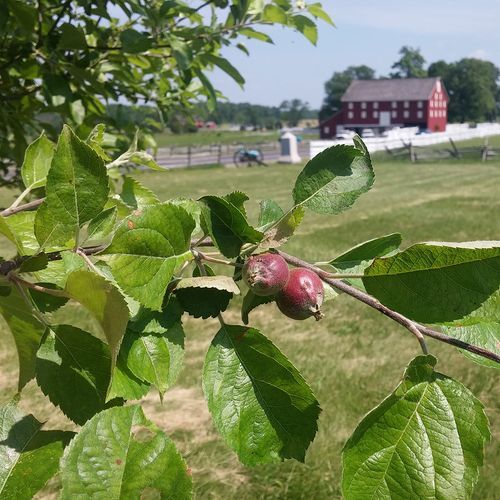
Peach trees still grow on the land of farmer Joseph Sherfy, where heavy fighting broke out on July 2, 1863. Union General Dan Sickles had pushed his III Corps forward from Cemetery Ridge to hold this rise, creating an exposed salient lined with artillery. That evening, Confederate brigades under Kershaw and Barksdale struck the position and drove the Union troops back. The Wheatfield and the Rose and Sherfy farms lie a short walk away.

Point of interestFirst Day's Battlefield

This ridgeline lies at the heart of the First Day's Battlefield, the ground where the fighting at Gettysburg began. Several landmarks of that opening day are a short walk away, including the McPherson Barn and monuments to John Buford, John Burns, and General John F. Reynolds. With the Railroad Cut also close by, the ridge makes a natural starting point for exploring the first day's fighting on foot.

Point of interestFirst Day's Battlefield

This ridge north of town saw heavy fighting on the first day of the battle, July 1, 1863. A short metal observation tower nearby gives a view over the ridge, the surrounding fields and south toward Gettysburg. Regimental monuments line Doubleday Avenue, including those to the 11th Pennsylvania, 12th Massachusetts, 16th Maine and 83rd New York, and Iverson's Pits and the Eternal Light Peace Memorial are a short walk away.

Point of interestEast Cavalry Field

This farmstead sits on East Cavalry Field, the part of the Gettysburg battlefield set aside to remember the mounted fighting east of town. It lies a short walk from the Michigan Cavalry Brigade Monument and the Gregg Cavalry Shaft, so it pairs well with a stop at either. The open fields around it give a sense of the ground the horsemen crossed.

Point of interestLittle Round Top & Devil's Den

This stretch of South Seminary Ridge runs south to the Alabama Memorial, the southernmost state monument on the battlefield, near the marker for the right flank of the Confederate line. Memorials to Arkansas, South Carolina, Georgia and Texas stand close by. The Warfield farmstead sits along the ridge, and the park plans to return the property to how it looked in 1863. Nearby Longstreet Tower gives a raised view over the surrounding fields.

Discover more activities and plan your visit in the Parka app

Download Parka — It's Free

Take it with you

The Parka app keeps your maps, trails and plans working with no signal. What you save here is already there.

Download on the App Store

Explore All 83 Parks

Browse parks by region and discover your next adventure