Grand Canyon National Park guide · 1 min read
Tusayan Ruin and the Canyon's Native Peoples
Three miles west of Desert View Watchtower, Tusayan Pueblo holds the remains of a small Ancestral Puebloan village.
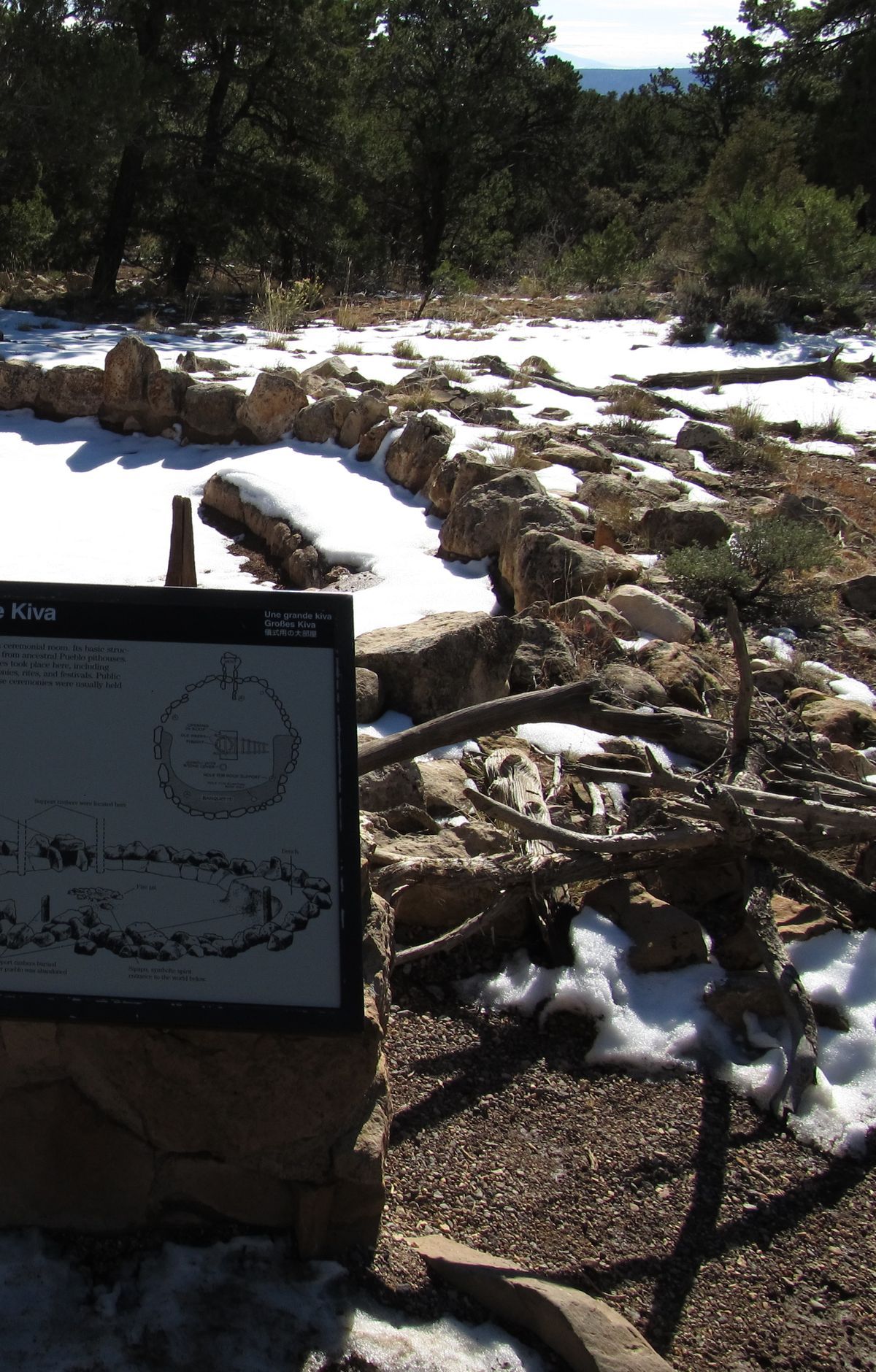
What survives today are low stone outlines that trace where rooms once stood side by side, along with a round kiva. Standing among these walls gives a sense of how compact and close-knit the settlement was.
A self-guiding trail loops around the whole site, and it is short and easy. The path covers about a tenth of a mile and stays relatively flat, so most visitors can walk it at a relaxed pace. Footpaths run along both sides of the row of rooms, letting you see the layout from more than one angle. Take time at the round kiva, whose shape stands apart from the rectangular rooms around it.
The site also includes a museum, and at times a Native American Artisan Market sets up here. Sponsored by Native Americans for Community Action, the market offers authentic arts and crafts made by Native artists. Shopping here puts handmade work directly in front of you and connects your visit to living cultures as well as ancient ones.
Continue east to Desert View Watchtower to see how this heritage shaped later building at the canyon. Set on the rim, the tower echoes the architecture of the ancestral Puebloans of the Four Corners region. Inside, the round Kiva Room has large windows alternating with stone pillars, a circular log roof and a flagstone floor, with a ladder rising from floor to ceiling at its center.