Joshua Tree National Park guide · 1 min read
Where Mojave Meets Colorado Desert
Two desert ecosystems meet in this park, the Mojave and the Colorado, and elevation is the main factor separating them.
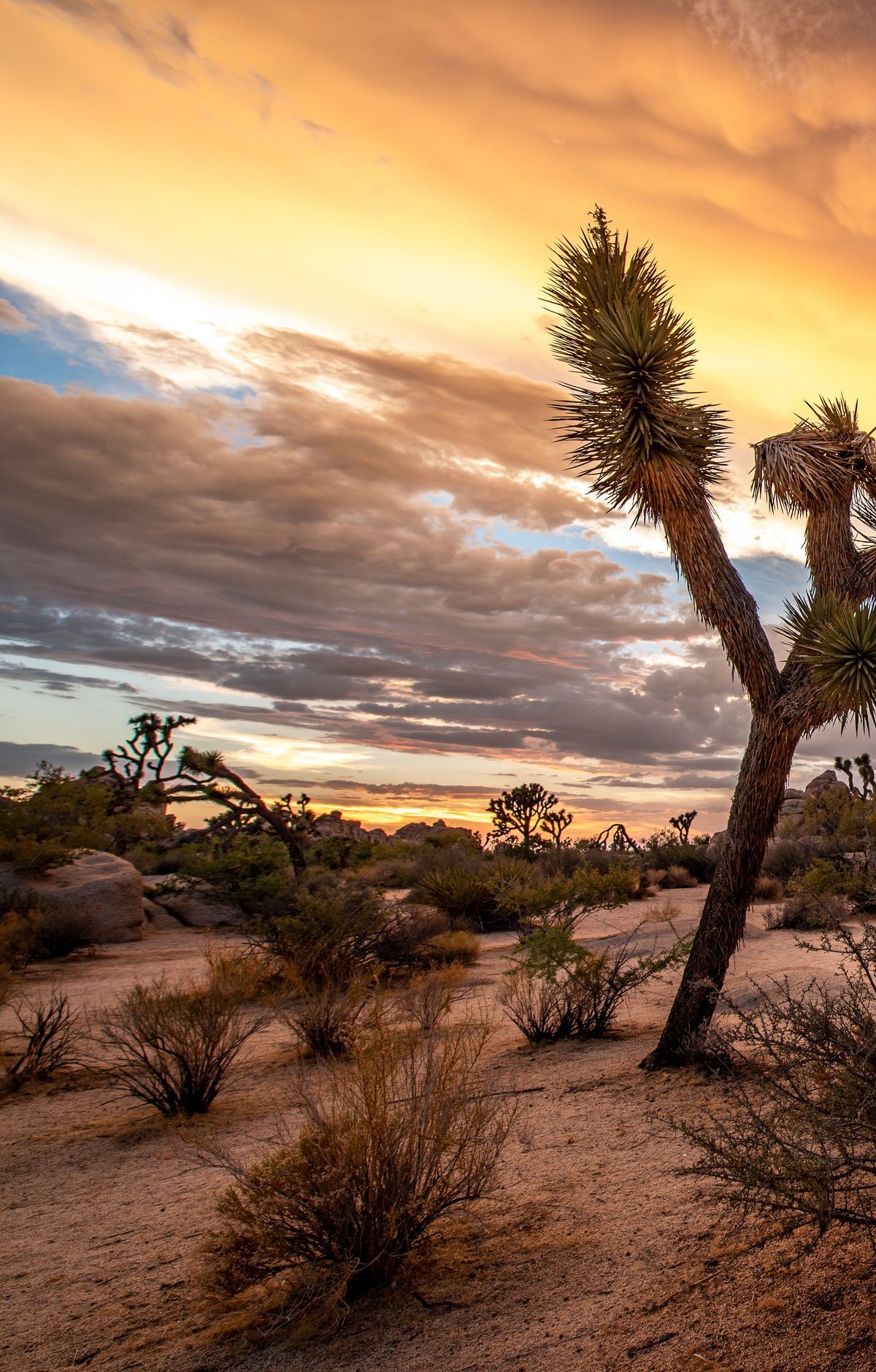
Across nearly 800,000 acres, the land climbs from 536 feet in the extreme southeast corner to 5,814 feet atop Quail Mountain. Conditions can differ a great deal from one spot to another.
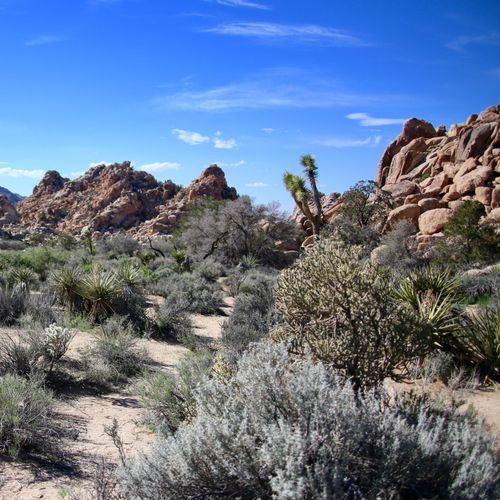
The western half of the park sits above 3,000 feet and belongs to the Mojave Desert. The air here is cooler, and around 4,000 feet winter can feel quite chilly. This is the home of the Joshua tree, which is actually a yucca rather than a true tree. Its growth is slow, roughly one inch a year, but a Joshua tree can eventually top 40 feet.
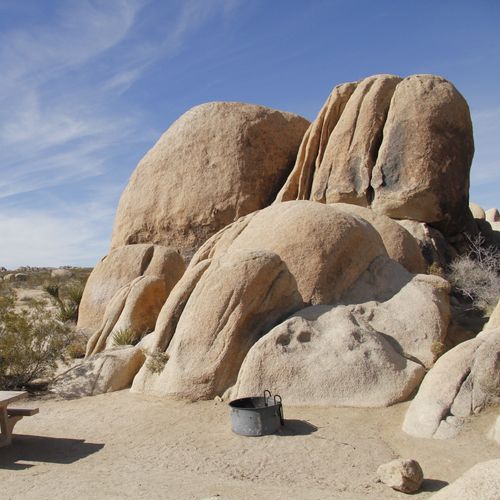
Much of the western landscape is made of bare rock hills, many of them strewn with loose boulders. Climbers and scramblers are drawn to these boulder piles. Skull Rock stands among these formations, and paired with the Joshua trees it gives the scene an otherworldly look.
The Colorado Desert covers the eastern part of the park, below about 3,000 feet. It is lower, hotter, and drier, with creosote bush, ocotillo, and cholla cactus growing across the land. The Cholla Cactus Garden is a named stop in the park, and cholla is one of the plants that defines this lower desert.
Five fan palm oases are scattered across the park. Water appears naturally at these few spots, and wildlife gathers around them in the dry landscape.