Parka
Manassas National Battlefield Park

Things to Do in Manassas National Battlefield Park

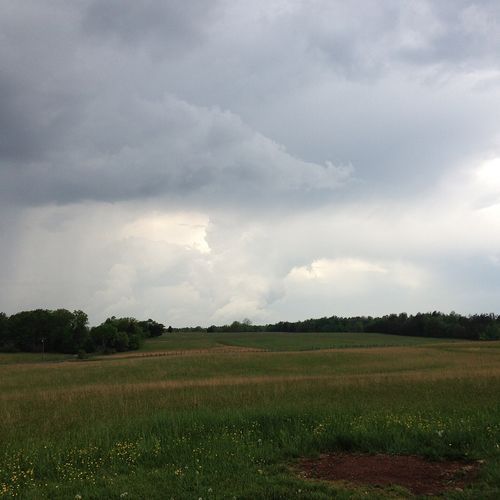
Manassas National Battlefield Park rewards visitors who come ready to read the land. Spread across roughly 5,000 acres of rolling Virginia Piedmont about 25 miles west of Washington, D.C., this is where two of the Civil War's pivotal clashes unfolded, and the best way to grasp their scale is behind the wheel. A self-guided driving tour of about twenty miles links the key sites of both First and Second Manassas, pausing at open ridgelines and wide fields where you can follow the battle lines. Henry Hill, near the visitor center, offers one of the park's most commanding views. In season, ranger-led walking tours bring the action into sharp focus. Admission is free, and the grounds are open from dawn to dusk.

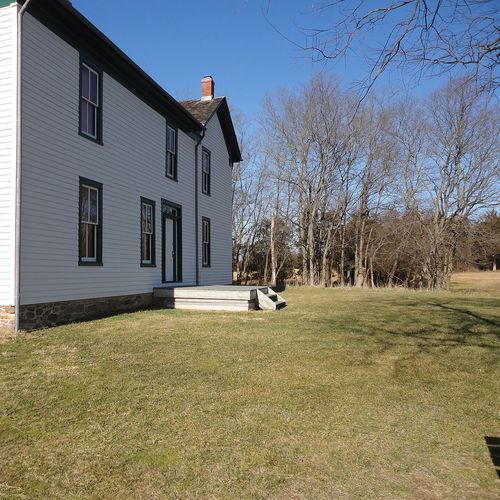
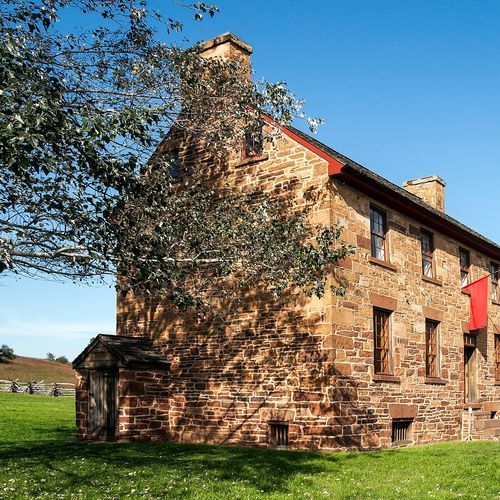
The park's standout landmarks are well worth a slower look. The Stone House is the battlefield's most recognizable building and one of only three structures that survived the war. It served as a field hospital during both battles, and its scarred walls still carry that weight. The Groveton School House tells a quieter story about the community that rebuilt and educated its children after the fighting ended. Portici, a plantation site, served as General Joseph Johnston's headquarters during the first battle and saw a cavalry fight during the second. Along the park's eastern edge, Bull Run and the Stone Bridge frame some of the most photographed scenery on the battlefield.

There are no swimming beaches here. Instead, the creek banks and ponds draw anglers, birders, and wildlife watchers. Mature hardwood forests, meadows, and open grasslands support a lively mix of species, and white-tailed deer are a common sight at dawn and dusk. Families can pick up the TRACK Trail, a Kids in Parks program that turns a walk into a guided adventure. Riders can follow bridle trails across the historic landscape. This is hallowed ground, so kite flying, ball games, frisbee, and sunbathing are not allowed. Summer days can be hot and humid, so bring plenty of water, sunscreen, and a hat.

Point of interestChinn Ridge

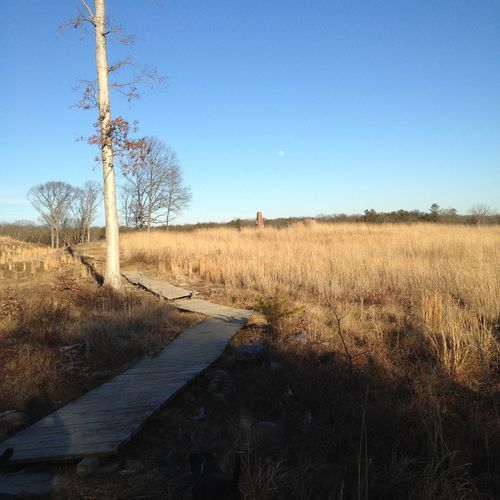
Only stone foundations and the bases of the chimneys remain of the Chinn family's farmhouse, which stood on a high ridge overlooking the Warrenton Turnpike and Young's Branch. Fighting swept across the property in both battles of Manassas, and the house twice became a field hospital. It survived until 1950, when it was taken down because it was collapsing. The family who farmed here owned enslaved people, and an information panel at the site tells their story.

Point of interestHenry Hill & Visitor Center

One of only three buildings in the park that stood during the Civil War, this house sits beside the crossroads of today's Route 29 and Sudley Road, which follow the old Warrenton Turnpike and Sudley Road. That location put it at the center of both battles of Manassas. Before the war it served as a tavern for wagoners and travelers. A short paved path leads to a wayside overlooking the house, and the surrounding grounds are mostly level dirt and grass.

Point of interestBrawner Farm & Deep Cut

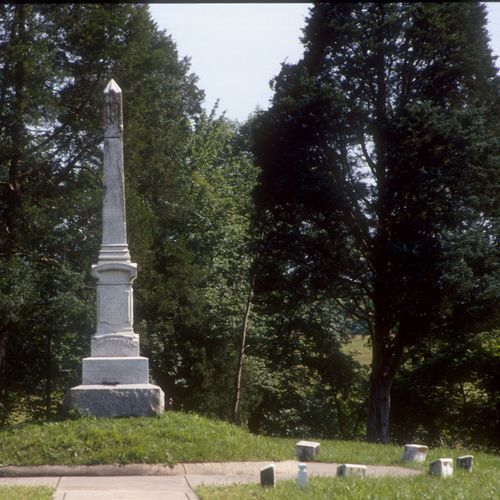
After the battles at Manassas, many Confederate soldiers lay in shallow battlefield graves until a local ladies' memorial association recovered their remains and reburied an estimated 500 of them on this knoll. Few were ever identified, and only two graves carry individual headstones. A white marble obelisk dedicated in 1904 stands over the site. The cemetery is a stop on the driving tour, and a footpath leads to the nearby Dogan House.

Point of interestBrawner Farm & Deep Cut

This farmhouse, rented by the Brawner family during the Civil War, sat in the middle of heavy fighting on the evening of August 28, 1862, when Jackson's troops attacked Union brigades moving along the turnpike. Digs around the home have turned up more than 27,000 artifacts, from battle bullets to pottery left by Native Americans. Line yourself up with the north wall to stand where the 19th Indiana's firing line stretched east.

Point of interestHenry Hill & Visitor Center

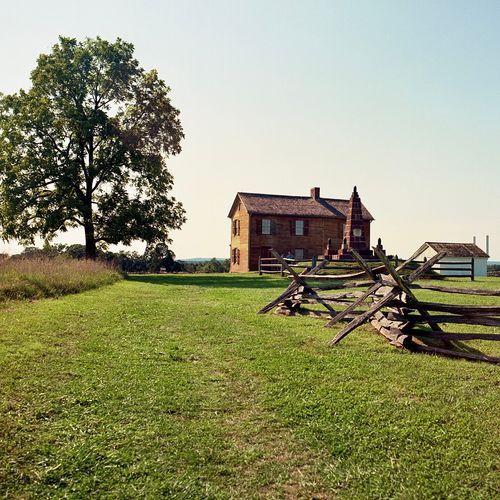
This farmhouse marks the spot where the First Battle of Bull Run reached its climax in July 1861. Federal cannon fire aimed at Confederate sharpshooters struck the original home and mortally wounded Judith Henry, an elderly, bedridden widow and the battle's only known civilian death. The house standing today was built by the family after the war and later served as the battlefield's first museum. Monuments and artillery positions surround it on Henry Hill.

Point of interestMatthews Hill & Sudley

On the morning of July 21, 1861, more than 13,000 Union soldiers waded across Catharpin Run at this crossing on their way to the First Battle of Manassas, and many retraced their steps in retreat just hours later. The ford lies near where Catharpin Run joins Bull Run, reached by a loop trail that passes the Thornberry House and returns along the wartime Sudley Road trace. Use care crossing busy Sudley Road from the parking area.

Point of interestBrawner Farm & Deep Cut

This rise above the Warrenton Turnpike, today's US 29, held artillery from both sides during Second Manassas. On August 28, 1862, six Union guns of Battery B, 4th U.S. Artillery, unlimbered here to answer Confederate cannon as fighting erupted at the Brawner Farm. Two days later, Confederate gunners on the same ground fired into the flank of the massive Union assault at the Deep Cut. A small lot provides access to the Brawner Farm Loop Trail.

Point of interestMatthews Hill & Sudley

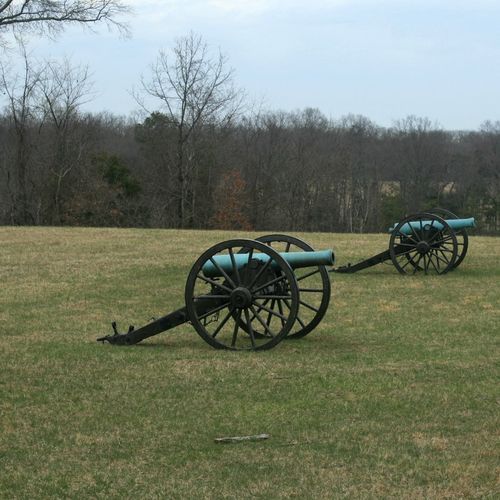
Opening clashes of First Manassas on July 21, 1861, played out on this hill, where Union troops seemed close to victory before the battle turned. A mowed path climbs to a line of Union cannons at the crest, with views over the Stone House toward Henry Hill and much of the battlefield. Panels recall the Matthew family farm, whose house sheltered wounded soldiers, including Major Sullivan Ballou.

Point of interestHenry Hill & Visitor Center

On this spot on Henry Hill stood the log home of James Robinson, a free Black man who bought the land in 1840 and became one of the wealthiest free African Americans in Prince William County. The house survived the fighting at First Manassas while his family sheltered nearby. Today, stones trace the outline of the house inside a split rail fence, a short walk from the Henry House and the battlefield monuments.

Point of interestStone Bridge & Portici

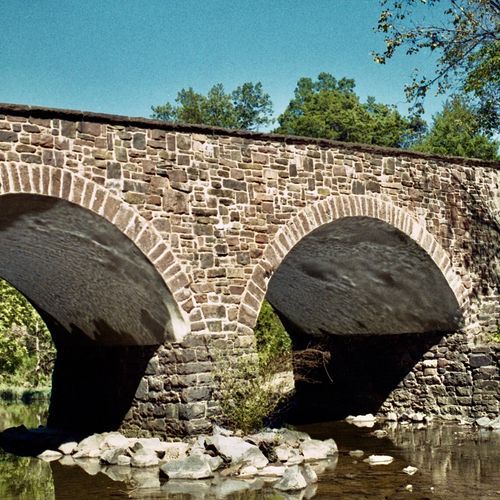
This stone span over Bull Run carried the turnpike across the steep-sided stream and played a key role in both battles of Manassas. Confederates blew up the original in 1862, and retreating Union troops later destroyed a wooden replacement built on its abutments; the bridge you see today was rebuilt by 1884. A wide paved path leads to an overlook, and a much steeper stretch descends to the bridge, where a loop trail crosses and follows the creek.

Point of interestHenry Hill & Visitor Center

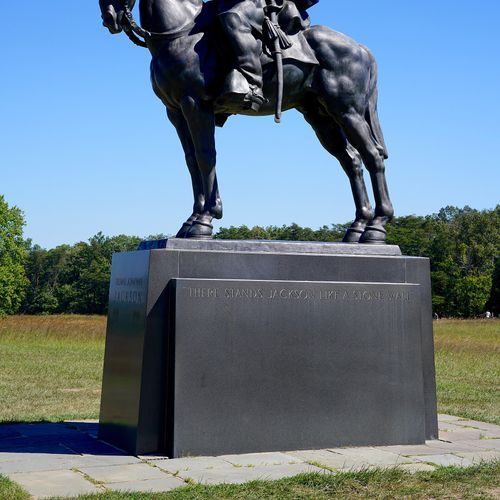
A large bronze statue of Thomas J. Jackson on horseback stands on the open plateau of Henry Hill, where his brigade of Virginians held firm against the Union advance at First Manassas in July 1861 and earned him the nickname "Stonewall." Virginia funded the monument after planning for the battle's 75th anniversary, and it was dedicated in 1940. Markers for Bee and Bartow, the Henry House and the visitor center all sit a short walk away across the surrounding battlefield.

Point of interestChinn Ridge

A granite boulder hauled from the Webster family home in Marshfield, Massachusetts, marks where Colonel Fletcher Webster, elder son of statesman Daniel Webster, was mortally wounded on August 30, 1862. He fell on the eastern crest of Chinn Ridge leading the 12th Massachusetts toward overrun Union guns. His surviving soldiers returned in 1914 to set the stone, and a nearby panel recounts a Confederate soldier who brought him water and later returned his wallet to his family.

Point of interestChinn Ridge

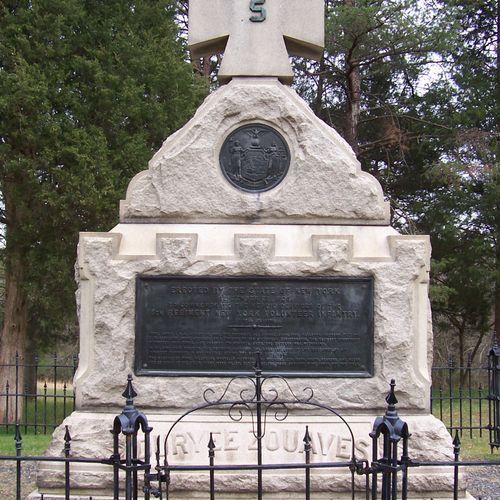
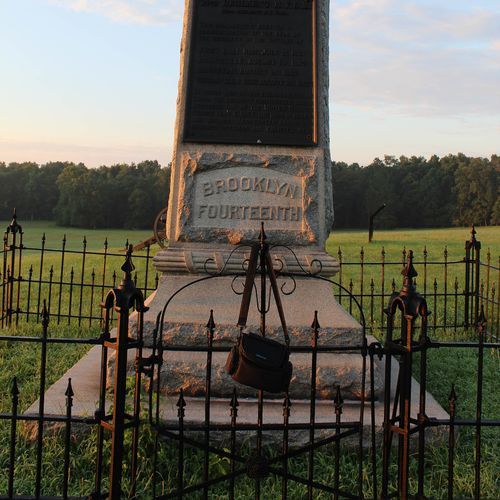
Two castellated monuments of granite and bronze stand along New York Avenue, honoring the 5th New York Volunteer Infantry (Duryee Zouaves) and the 10th New York Volunteer Infantry (National Zouaves). These regiments put up a determined stand here against the Confederate attack at Second Manassas. Each monument is ringed by an ornamental iron fence, and a granite obelisk to the 14th Brooklyn rises on the hill just to the west.

Point of interestHenry Hill & Visitor Center

On Henry Hill, this spot marks where Confederate artillery stood during the First Battle of Bull Run, a short walk from the Stonewall Jackson, Francis Bartow and Bernard Bee monuments. Look across the open ground toward the Union positions at Rickett's and Griffin's batteries to see how close the opposing guns were. It fits easily into a loop from the nearby visitor center past the Henry House.

Point of interestHenry Hill & Visitor Center

This spot on Henry Hill recalls Union Captain Charles Griffin's artillerymen, ordered forward from Dogan Ridge during the First Battle of Bull Run without the infantry support they wanted. Griffin shifted two smoothbore howitzers to fire along the Confederate flank, then held fire when a superior mistook troops in the nearby woods for Union supports. They were Confederates, and their charge captured the guns, a turning point in the battle. Ricketts' Battery and the Henry House are a short walk away.

Point of interestHenry Hill & Visitor Center

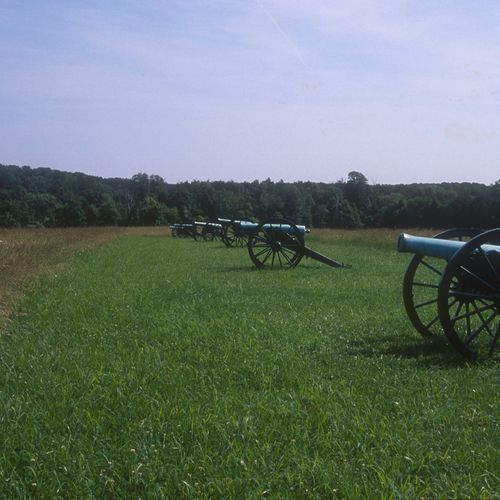
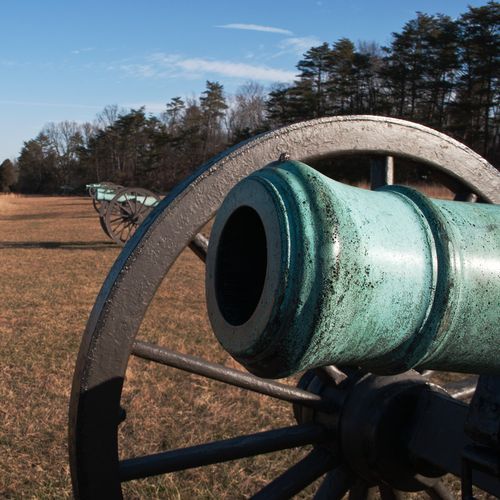
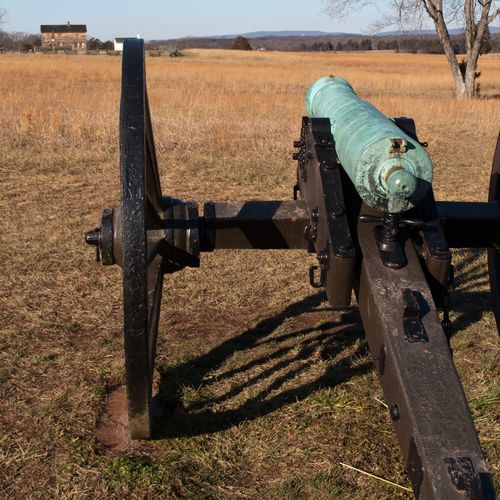
Cannon on the western slope of Henry Hill mark where Union artillery was ordered forward during the First Battle of Manassas, within close range of the Confederate guns despite the captains' objections. The six guns here came under heavy fire, and the position changed hands three times as Jackson's brigade charged. Shots from this spot struck the nearby Henry House, mortally wounding Judith Carter Henry, and the house and Patriots' Monument stand in view.

Point of interestBrawner Farm & Deep Cut

This small frame house is the last original building left from Groveton, a crossroads village caught in the middle of the Second Battle of Manassas. After their home burned in 1860, widow Lucinda Dogan and her five children joined smaller outbuildings to form this dwelling. Opposing armies fired across it repeatedly, leaving bullet and shell scars. It is among just three Civil War era buildings still standing in the park, close to Groveton Confederate Cemetery.

Point of interestStone Bridge & Portici

This small family burial ground lies in the battlefield's Stone Bridge and Portici section, a quieter part of the park away from the main cluster of monuments. It marks the resting place of the Ball family, one of the local households whose land later became part of the battlefield. The Henry Hill Visitor Center, along with the artillery positions and monuments on Henry Hill, is within walking distance.

Point of interestMatthews Hill & Sudley

More than 70 members of the Carter family were buried here over two centuries, in rows of graves with no inscribed headstones. Among them are Landon Carter Jr., who built the Pittsylvania estate around 1765, and Dr. Isaac Henry, whose widow Judith died on Henry Hill during the First Battle of Manassas. In the 1880s, relatives enclosed the plot with a wall built from stones salvaged from the ruined mansion's foundation and outbuildings.

Point of interestHenry Hill & Visitor Center

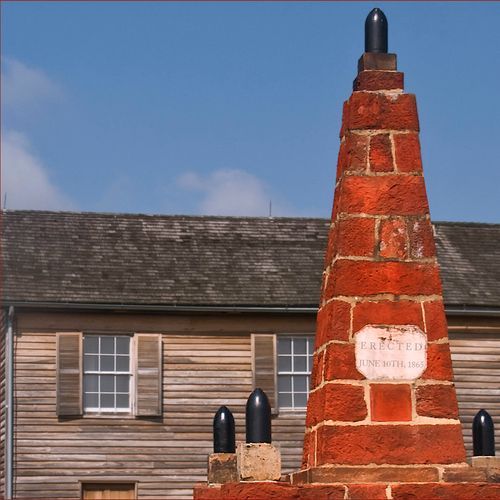
One of the oldest surviving monuments on any Civil War battlefield, this memorial honors the Union soldiers who died at First Manassas. Federal troops stationed at nearby Fairfax Court House, many fresh from burial duty on this field, built it in June 1865 as one of their last acts before going home. It stands beside the Henry House on the open plateau where some of the fiercest fighting of both battles took place.

Point of interestBrawner Farm & Deep Cut

This monument honors a Union regiment recruited largely from Brooklyn, known as the "Fourteenth Brooklyn" even after it became the 84th New York Volunteers. The unit fought at both battles here: supporting artillery on Henry Hill in 1861, then in 1862 clashing with Hood's Confederates at dusk along the Warrenton Turnpike before joining Porter's assault at the Deep Cut the next day, losing 129 men. Groveton Confederate Cemetery and the New York Monuments are a short walk away.

Point of interestBrawner Farm & Deep Cut

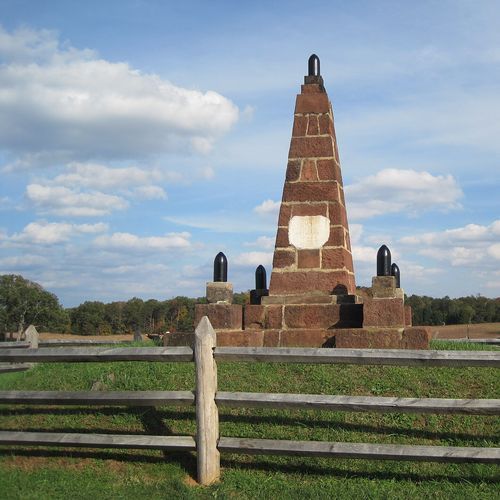
One of the battlefield's earliest memorials, this brown sandstone obelisk stands beside the Deep Cut, where Union troops assaulted Confederate lines along the unfinished railroad grade during Second Manassas. Union soldiers raised it in 1865, dedicating it the same day as its twin on Henry Hill, to honor the men who fell in the August 1862 fighting. Stacked artillery shells and cannonballs once decorated it but have since disappeared.

Point of interestBrawner Farm & Deep Cut

This ground was the scene of a Union assault during the Second Battle of Manassas in 1862, close to the Groveton Monument and the grade of the Unfinished Railroad. Folds in the slopes hid the advancing Union troops from Confederate eyes until they were only yards away. Archeologists have recovered many unfired bullets here, including a cluster behind a single rock, marking where soldiers sheltered before Confederate artillery drove them back.

Point of interestHenry Hill & Visitor Center

A stone block with a bronze tablet marks where a Savannah-born colonel was mortally wounded while leading the 7th Georgia Infantry in the First Battle of Manassas, making him the first Confederate officer killed on the field. Look close by for a small granite octagon, the base of an earlier marker raised in the fall of 1861 and possibly the first Civil War monument. The Stonewall Jackson statue stands just to the south.

Point of interestHenry Hill & Visitor Center

A tall shaft of white marble on Henry Hill marks where Confederate Brig. Gen. Barnard E. Bee of South Carolina was mortally wounded during the First Battle of Manassas. While rallying his scattered brigade, Bee pointed toward Thomas J. Jackson's Virginians and compared them to a stone wall, giving Jackson his lasting nickname. Bee died the next day, the highest-ranking officer killed in the battle. The Jackson monument stands just steps away.

Point of interestMatthews Hill & Sudley

This low rise next to Matthews Hill served as the headquarters of Union Maj. Gen. John Pope during the Second Battle of Manassas in August 1862. From here Pope directed his Army of Virginia against Stonewall Jackson's troops, who were dug in along an unfinished railroad grade. On the final day he wrongly concluded that the Confederates were retreating, just before Longstreet's counterattack drove his army from the field. The Stone House is a short walk away.

Point of interestChinn Ridge

This granite marker on Chinn Ridge honors the Texans who fought at Second Manassas in 1862, along with the Georgia, South Carolina and later Arkansas units that served beside them in Hood's Brigade. Its inscription tells how the brigade spearheaded Longstreet's huge counterattack on August 30, routing the 5th and 10th New York. A relatively recent addition to the battlefield, it stands a few steps from the Fletcher Webster Memorial.

Point of interestChinn Ridge

This open ridge saw some of the heaviest sustained fighting of Second Manassas, when Union troops made a desperate stand here on August 30, 1862, and slowed the Confederate counterattack. It also played a part in Confederate flank attacks during First Manassas. A wheelchair-accessible path runs along the crest with interpretive signs, passing the Fletcher Webster Memorial and the Texas Brigade Monument, while the foundations of the Chinn house, twice a field hospital, sit nearby.

Point of interestBrawner Farm & Deep Cut

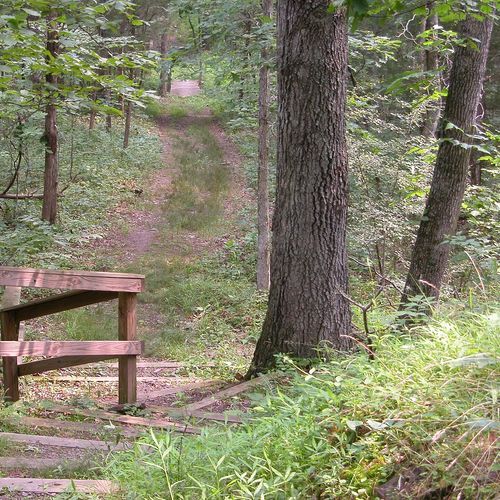
In the 1850s the Manassas Gap Railroad began grading its own line toward Alexandria, using the labor of enslaved local people and Irish immigrants, but money ran out before any track was laid. During Second Manassas, Stonewall Jackson's Confederates used the abandoned railbed as a ready-made defensive line. The grade still runs through the woods here, and a loop trail with interpretive markers traces the fighting, including Cuvier Grover's Union bayonet charge that briefly broke through.

Discover more activities and plan your visit in the Parka app

Download Parka — It's Free

Take it with you

The Parka app keeps your maps, trails and plans working with no signal. What you save here is already there.

Download on the App Store

Explore All 83 Parks

Browse parks by region and discover your next adventure