Organ Pipe Cactus National Monument guide · 2 min read
The Organ Pipe Cactus at Its Northern Edge
Organ Pipe Cactus National Monument sits at the northern limit of where Stenocereus thurberi grows on its own.
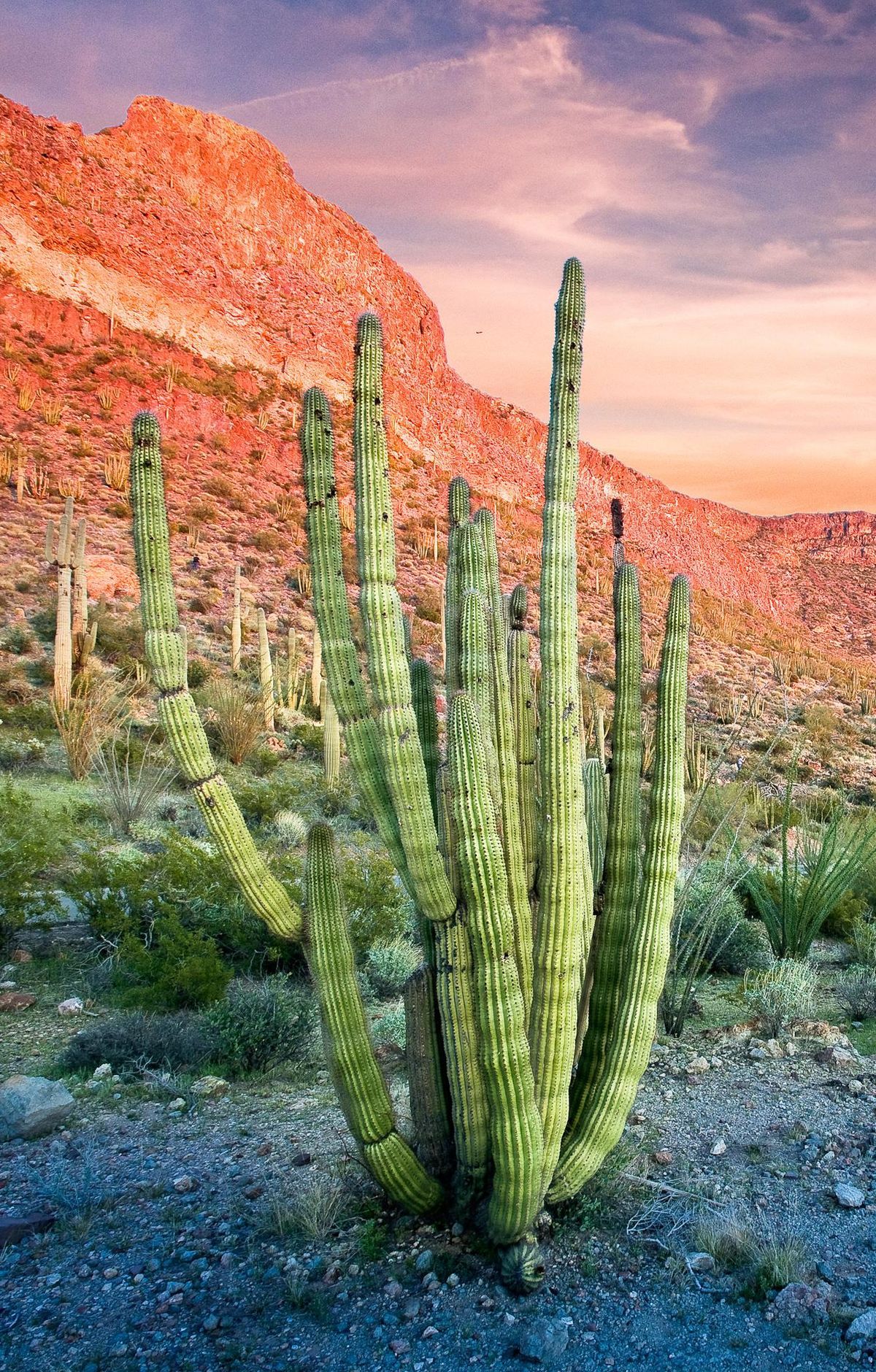
The cactus ranges far south into Mexico, but here in southern Arizona it reaches its edge. This is the only place in the United States with large wild stands, and the monument is named for it.
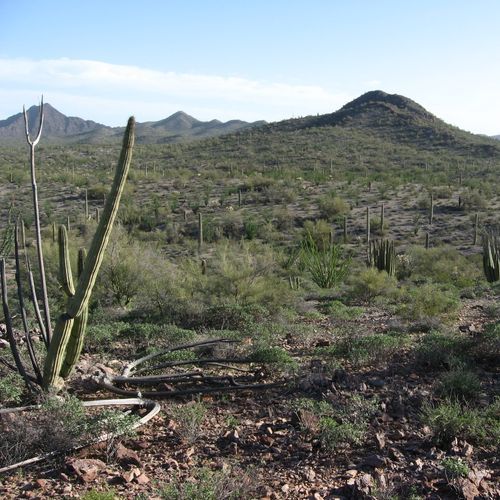
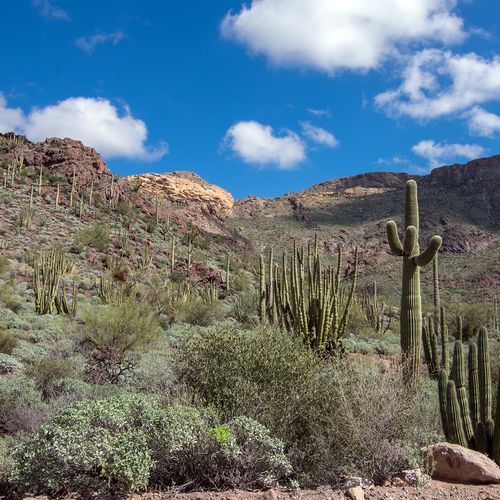
Look for organ pipes on rocky hillsides that face south. Those slopes soak up the most sun, and that warmth matters in winter, when a severe frost can kill an entire plant. Milder freezes kill the tender growth at the tips of the stems. When the stem starts growing again, it leaves a ring-shaped dent, so a wavy or bumpy pipe is a record of past cold snaps. Frost sets the limit of this cactus's range.
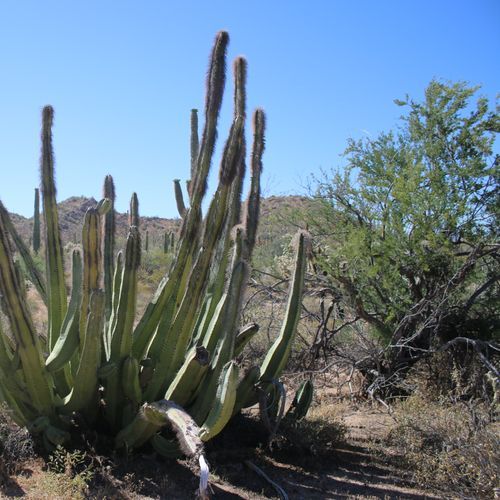
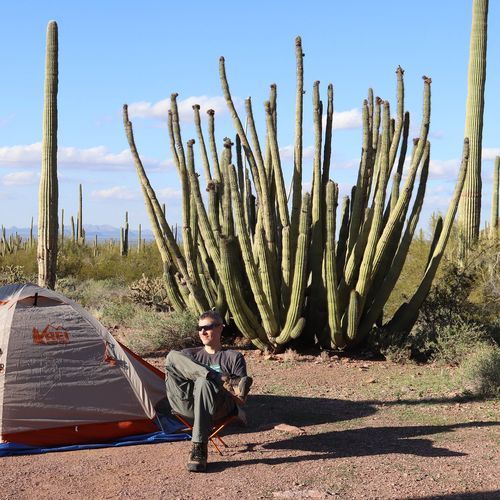
An organ pipe sends many upright stems from a single base, each five to fifteen feet tall with twelve to nineteen ridges and clusters of black spines. Saguaros grow alongside it but have thicker trunks and branch higher up. In midsummer, white to pink flowers open after dark and last into the following day. A single plant can live for about 150 years.
The cactus feeds the desert around it. The endangered lesser long-nosed bat and the white-winged dove drink its nectar overnight and into the next day, pollinating the flowers as they go. Bats, birds, bighorn sheep and people eat the round, reddish fruit and scatter the seeds.
The monument also protects the senita, another columnar cactus found nowhere else in the country. It clings to a few frost-free spots near the Mexican border, especially Senita Basin, and shows thinner stems, fewer ribs and tufts of whitish hair at the tips. To see organ pipes, take one of the monument's two scenic drives or its hiking trails, and watch for them at the foot of Pinkley Peak and around Tillotson Peak Wayside.