Petrified Forest National Park guide · 2 min read
How Triassic Logs Became Rainbow Stone
Between about 225 and 207 million years ago, in the Late Triassic, this corner of what is now northeastern Arizona lay close to the equator.
It sat along the southwestern margin of Pangaea, a single huge landmass, and the air was warm and humid. Highlands rose to the south and southeast, a sea lay to the west, and streams ran across the flat lowland between them. Those streams carried stream sediment, fallen trees, and other plants and animals into their channels.
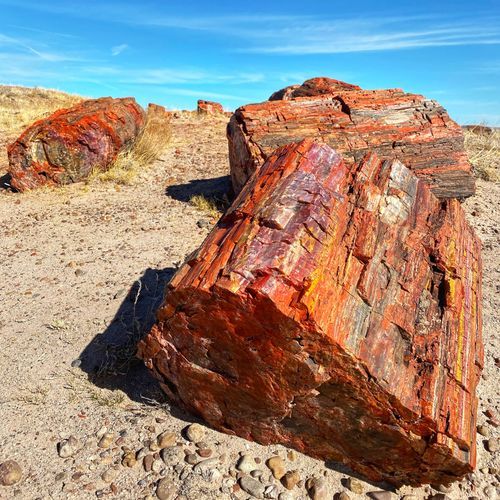
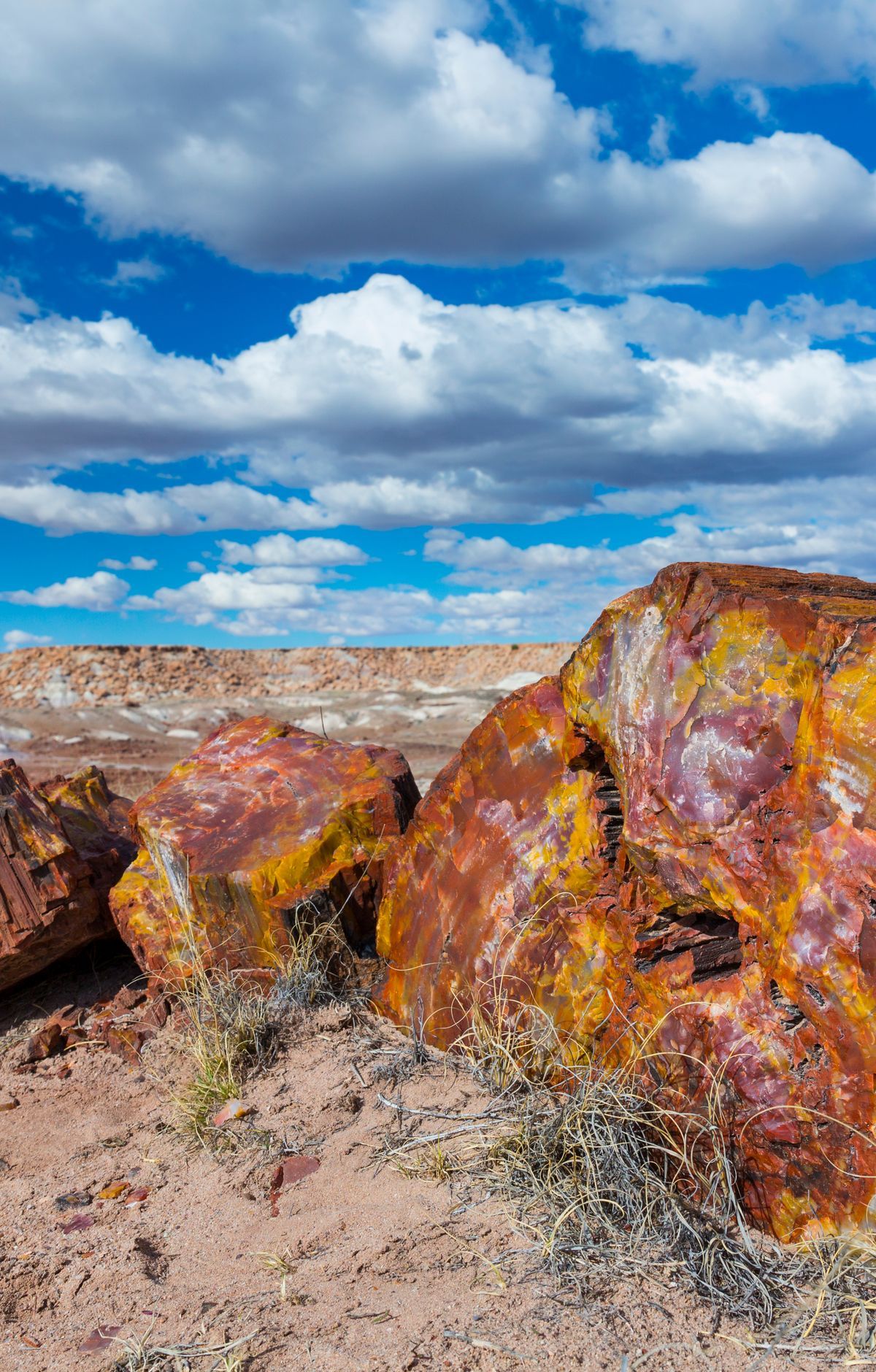
In those channels, logs piled up and were buried from time to time under sediment that contained volcanic ash. The ash turned out to be the key ingredient. As groundwater seeped through it, silica dissolved out and traveled into the buried wood. There it crystallized as quartz, bit by bit taking the place of the organic material. Most trunks kept their outer shape, even though their interiors changed completely.
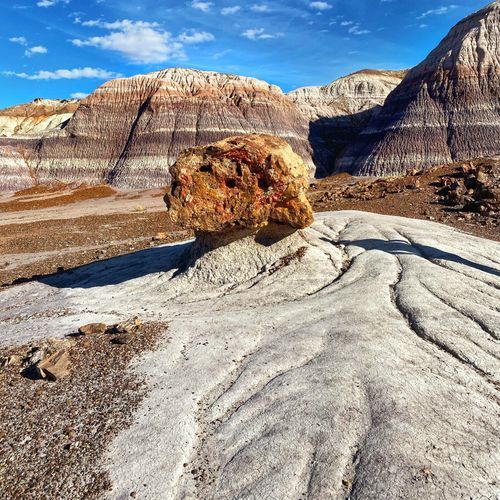
These fossil-bearing layers are part of the Chinle Formation, which also makes up the banded Painted Desert badlands. Traces of iron oxide and other substances blended with the silica, producing the wide range of colors in the wood. Scientists regard the park as the finest record of the Late Triassic anywhere on Earth, and paleontologists here find about two new animal species in an average year.
The densest concentration of petrified wood lies toward the south end of the park. Stop at Rainbow Forest Museum before you walk the Giant Logs Trail, a 0.4 mile loop that begins just behind the museum. The museum's paleontology exhibits explain the Late Triassic landscape, how wood turned to stone, and the plants and animals that lived here long ago.
Near the top of the Giant Logs Trail, a log called Old Faithful is almost ten feet wide at its base. Agate Bridge is another fossilized tree that visitors can see in the park. Please leave the petrified wood in place so that others can enjoy it too.