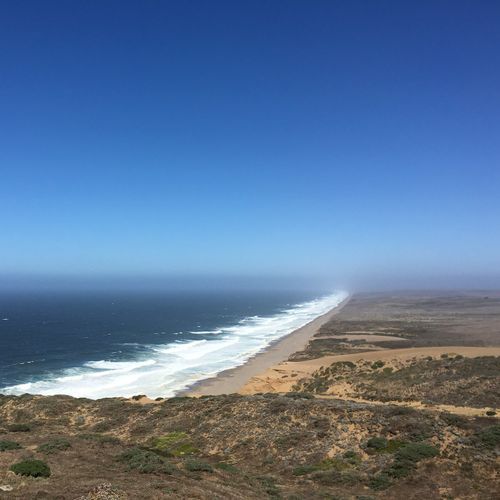
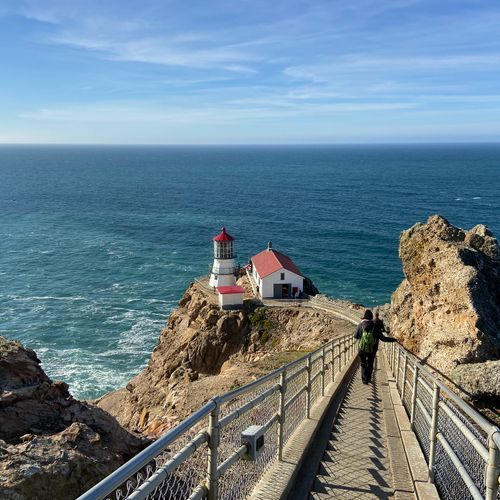
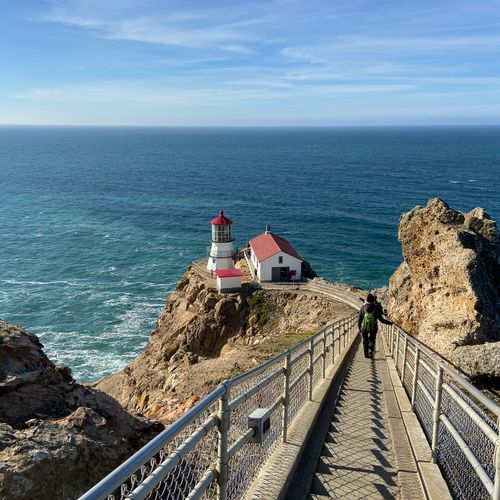
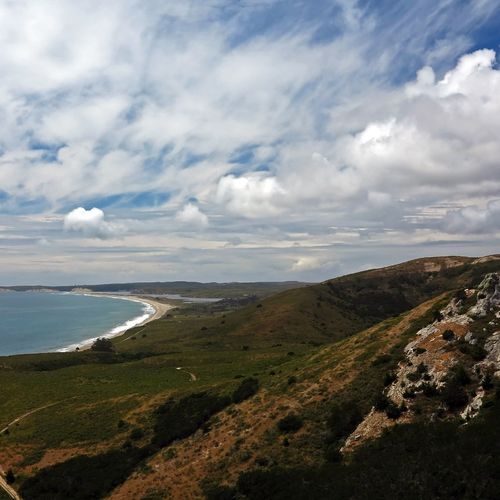
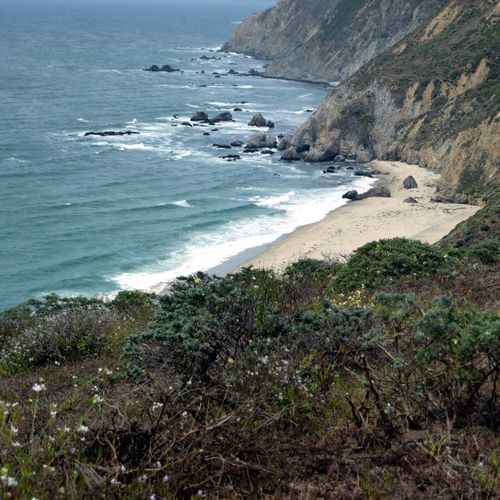
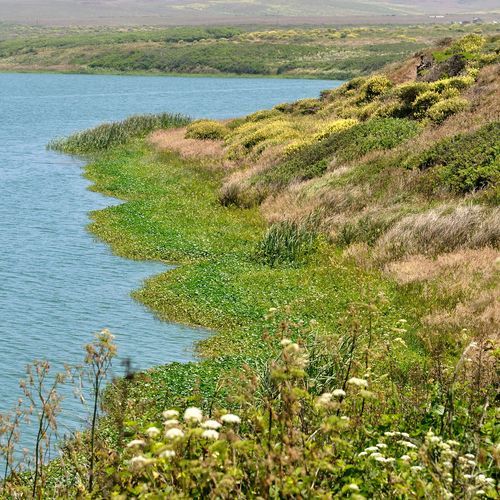
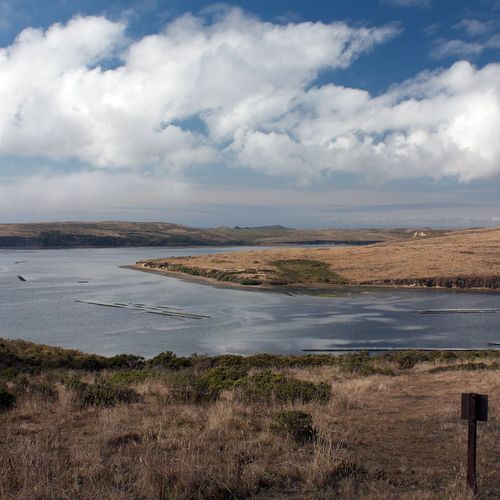
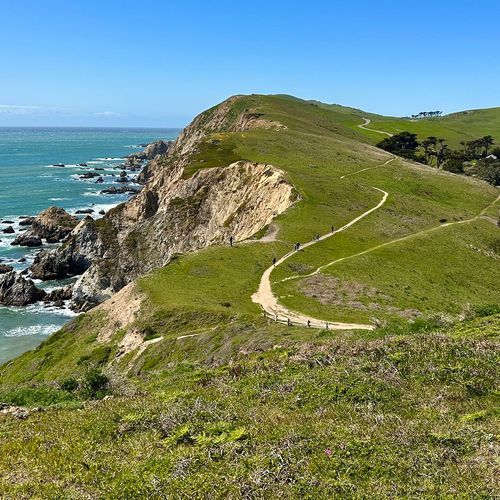
This overlook sits on the high, rocky headlands at the tip of the Point Reyes peninsula, where the land juts far out into the Pacific. The area around the headlands is one of the best places on the California coast to spot whales, so bring binoculars and scan the open water. The Lighthouse Visitor Center is a short walk away. Conditions here are often very windy or foggy, so dress in layers.
Things to Do in Point Reyes National Seashore
Point Reyes rewards the traveler who arrives with more than hiking boots. The peninsula juts boldly into the Pacific, and its most dramatic vantage points sit right at the edge of the continent. The historic lighthouse, perched on a wind-scoured headland far below its parking area, ranks among the most memorable stops in Northern California, and on clear winter days it doubles as a front-row seat for migrating gray whales. Nearby, the Chimney Rock area offers sweeping views back across the headlands, and in the colder months elephant seals haul out on the sand beneath the cliffs, bellowing and jostling in a spectacle few visitors expect so close to a major city. Tule elk roam the open grasslands of the northern reaches, so a single day can take in elk, seals and whales.
The beaches here are wild rather than manicured, and that is precisely their appeal. Long, windswept strands stretch for miles along the outer coast, ideal for beachcombing, sunset strolls, and watching shorebirds work the surf line, while more sheltered coves along the bay side invite a slower pace. Strong currents and cold water make the ocean beaches better for wandering than swimming, but low tide opens up rocky shelves teeming with anemones, sea stars, and crabs. Birders will find the estuaries and lagoons extraordinarily rich, especially during fall and winter migration.
For a different perspective, slip a kayak onto Tomales Bay, a long, quiet tidal inlet bordering the seashore's eastern edge, where outfitters in Inverness and Marshall rent boats and lead guided paddles. Drakes and Limantour esteros also open to paddlers outside the spring harbor seal pupping season. The geology itself is an attraction: the San Andreas Fault runs right through the park, and you can still see evidence of the ground lurching nearly 20 feet during the 1906 earthquake. Start at the barn-style Bear Valley Visitor Center for maps, current closures, and free ranger-led programs, then explore the charming nearby villages of Point Reyes Station, Olema, and Inverness for local food and a taste of rural west Marin.

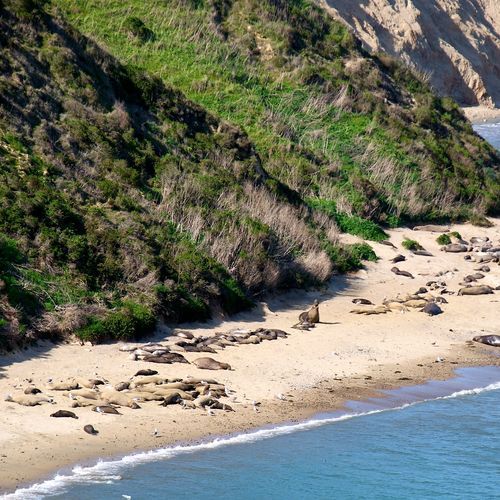
Perched above Drakes Bay near Chimney Rock, this spot looks down on a beach where northern elephant seals haul out to give birth and mate. Winter is the busiest season, when bulls with huge drooping noses fight for dominance, newborn pups nurse beside their mothers, and the males' deep trumpeting carries across the water. Seals can turn up in other months too, and grassy bluffs frame views toward Inverness Ridge.
Perched on the rocky headlands close to the Lighthouse Visitor Center, this spot looks out over open Pacific water from the high tip of the peninsula. The area around the lighthouse ranks among the best places on the California coast to watch for migrating whales, and a dedicated whale observation point sits just a short walk away. Bring layers, since strong wind and thick fog are common here.
Perched beside the Lighthouse Visitor Center near the western tip of the Point Reyes Headlands, this high overlook looks down on open Pacific water where migrating whales pass close to land. California gray whales are the most common sight, heading south in early winter and returning north in spring. You can often spot them by eye, though binoculars help, and clear weather gives the best odds. The historic lighthouse sits below, down a long flight of stairs.
This overlook sits in the Limantour and Inverness Ridge area of Point Reyes, a short walk from Coast Campground, which makes it a convenient outing for campers staying there. A second viewpoint lies a little farther on, so the two pair well on one stroll. The Laguna and Fire Lane Trails also reach the campground, dropping down from near the ridge crest.
This overlook sits near the northern tip of Point Reyes, on the narrow finger of land between the Pacific Ocean and Tomales Bay. It lies close to the tule elk reserve, so keep an eye out for grazing herds as well as birds and spring wildflowers. The historic Pierce Ranch, a reminder of the peninsula's dairy ranching past, is nearby.
This stop sits on the narrow strip of land at the northern end of the Point Reyes peninsula, with the Pacific Ocean to the west, Tomales Bay to the east and Bodega Bay to the north. The surrounding grasslands are home to the park's first reintroduced tule elk herd, and the area draws visitors looking for birds and wildflowers. The historic Pierce Ranch, a former dairy operation, is close by.
This stop sits in the open country around Drakes Estero, a hand-shaped estuary that drains much of the Point Reyes peninsula and empties into Drakes Bay between Drakes Beach and Limantour Spit. The sheltered waters hold the park's largest harbor seal breeding colony, and the mudflats draw herons, egrets, shorebirds and osprey, especially in fall and winter. The area is also linked to Francis Drake's 1579 landing on this coast.
The remains of a former lookout sit out on the Point Reyes Headlands, where the land narrows toward the open Pacific. It pairs easily with a stop at the historic Coast Guard boathouse nearby or a walk over to the Elephant Seal Overlook. Rain loosens the bluffs along this stretch of coast and they can give way without warning, so keep to the trail and leave plenty of room between you and the edge.
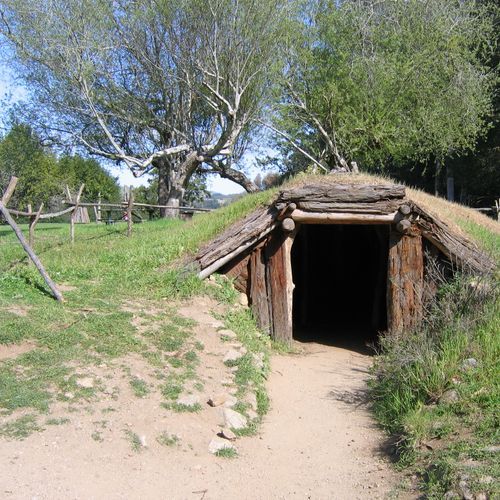
A recreated Coast Miwok village sits on a grassy rise above the Bear Valley Visitor Center, built by the Park Service in the 1970s on the site of the former Bear Valley Ranch. Its name means "Bear Valley" in the Coast Miwok language. Interpretive signs explain the village structures and introduce Coast Miwok history and culture. The dirt path up starts steep and crosses exposed roots, and gopher holes dot the field between the buildings.
Tule elk graze the open grassland at the northern tip of the Point Reyes peninsula, where the species returned in 1978 after disappearing from the area in the 1850s. The herd began with just ten animals brought from the San Luis National Wildlife Refuge and released on former ranchland around historic Pierce Ranch, now protected as wilderness. Visitors come to watch the elk alongside birds and spring wildflowers, with Tomales Bay to the east.
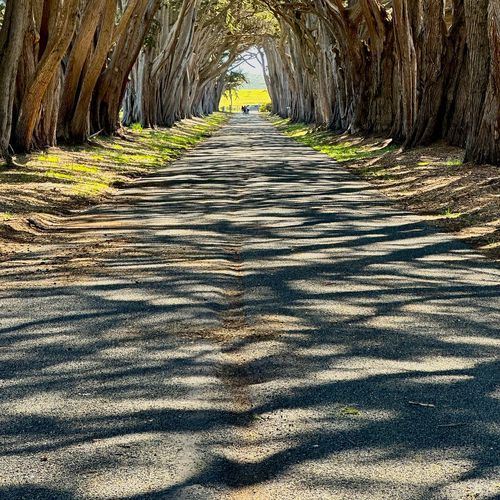
Two rows of Monterey cypress, planted around 1930, arch over a single-lane road to form a shaded tunnel leading to the historic Point Reyes Receiving Station. The trees were meant to lend prestige to RCA's profitable radio operation, and the station now serves as the park's North District Operations Center. Watch for the operations center sign along the road; the tunnel begins just past it on the right and makes a popular photo stop.
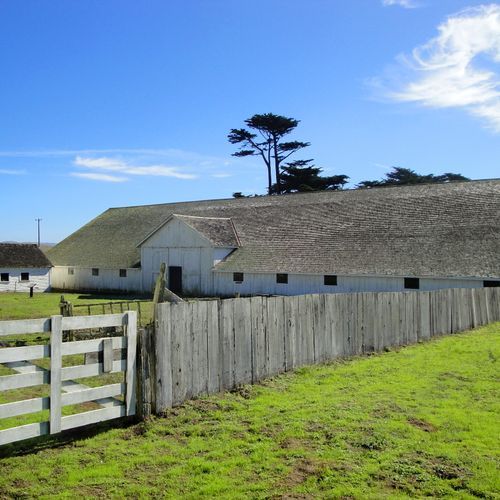
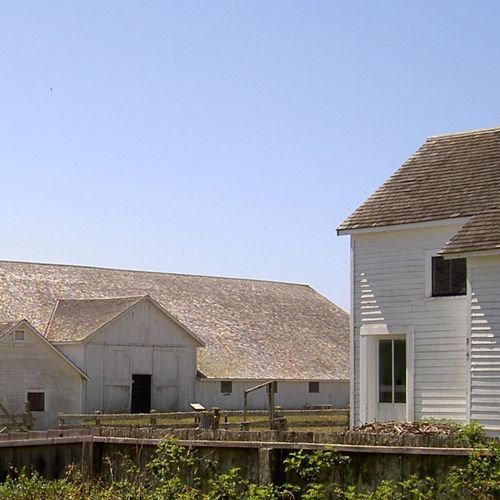
Founded in 1858 near the tip of Tomales Point, this dairy ranch once produced butter so prized that a San Francisco fine food merchant bought its entire output. Operations ended in 1973, and the park later rehabilitated the ranch core as the best surviving example of a 1800s west Marin dairy. Visitors can wander among the restored buildings, now on the National Register of Historic Places, on a peninsula where tule elk have been reintroduced.
Discover more activities and plan your visit in the Parka app
Download Parka — It's Free