Theodore Roosevelt National Park guide · 2 min read
Maltese Cross Cabin and Roosevelt's Badlands Years
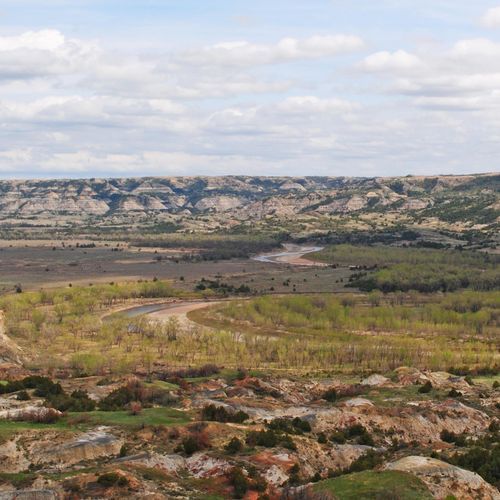
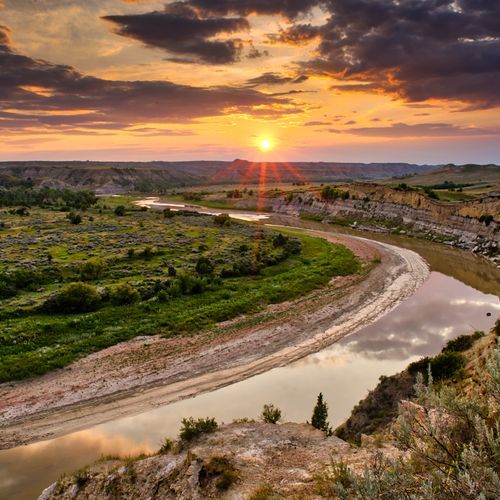
In 1883, Theodore Roosevelt came to Dakota Territory to hunt bison. He was a young man from New York, and he found the rough country along the Little Missouri River appealing.
By the time he headed home, he held a major stake in the Maltese Cross Ranch, also known as Chimney Butte Ranch. The ranch was roughly seven miles south of Medora, in wooded river bottoms. He flourished in the open-air life there and worked alongside the cowhands each day.
Sylvane Ferris and Bill Merrifield, the ranch managers, put up a cabin at Roosevelt's request, and it is now called the Maltese Cross Cabin. The logs were ponderosa pine, cut upstream and floated down the Little Missouri to the building site. Floors were wood, and the cabin was divided into three rooms: a kitchen, a sitting room and Roosevelt's bedroom. Its steep roof was unusual for the northern plains, and the space under it became a sleeping loft for the ranch hands.
Today the cabin stands just outside the South Unit Visitor Center on Scenic Loop Drive, making it a quick stop. Visitors can wander through on a self-guided tour or join a ranger-led cabin tour. Some furnishings once belonged to Roosevelt, and the remaining pieces date to the same years. Indoors, exhibits in the visitor center cover Roosevelt's time as president and the years he spent in the badlands.
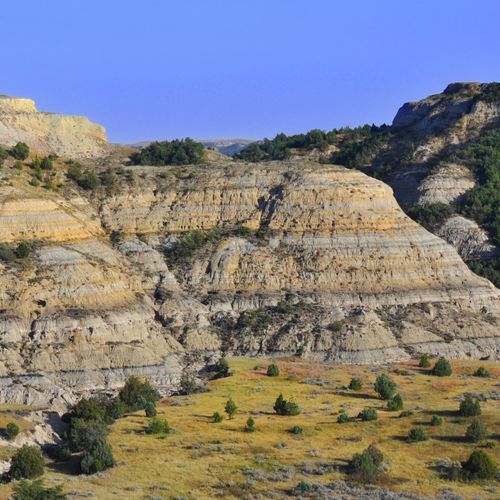
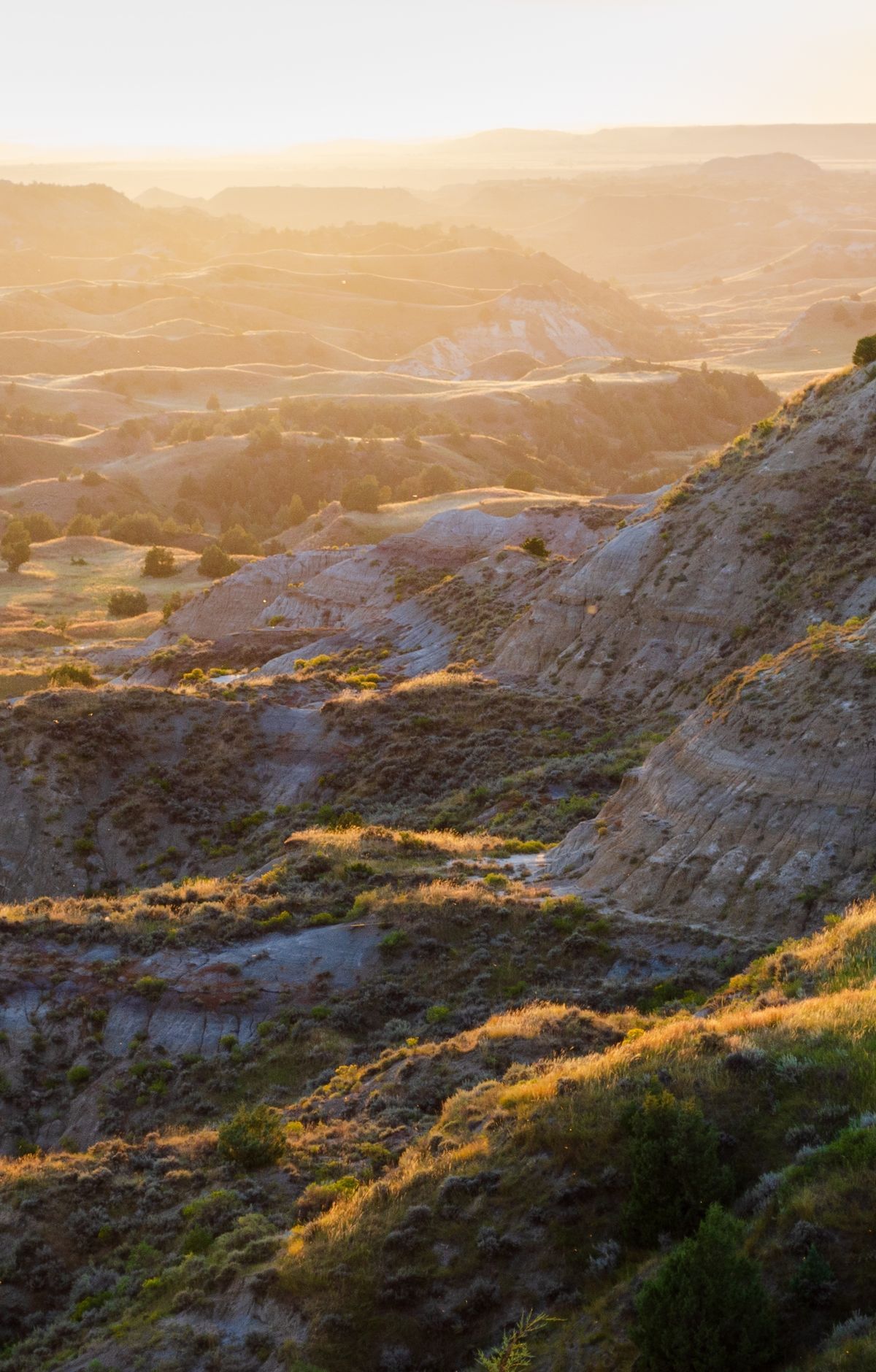
Much of Roosevelt's time in the area was spent in the Little Missouri Badlands, where bison, prairie dogs and elk roam over grasslands and colorful bentonite hills. The park today covers that country in three separate units: the South Unit, the North Unit and the Elkhorn Ranch Unit.
Roosevelt later served as the 26th president of the United States, and the park is named for him. The rugged country he came to know in the badlands influenced the conservation policies he pursued while in office.