Yosemite National Park guide · 1 min read
Half Dome, El Capitan and the Valley's Icons
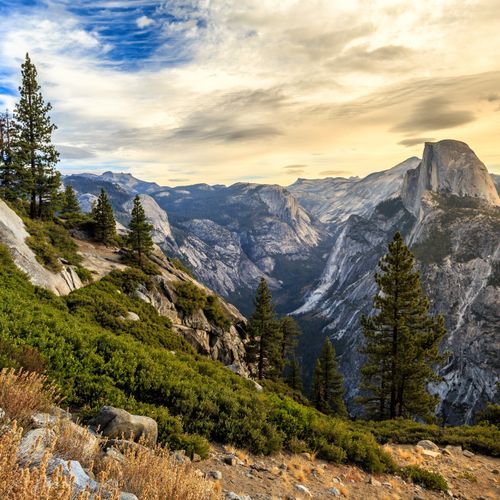
Half Dome is perhaps the most recognized symbol of Yosemite, a granite formation rising nearly 5,000 feet above the floor of Yosemite Valley.
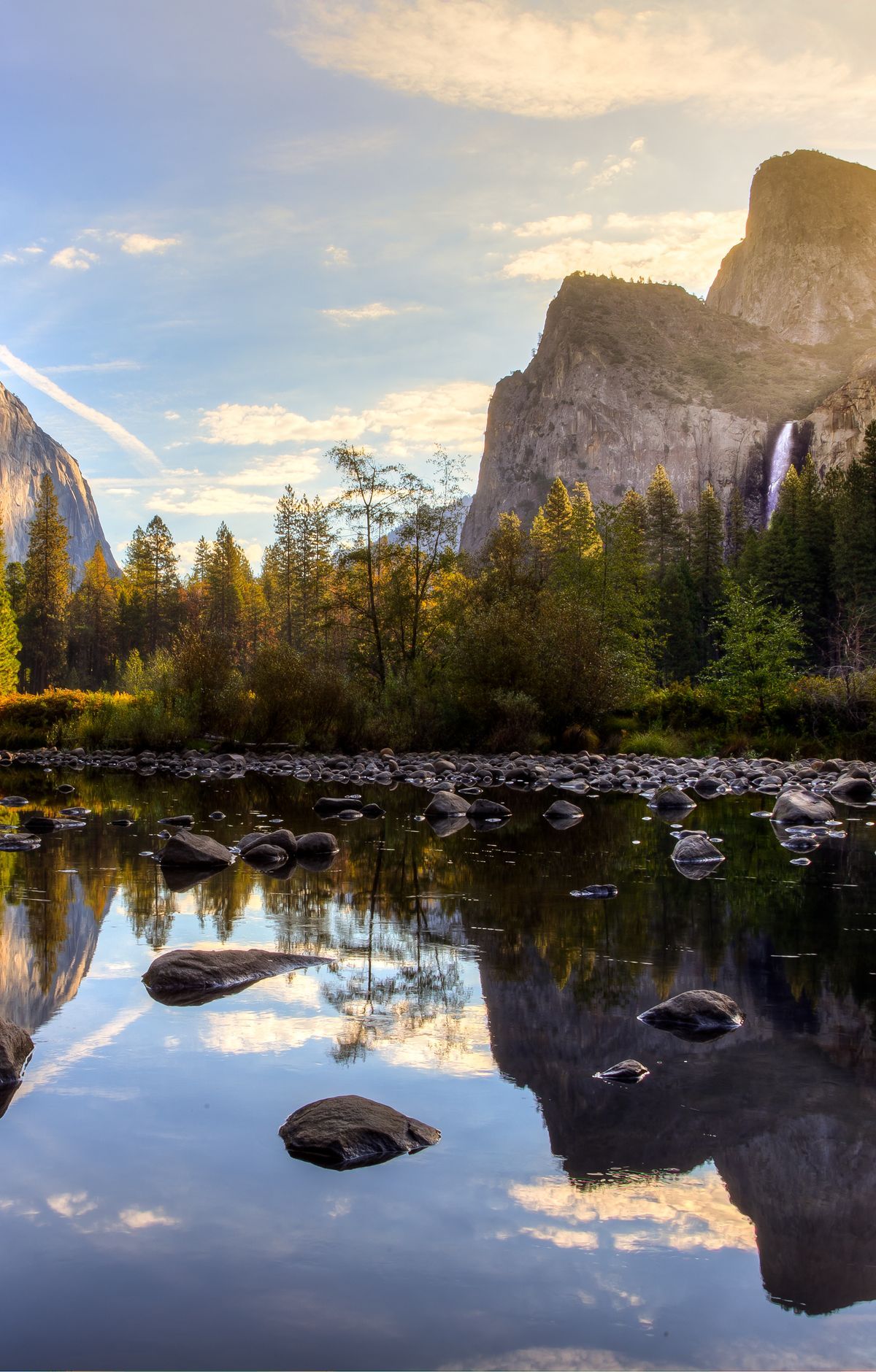
You can spot it from much of the eastern Valley, including the road between Yosemite Village and Yosemite Valley Lodge and the roads around Curry Village. For a closer look, take the paved two-mile round-trip walk to Mirror Lake. Some visitors even hike or climb all the way to its summit.
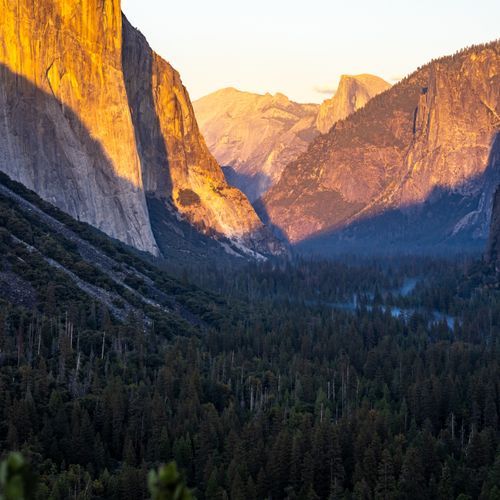
Across the Valley, El Capitan stands more than 3,000 feet above the valley floor. It anchors a canyon carved about 3,000 feet deep into solid granite by rivers and glaciers. Nearly every wall here is bare rock, while the floor below holds forests, meadows and the Merced River flowing from east to west. A single road loops through the Valley, and driving it or riding the Yosemite Shuttle brings many of these formations into view.
Waterfalls pour over the granite walls, and Yosemite Falls is the best known. Upper Yosemite Fall can be seen from many points in the Valley, and the walk to Lower Yosemite Fall is short and easy. Flow changes through the year, sometimes dropping to a trickle by late summer and returning strong after a wet winter.
Two viewpoints show the Valley from above. Tunnel View, about fifteen minutes up the Wawona Road, is among the most photographed scenes in the park. Glacier Point looks down over the eastern Valley and Half Dome from high on the rim.
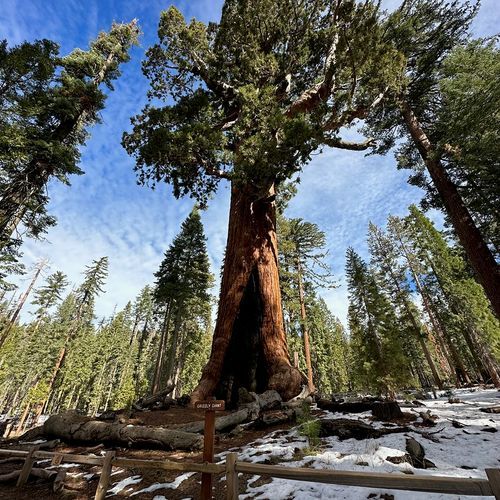
Beyond the Valley, the Mariposa Grove of Giant Sequoias offers a quiet stand of massive trees. Trails climb from the valley floor to the highest peaks, including routes to Sentinel Dome and Taft Point with wide views over the landscape.