Yosemite National Park guide · 1 min read
Snowpack, Elevation, and When Roads Open
Yosemite has a Mediterranean climate, so nearly all of its precipitation arrives during the mild winter while the long summers stay almost dry.
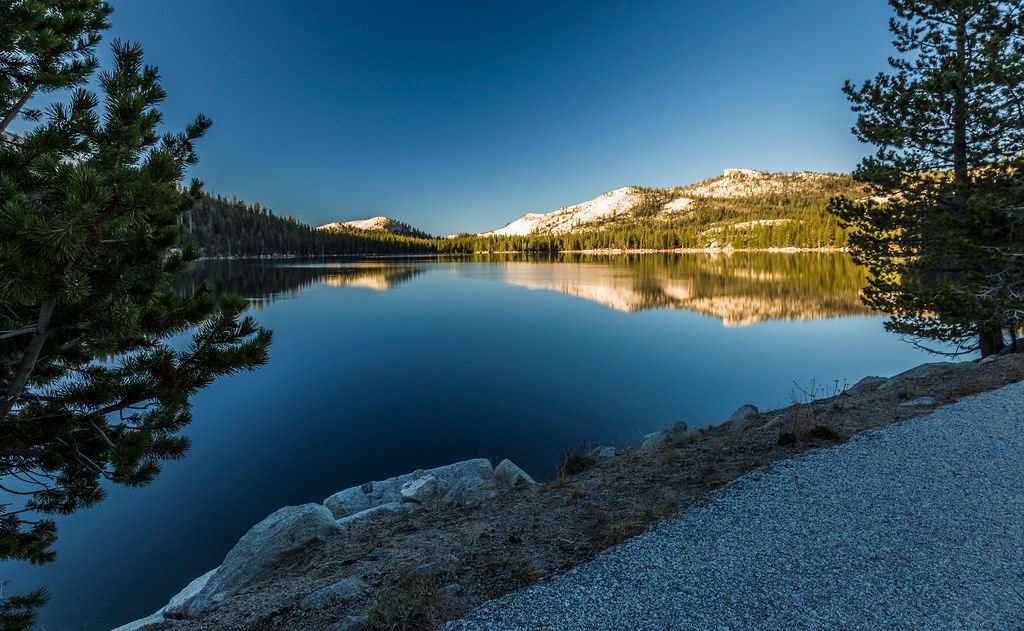
About 95 percent falls between October and May, and more than three quarters lands between November and March, mostly as snow. Because moist air rises over the Sierra Nevada, precipitation increases with elevation up to about 8,000 feet.
The park spans nearly 1,200 square miles and climbs from about 2,000 feet to 13,000 feet, so conditions can differ sharply within a short drive. Yosemite Valley sits near 4,000 feet, where a winter storm may bring rain or snow. Snow cover is consistent above 6,000 feet, and most of the park stays under snow from about November through May, with the snowpack usually reaching its deepest in March.
That high snowpack decides when Tioga Road and Glacier Point Road open. Tioga Road carries Highway 120 across the high country between Crane Flat and Tioga Pass, passing through Tuolumne Meadows. Both roads usually open sometime around late May or early June, once crews finish plowing, and the exact timing is hard to predict because April and May storms can set the work back.
Lower elevations stay reachable by car all year, including Yosemite Valley and Wawona. In winter, the road toward Glacier Point is plowed as far as Badger Pass Ski Area, a popular spot for both downhill and cross-country skiing.
Spring hiking starts low and works its way uphill. Some trails from Yosemite Valley, Wawona, and Hetch Hetchy are often free of snow by April, and most clear sometime in May, while higher terrain can stay snowy into June. Even a few inches of snow can hide a trail completely, so carry a map and compass when hiking near the snow line.