Badlands National Park guide · 1 min read
Surviving Badlands Extremes: 116°F to -40°F
Readings in the Badlands have run from a high of 116 degrees down to 40 below zero. Summer heat is dry, but thunderstorms can turn violent with little notice.
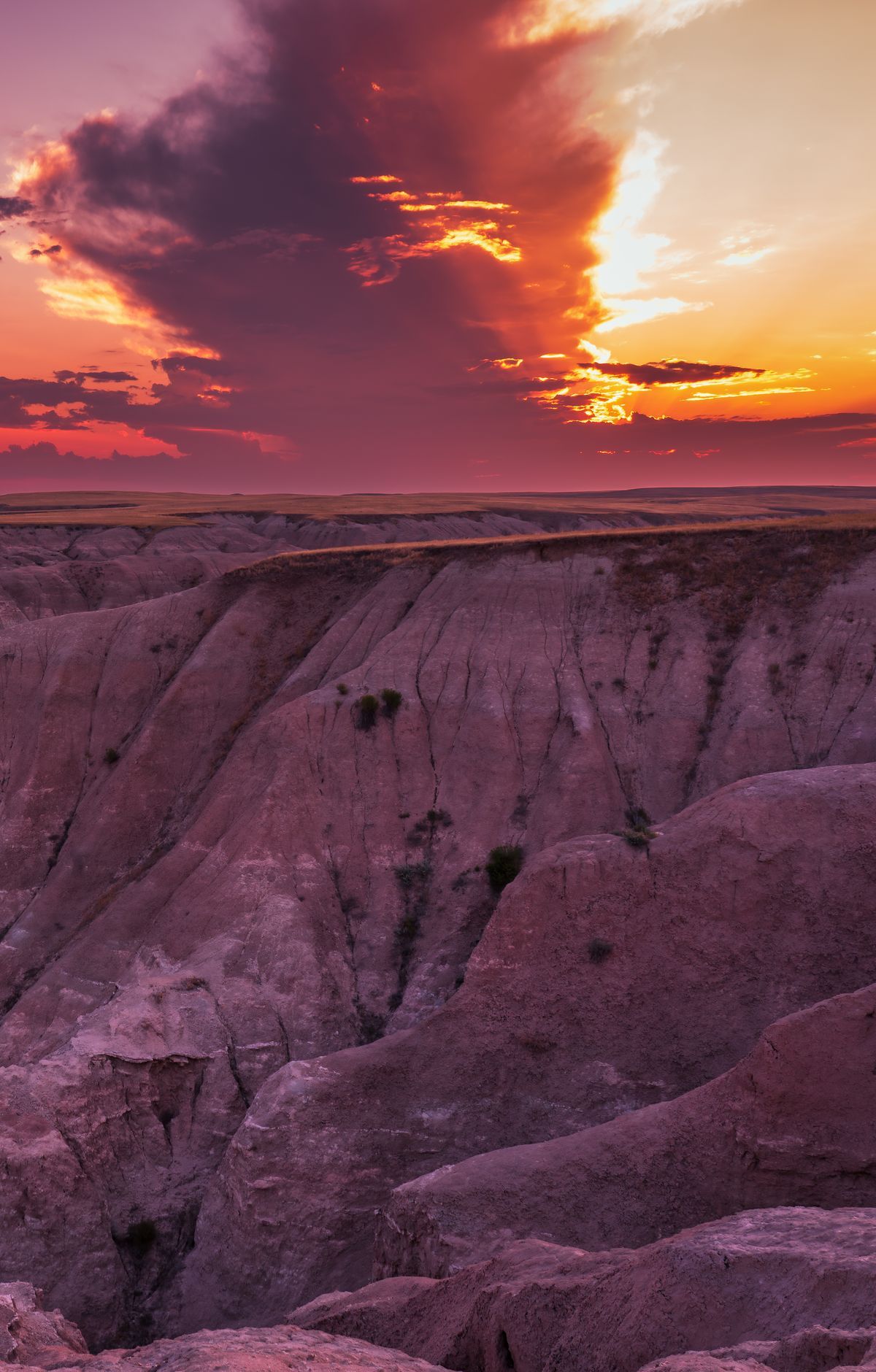
Hail and, every so often, tornadoes can arrive with sudden force, so keep an eye on the sky.
Most of the roughly 16 inches of precipitation the park receives each year arrives in the warmer months. June gets more rain than any other month, while December and January stay the driest. Winters are cold, with a typical snowfall of 12 to 24 inches. Weather can shift quickly, so be ready for more than one kind of day.
Before any drive or hike, check the local forecast and dress in layers. On the trail, carry sunscreen, a hat, sunglasses, and enough water. If rain is in the forecast, bring a rain jacket and boots that are waterproof or water-resistant.
Spring and fall are the best times to visit. Spring is cool and less crowded, though rain becomes more likely as the weather warms. Fall is also cool, and crowds thin once children return to school. Before setting out on any trail, look at weather reports and climate data.