Colonial National Historical Park guide · 1 min read
Captain John Smith and Jamestown's First Settlers
In December 1606, the Virginia Company of London sent three ships carrying 104 settlers across the Atlantic, and Captain John Smith was among them.
The Susan Constant, Godspeed and Discovery reached land in April 1607. On May 13 that year, the colonists established a settlement named Jamestown in honor of King James I.
Jamestown was the first permanent English settlement on the mainland of North America, and it was the first of thirteen English colonies that later won their independence. The settlement stood on Jamestown Island, which the park protects today. Preservation Virginia owns 22 acres on the island, and the National Park Service owns the other 1,178 acres.
In 1608 Smith set out with several fellow colonists in an open barge roughly thirty feet in length. Across two trips between June and September, they logged about 2,500 miles around the Chesapeake Bay and the waterways feeding it, among them the Potomac and the Rappahannock. The map they drew marked where Indian villages stood and other vital details. That September, the colonists chose Smith to lead them as president.
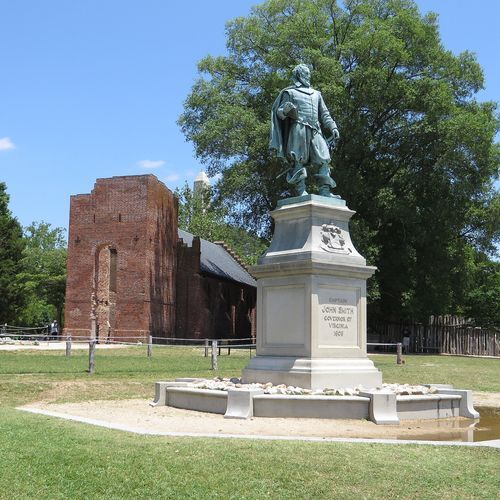
A John Smith statue stands at Historic Jamestowne, honoring the explorer who was among the settlement's most famous early leaders. The original 1607 James Fort was not uncovered until 1996, its remains having been kept safe from river erosion behind a sea wall built in 1900. The ruined tower of Jamestown Church also came to the preservation group in 1893 as part of a land gift.
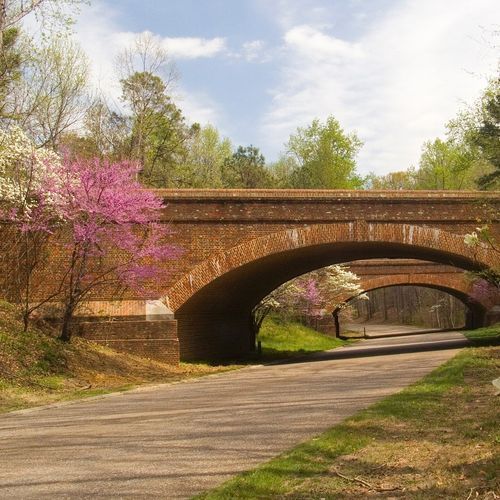
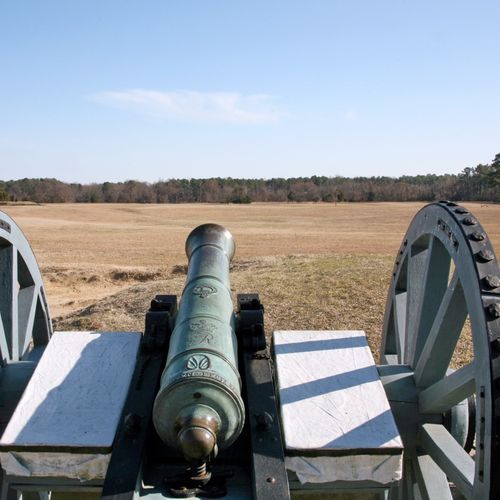
The Colonial Parkway, a 23-mile scenic route, runs from Historic Jamestowne at its southern end to Yorktown Battlefield, and together the two sites span the English colonial period from its beginning to its end. Cape Henry Memorial, also in the park, stands close to where the settlers first made landfall in April 1607.