Everglades National Park guide · 2 min read
Mangrove Nurseries and the Everglades' Habitats
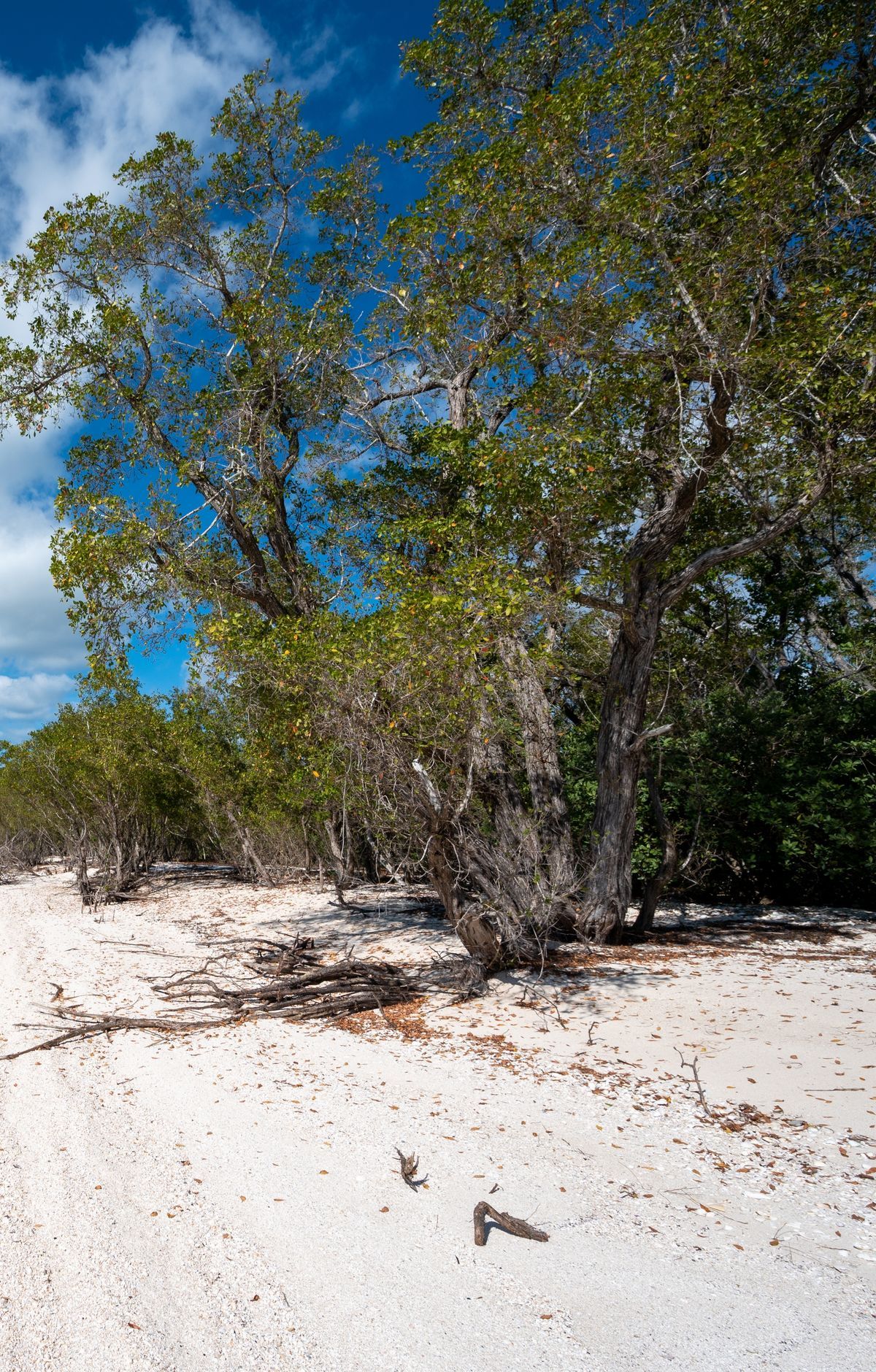
South Florida's coastlines are lined with mangrove trees, which in places extend inland. Their swamps help hold the shore against erosion and give wildlife cover.
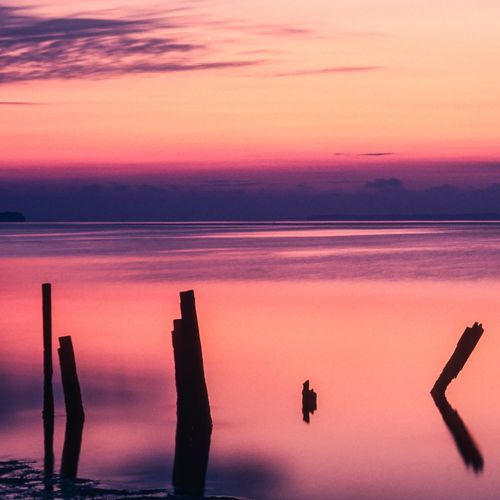
Florida Bay is the park's largest body of water, stretching more than 800 square miles from the mangroves of the mainland's southern tip to the Florida Keys. Seagrasses, coral and sponges give crustaceans and mollusks food and shelter, and those small animals feed larger ones. Sharks, stingrays, barracudas and a resident population of bottlenose dolphins live in the bay. Seagrass meadows here and in nearby estuaries keep sediments in place, sustain fisheries and protect coastal habitats from disturbance. For wildlife viewing, scan the shorelines for pelicans, terns, shorebirds and black skimmers.
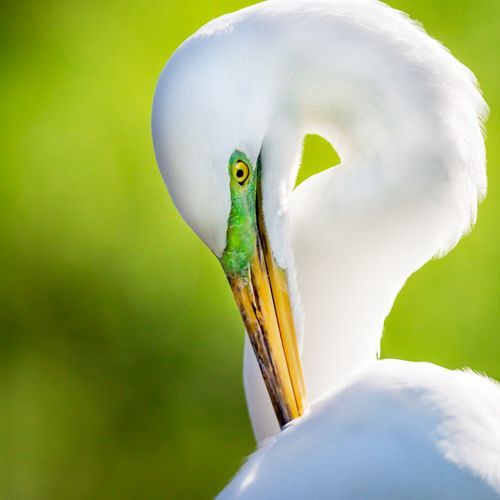
Cypress trees, conifers suited to life in standing fresh water, grow over limestone in tight domes and long strands. When water levels swing widely, they send up knees that rise above the surface to supply oxygen to the roots. Bromeliads, Spanish moss, orchids and ferns cling to their branches, and the park has twenty-five orchid species. Tall cypresses give nesting sites to herons, egrets, ibises and anhingas, while white-tailed deer, raccoons and river otters also live here.
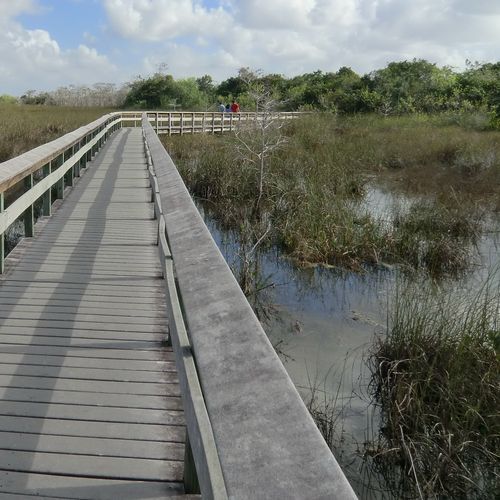
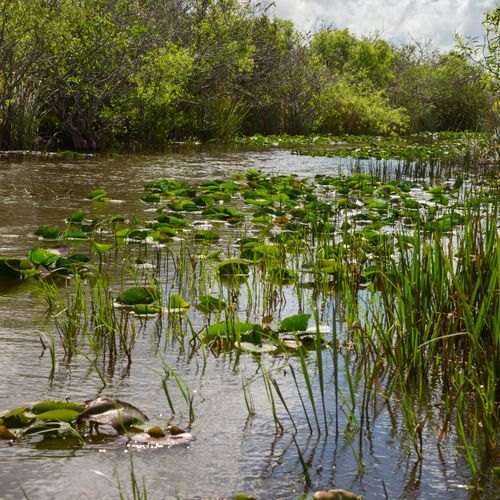
The sawgrass wetland is often called the River of Grass. Its water comes from Lake Okeechobee, but canals divert it toward cities. Less than half of the Everglades that existed before drainage remains intact, and sending water to South Florida's growing metropolitan areas is the park's greatest threat. When water runs low, fish are easier prey, and dried sawgrass can burn, killing apple snails that wading birds eat. Wading bird numbers have fallen about 90 percent from their original levels.
Restoration work has been underway for about twenty years. Since it began, the park has grown larger, more water now flows back into the Everglades, and bird numbers are climbing. The effort remains contested, with some people wanting this land protected and others wanting it developed.