Everglades National Park guide · 2 min read
6,000 Years of Seminole and Miccosukee Life
Early people probably reached South Florida between 10,000 and 20,000 years ago. Two groups later developed at the southern tip of the peninsula.
The Tequesta occupied the east coast, living in one large community by the mouth of the Miami River. The Calusa, more numerous, lived in 30 villages on the west side. The glades formed a natural divide between them, and both crossed the wetlands yet settled mostly along the coast.
Shellfish and fish formed the core of the diet, with small land animals, larger game and wild plants added. Soft limestone was the only stone available, so tools were mostly made from wood, bone, shell and the teeth of animals. Shark teeth served as cutting blades, and sharpened reeds made arrows and spears. A Calusa chickee on display at the Florida Museum of Natural History gives a sense of the dwellings used in the region. Shell mounds from those years still exist within the park.
After the Seminole Wars ended, American settlers took up homes at scattered points along the coast, from the Ten Thousand Islands to Cape Sable. Chokoloskee Island is itself a shell heap about 20 feet tall, built by the Calusa over thousands of years. Chokoloskee and Flamingo on Cape Sable became trading places for farmers, fishers and charcoal makers in the Ten Thousand Islands. Boats were the only link to these settlements well into the 1900s.
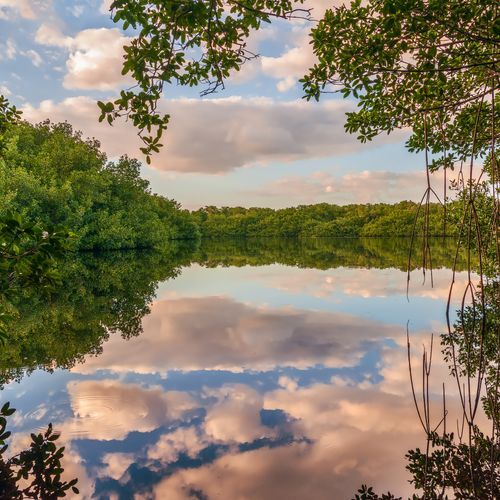
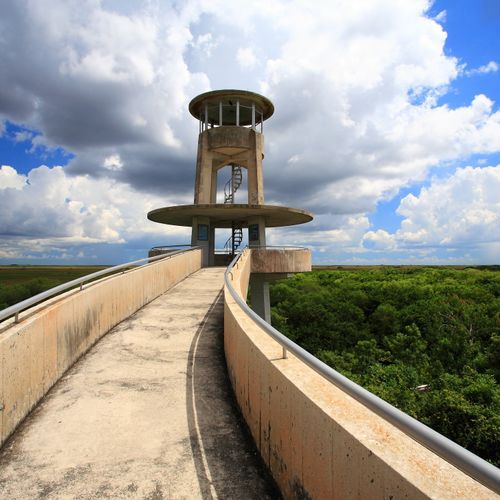
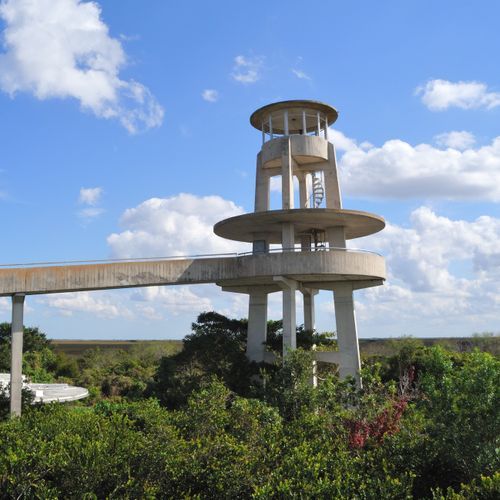
The Ten Thousand Islands are a string of mangrove islets along the shore, forming a vast estuary among the largest on the continent. Farther inland, a huge wetland fed by water from Lake Okeechobee stretches out, a landscape often called the river of grass. The Shark Valley Visitor Center sits on the Tamiami Trail, directly west of Miami. A round-trip path of fifteen miles runs from the center to a viewing tower two stories tall.