
Everglades National Park guides
12 in-depth guides to Everglades National Park, in reading order: what to see, how to get around, and what to know before you go. Back to the Everglades National Park overview.
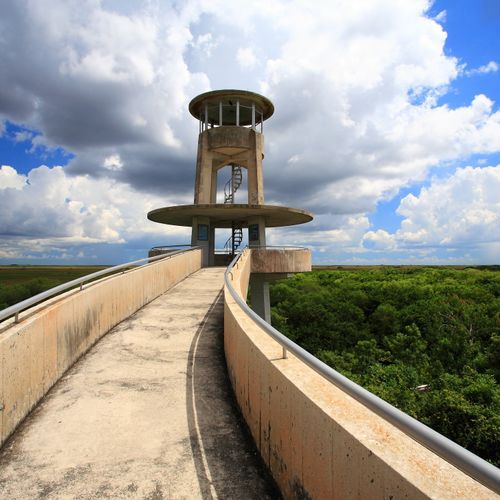
Wet Season vs. Dry Season Survival Guide
The wet season runs from May through November, when the park is typically hot and humid. Average highs reach 90 degrees, humidity often tops 90 percent, and the heat index can climb above 100 degrees.
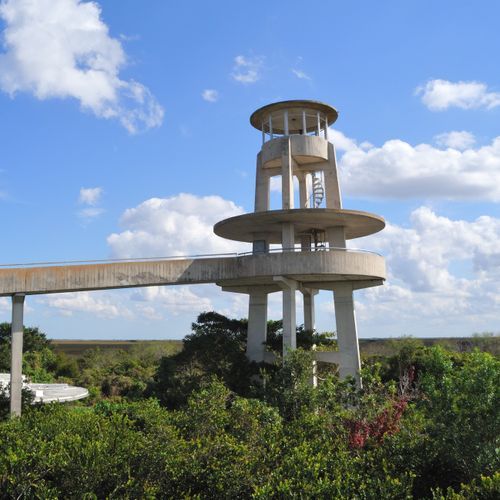
Shark Valley Tram Road and Observation Tower
Shark Valley sits deep in the Everglades, along the Tamiami Trail, which is United States Highway 41, west of Miami.
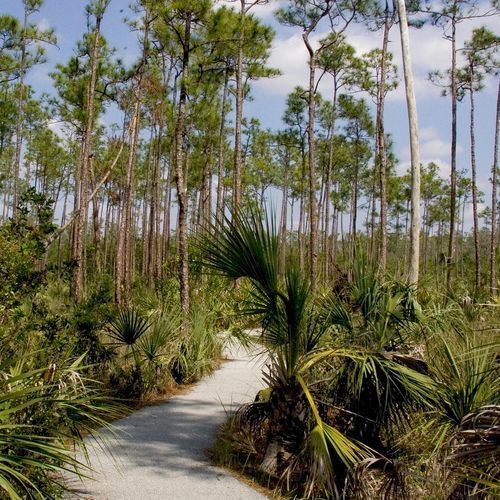
Pinelands and Pa-hay-okee on the Main Park Road
Along the main park road, the Pa-hay-okee Overlook sits about thirteen miles from the main entrance and the Ernest F. Coe Visitor Center.
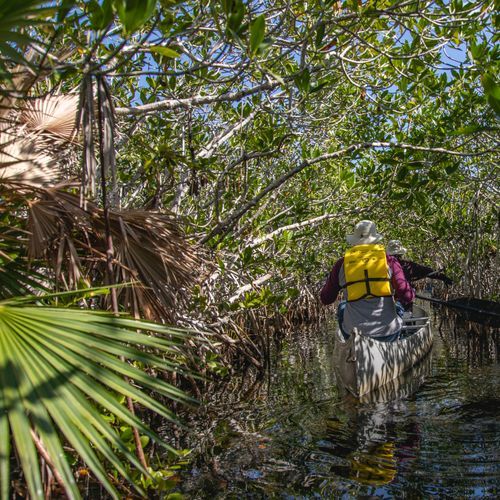
Paddling the Wilderness Waterway and Backcountry Chickees
The Wilderness Waterway is a 99-mile route linking Flamingo with Everglades City, and it suits paddlers seeking an extended trip.
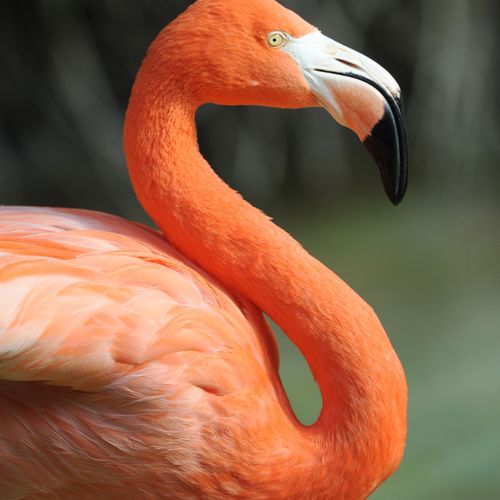
Milky Way Nights at Flamingo
Flamingo sits on the edge of Florida Bay at the end of the Main Park Road, 38 miles past the Homestead entrance.
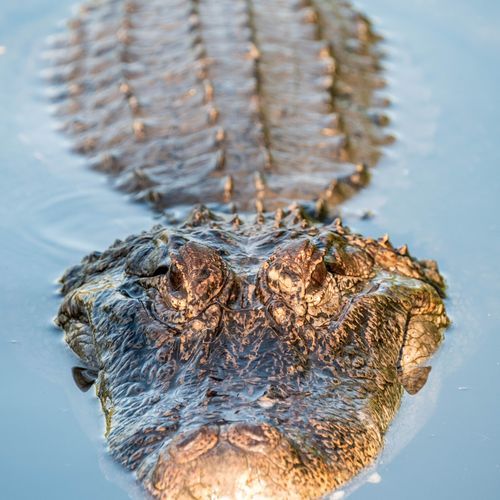
Crocodiles, Manatees, and Panthers
Everglades National Park is the one place on the planet where alligators and crocodiles share habitat, and at spots like Paurotis Pond or Nine Mile Pond you might see both in a single stretch of water.
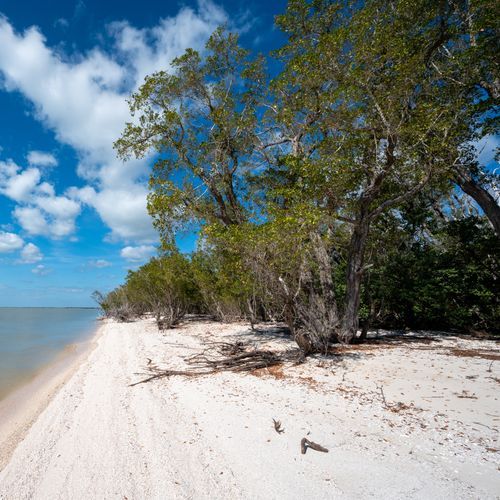
Mangrove Nurseries and the Everglades' Habitats
South Florida's coastlines are lined with mangrove trees, which in places extend inland. Their swamps help hold the shore against erosion and give wildlife cover.
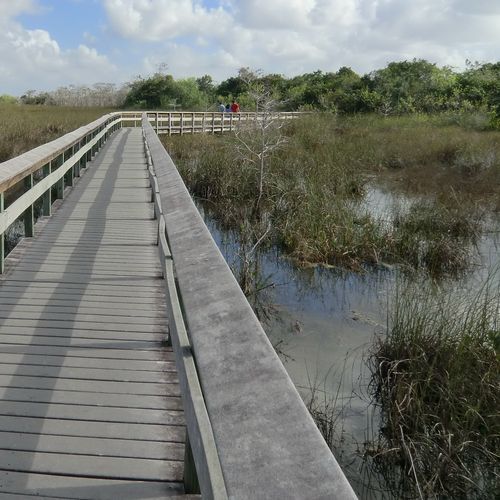
Porous Limestone Beneath the Flat Everglades
The bedrock under Everglades National Park is limestone, which formed when a shallow sea laid down calcium carbonate from sand, shells and coral.
Marjory Stoneman Douglas and the Park's Fight
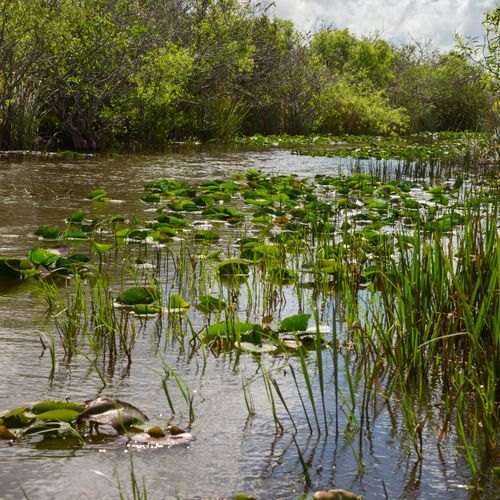
Marjory Stoneman Douglas is the writer most closely tied to the fight for this landscape. Her 1947 book, The Everglades: River of Grass, captured the open expanse of the land and the variety of life packed into its waters and marshes.
6,000 Years of Seminole and Miccosukee Life
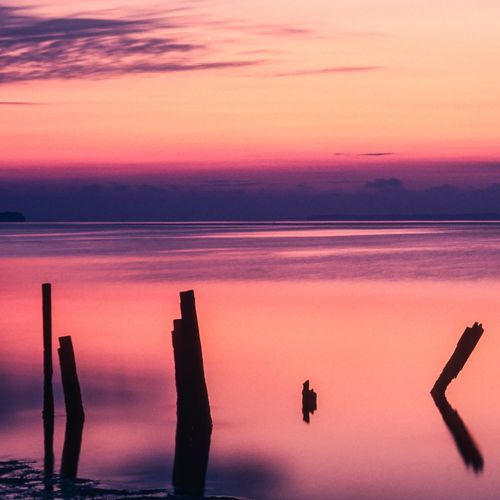
Early people probably reached South Florida between 10,000 and 20,000 years ago. Two groups later developed at the southern tip of the peninsula.
Flamingo: Lodge, Marina, and Florida Bay
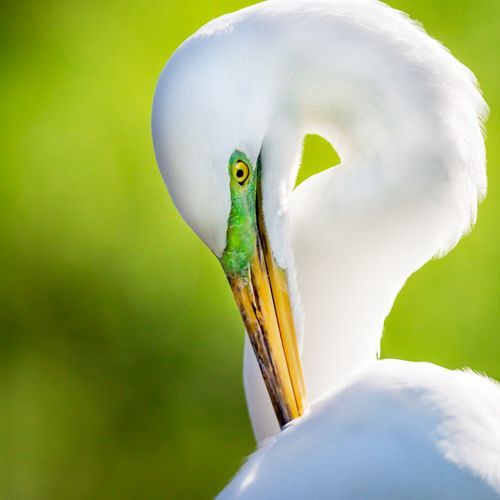
Flamingo sits 38 miles south of the park's Homestead entrance, on the shore of Florida Bay.
Ten Thousand Islands from the Gulf Coast
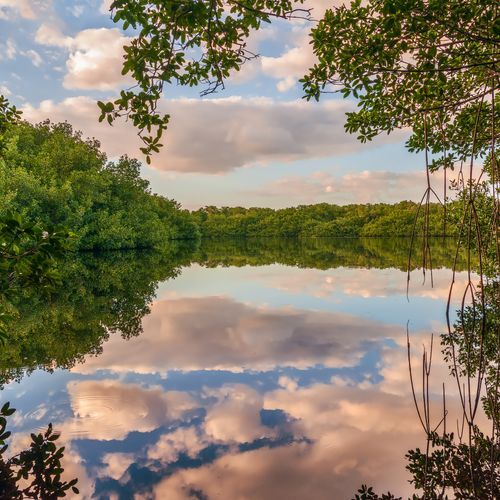
The Gulf Coast Visitor Center sits in Everglades City, the gateway to the Ten Thousand Islands.
