Great Sand Dunes National Park & Preserve guide · 2 min read
Medano Creek's Spring Surge and the Seasons
Medano Creek never settles into a permanent streambed, because fresh sand keeps falling into it.
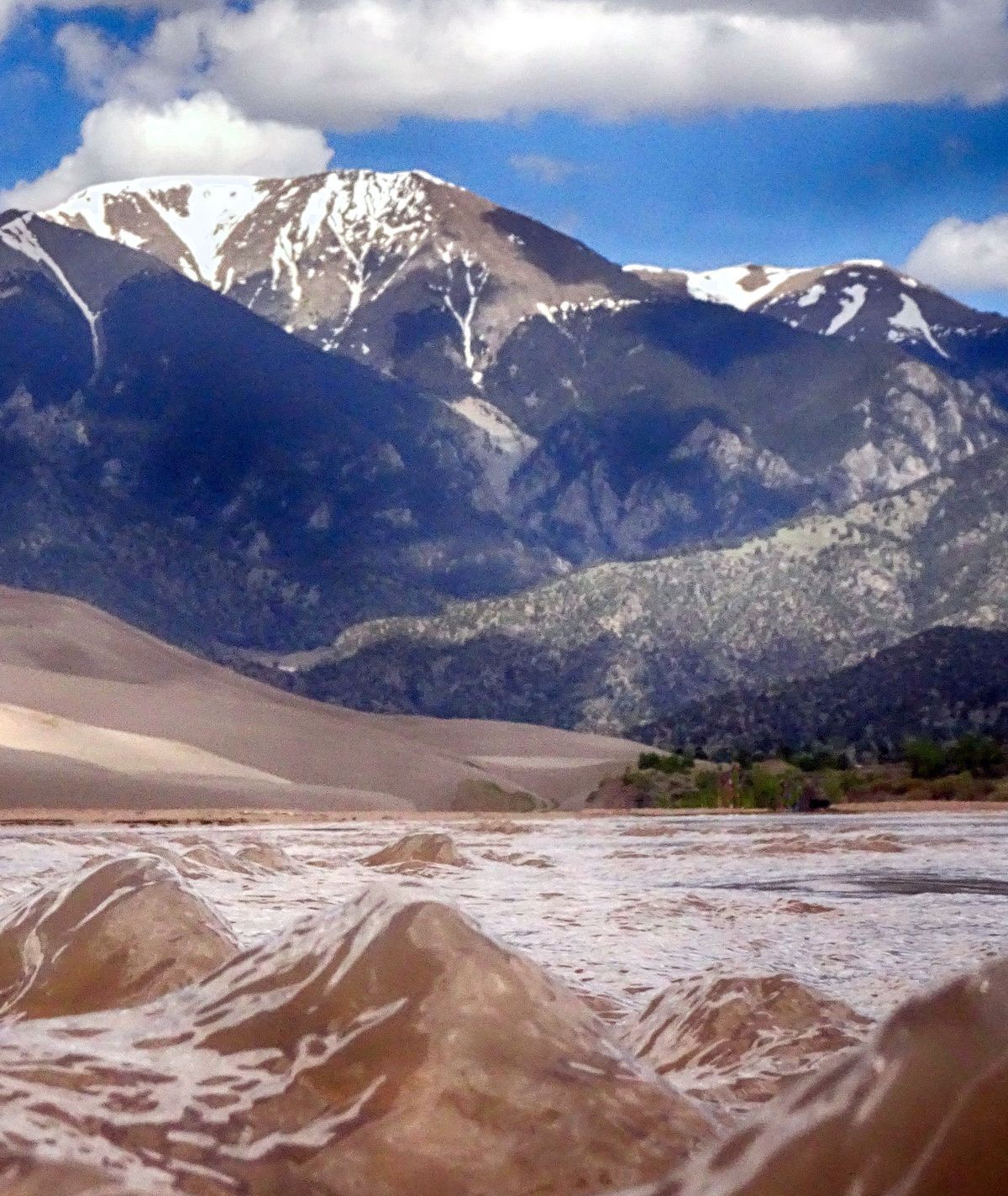
Small underwater sand ridges form, act like dams, then break down, creating surges that look like waves. On average a new surge arrives about every 20 seconds, and in a high-water year the waves can rise to around 20 inches. Most years, this surge flow is strongest in late May and early June, when the creek runs highest.
Visitors splash and float in the creek during this season. In average or wetter years, the waves are big enough for children to float down short stretches on flat inflatable toys. Snowmelt from the mountains starts out cold, then warms in the sun as it fans out over the sand. Weekends in late May and early June get crowded, so a weekday may be easier.
April is the second snowiest month here, and the creek starts to trickle as the mountain snow thaws. By late April it may be a few inches deep. By July the water retreats toward the peaks, drying up by the Dunes Parking Lot, but a gentle flow continues near the Castle Creek Picnic Area. Mosquitoes are plentiful from mid-June through July, since the low water gives them places to breed.
Medano Pass Primitive Road reaches Medano Pass after crossing the creek nine times. The water runs highest at dawn and lowest by late afternoon. In an average year the peak reaches about 40 cubic feet per second, usually in late May or early June.
Autumn changes the palette. Cottonwoods and aspens shift to gold, and the aspens above the dunes look their best in late September and early October. Sandhill cranes visit the San Luis Valley for part of spring and fall. Daytime finds them in farm fields, while wetlands hold them overnight. Springtime is when they put on their courtship dances.