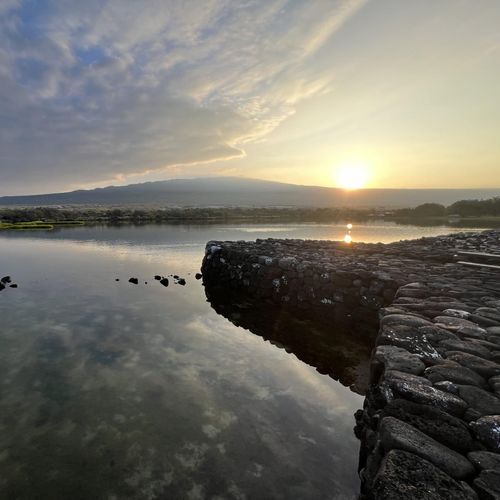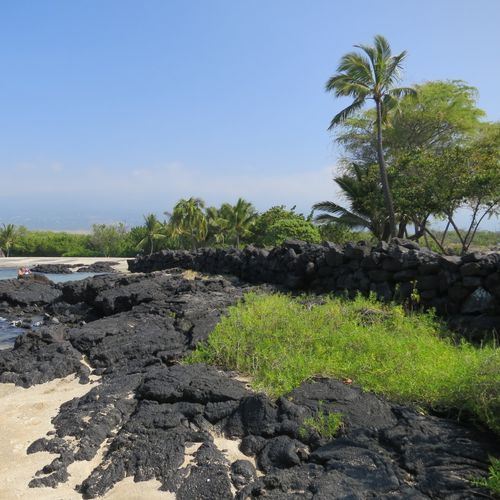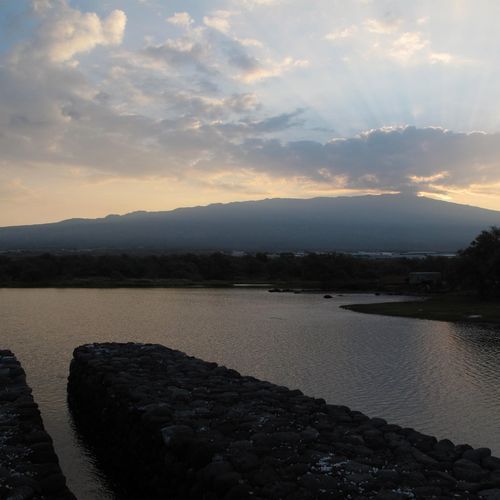
This massive seawall encloses Kaloko Fishpond, a favorite of King Kamehameha I. Native Hawaiians dry-stacked water-worn lava stones without mortar to build what is now the largest fishpond retaining wall in Hawaii, and the angles and gaps between the stones turn back the surf better than many concrete walls. Channels with sluice gates let tides flush the pond. A small parking area at the end of a gravel road offers views of the wall and access to the Ala Kahakai Coastal Trail.
Things to Do in Kaloko-Honokōhau National Historical Park
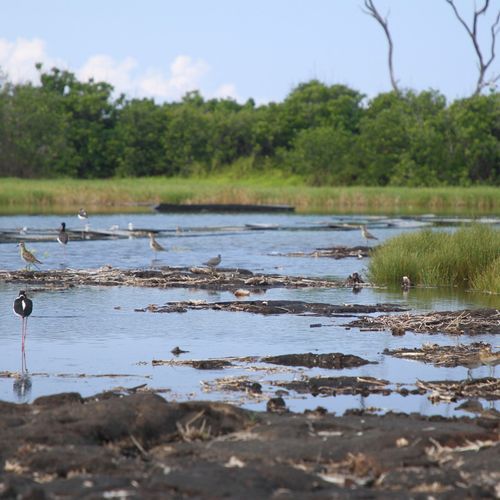
Along the Kona coast of Hawaiʻi Island, this historical park protects traditional native Hawaiian culture and the land use patterns that supported it. Its fishponds, including Kaloko Fishpond and the wetland of ʻAimakapā Fishpond, show how people once raised fish along the shore. Visitors can hike historic trails such as the Ala Kahakai, where ancient heiau and house platforms still stand. At ʻAimakapā, keep an eye out for endangered native waterbirds like the ae'o and ʻalae keʻokeʻo. Honokōhau Beach, a strip of white coral sand, sits against the black lava. Start at the Hale Hoʻokipa Visitor Center, and bring plenty of water, since there is none in the park.
Kaloko-Honokōhau National Historical Park has 6 places to see and things to do on the Parka map: 4 points of interest and 2 beachs. They include Kaloko Kuapā (Seawall), ʻAimakapā Fishpond and Kaloko Fishpond.
The Kona Coast's largest natural pond and wetland covers about 30 acres at the center of the park, cut off from the sea by a sand berm running parallel to the shore. Spring-fed fresh water blends with seawater that flows in through channels on rising tides. Native Hawaiians adapted the pond to raise fish, and it was farmed into the 1950s. Today wading birds gather in its shallows, just behind Honokōhau Beach.
Once a favored fishpond of King Kamehameha I, this tidal pond is enclosed by a massive seawall of smooth lava stones stacked by hand without mortar. Broad enough to walk along, it is the largest wall of its kind in Hawaiʻi, and its sloped, gapped construction breaks the incoming surf. Look for the channels and mākāhā sluice gates that let the tides flush the pond and were used to stock and harvest fish.
A wooden boardwalk loops over black pāhoehoe lava past hundreds of images that ancestral Hawaiians pecked into the stone with stone tools. Honokōhau holds one of the largest groupings of petroglyphs on the Kona coast, including human figures, sailing ships, cannons and muskets introduced after European contact, some found nowhere else in Hawaiʻi. A faint, worn band in the lava marks an ancient footpath beside the carvings. Stay on the boardwalk, since the carvings are fragile.
Discover more activities and plan your visit in the Parka app
Download Parka — It's Free