Mesa Verde National Park guide · 1 min read
From Basketmaker Pithouses to Cliff Villages
The Basketmaker culture comes early in this story. Archaic groups here gave up their nomadic habits and settled into permanent pithouse villages, combining foraging with farming.
Their finely woven baskets gave the Basketmaker II people their name. By the year 300, corn was the main part of their diet.
The Ancestral Puebloans came later, and their communities were organized around farming and basket weaving. Most of their time here was spent in pithouses on the mesa top, and only in the final century or so did they build cliff dwellings. They flourished from about 550 to 1300. Today, a trip along Mesa Top Loop Road covers roughly 600 years of that history.
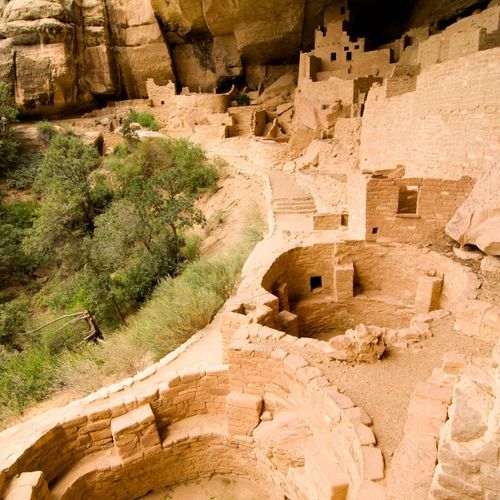
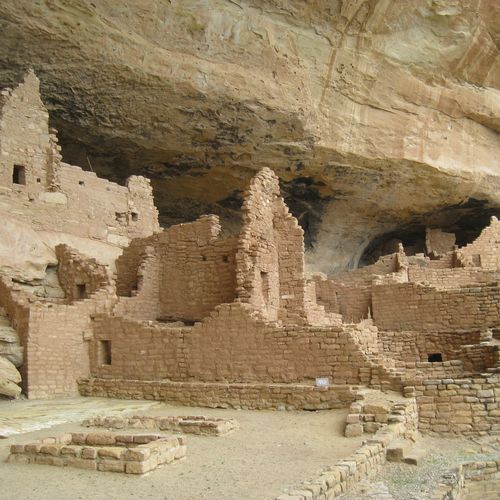
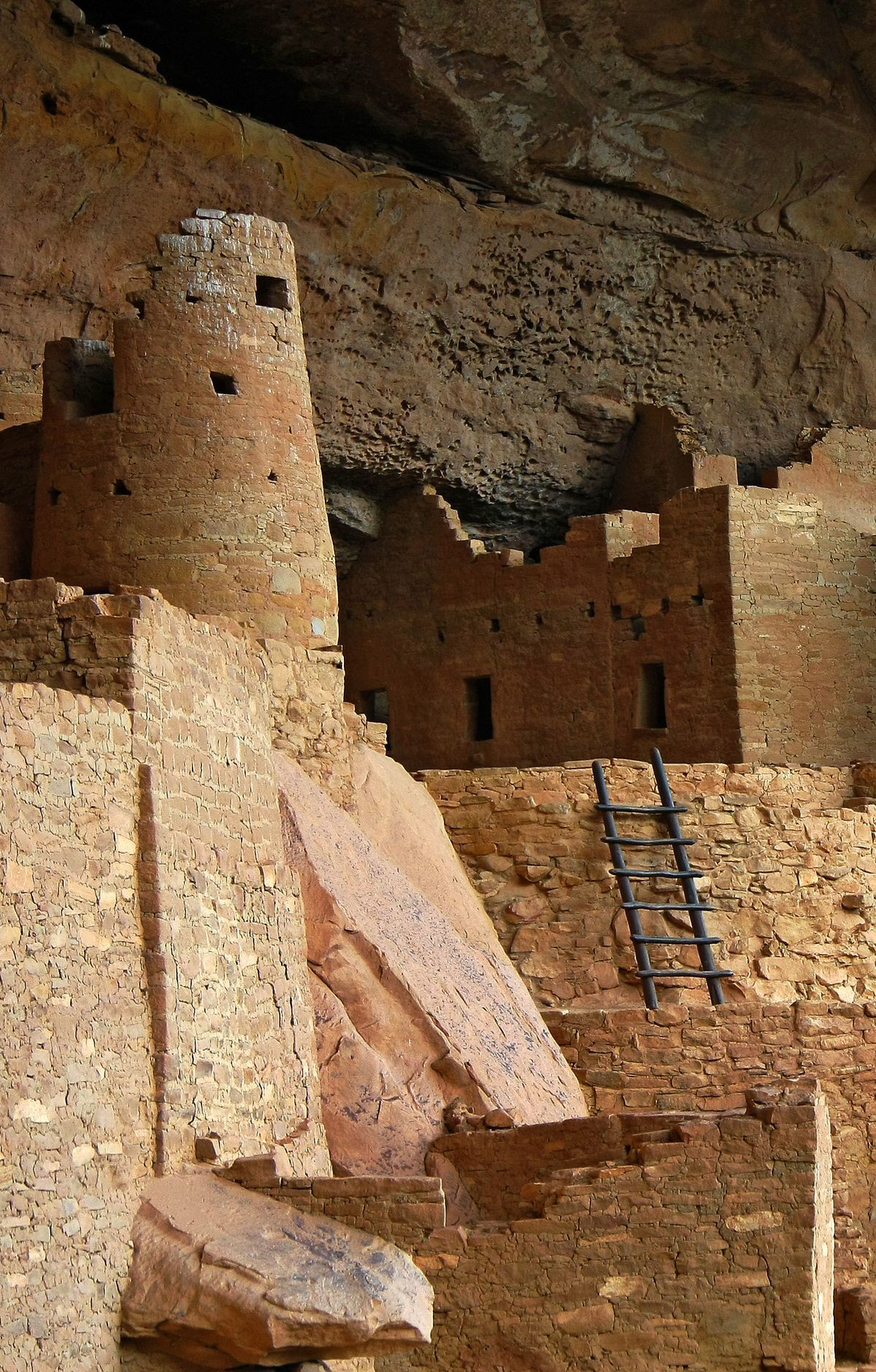
Cliff dwellings are the feature the park is most famous for. The builders set them into alcoves along the canyon walls, shaping sandstone blocks and bonding them with adobe mortar. Cliff Palace, the most widely known example, lies in the largest alcove near the center of the Great Mesa and has 150 rooms and 23 kivas. Reaching the cliff houses involves many wooden ladders.
Rock art is older than the cliff houses. The Archaic period began long before the Basketmaker culture, and Archaic people made rock shelters and rock art in the surrounding canyons, mesas, and mountains. Rock art is scarce on the mesa itself, but Petroglyph Point shows the Eagle, Mountain Sheep, Parrot, Horned Toad, and Mountain Lion clans and the Ancestral Puebloans.
Begin at the Mesa Verde Museum, located at milepost 20. Its exhibits explain Ancestral Pueblo ways of life. Built from 1922 to 1925 out of Cliff House Sandstone, it is one of the oldest museums in the National Park Service. Step around behind the building to see Spruce Tree House, the park's third-largest cliff dwelling and one of its most intact.