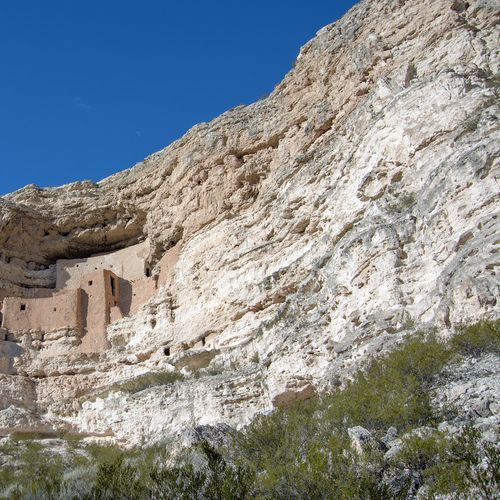
Montezuma Castle National Monument is split into two separate units, and seeing both is what turns a quick roadside stop into a real understanding of the people who lived here. The larger Castle Unit, about 734 acres in the heart of the Verde Valley, holds the monument's signature sight: a five-story stone dwelling tucked into a recess high on a pale limestone cliff, raised by the Southern Sinagua sometime between roughly 1100 and 1425 CE. An easy paved loop of about a third of a mile runs along the base of the cliff, passing under tall Arizona sycamores and following Beaver Creek, one of the rare Arizona streams that flows all year. Nobody has been allowed inside the castle since 1951, when the structure was judged too fragile, so the pleasure here comes from studying it from below and picturing the ladders, roof beams and daily routines that once kept it busy. Before or after the walk, the visitor center exhibits and their artifacts add useful background.
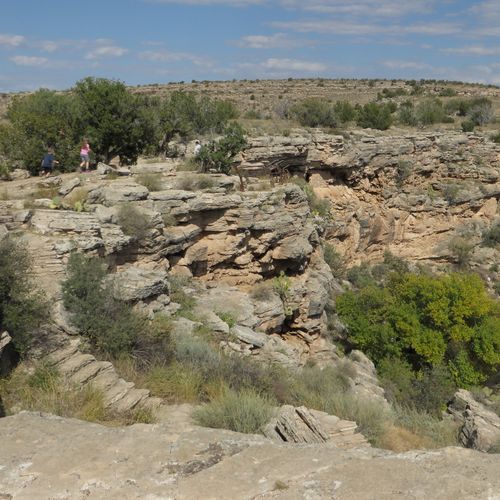
A few miles north, the smaller Montezuma Well Unit, around 276 acres, feels completely different. Rather than one dramatic building, its centerpiece is a deep limestone sinkhole holding a spring-fed pool, a true desert oasis edged by the remains of small cliff rooms and pueblos. People were drawing water from this spot centuries before the Sinagua arrived, and traces of an ancient irrigation channel reveal how ingeniously they put it to use in such a dry land. Another short loop of about a third of a mile climbs to the rim and then drops toward the water, and it tends to be quieter and more reflective than the busy castle trail.
Plan on several hours to do both units properly. Begin at the castle while the light on the cliff is soft, then drive up to the Well to cool off in the shade near the spring. Leashed dogs are allowed on the trails, and weather in the valley can change fast in any season, so bring water and layers. Your entrance pass also covers nearby Tuzigoot National Monument for seven days, which makes it easy to fill out a full day exploring the Sinagua sites of the Verde Valley.