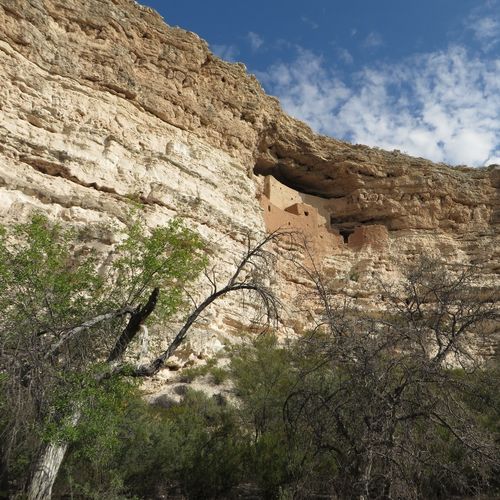
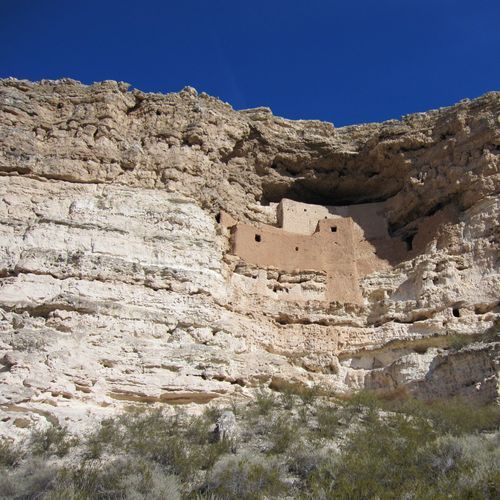
Montezuma Castle rewards visitors who slow down. The centerpiece is the five-story cliff dwelling itself, tucked into a recess high on a pale limestone wall above Beaver Creek, and the best way to appreciate it is from the benches and overlooks along the paved loop at the cliff base. Shaded by enormous Arizona sycamores, this path offers changing perspectives on a structure the Southern Sinagua built between roughly 1100 and 1425 CE, along with the crumbling remains of Castle A, a larger pueblo that once held dozens of rooms. Interpretive panels along the way are genuinely worth reading, and rangers often stationed nearby are happy to field questions about how families lived, farmed, and traded in this desert oasis.
Before or after the walk, step into the visitor center museum, where artifacts and exhibits fill in the details of daily Sinagua life and explain how the site became one of the country's first national monuments in 1906, after looting had stripped much of its contents. Ranger talks, typically held in late morning and early afternoon, bring the history to life against the backdrop of the dwelling, and families should ask about the Junior Ranger program and any seasonal events. When it is time for a break, the picnic area along the banks of Beaver Creek is a lovely spot to linger under the trees and listen to the water, a reminder of why people chose to settle here centuries ago.
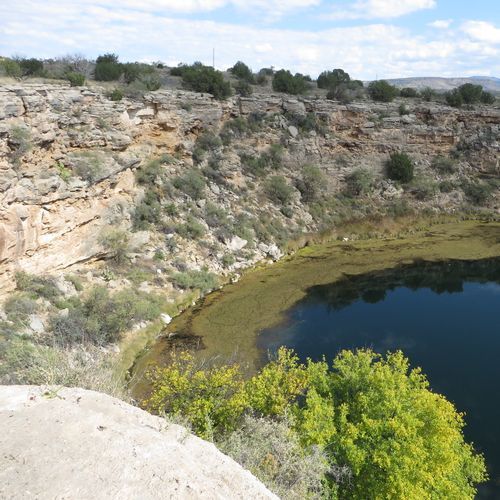
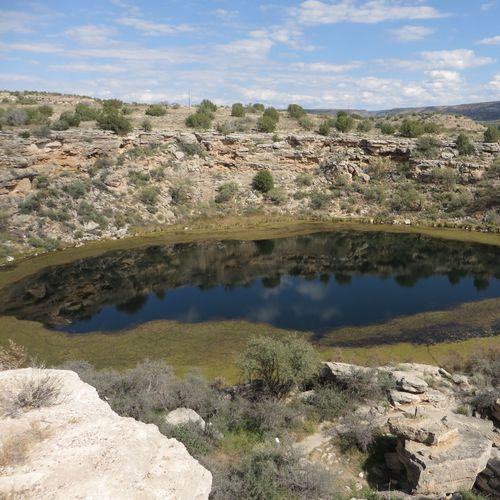
Don't leave the area without making the short drive, about 11 miles northeast, to Montezuma Well, a detached unit of the monument. This spring-fed limestone sinkhole holds a startlingly blue pool ringed by small cliff dwellings, and an ancient irrigation channel still carries its water toward the creek below. It tends to be quieter than the castle and feels more like a discovery. Your entrance pass also covers nearby Tuzigoot National Monument for seven days, so it is easy to string all three sites together, perhaps finishing with a visit to the wineries around Cottonwood. In summer, arrive early to beat the heat and the tour buses.