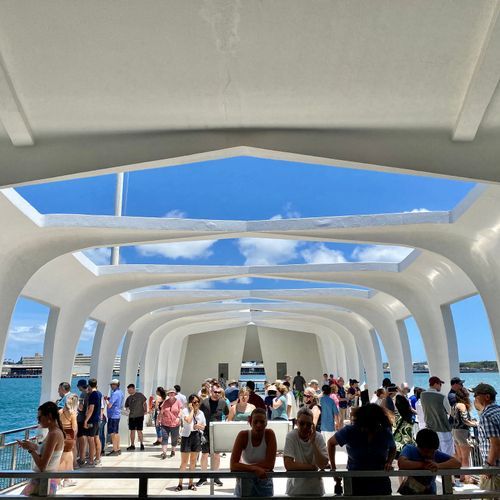
Reached only by boat, this memorial stretches across the sunken battleship Arizona without touching the hull, which remains the final resting place of more than 900 crewmen killed in the December 7, 1941 attack. Visitors move through an entry room and an open assembly room used for ceremonies and observation, ending at the shrine room, where the names of the dead are carved into a marble wall. A flag flies from a pole fixed to the ship's severed mainmast.
Things to Do in Pearl Harbor National Memorial
Pearl Harbor National Memorial sits on Oahu, where a memorial built over the sunken battleship USS Arizona marks the December 7, 1941, Japanese attack that drew the United States into World War II. Guided boat tours carry visitors from the Pearl Harbor Visitor Center to the USS Arizona Memorial, and the visitor center holds exhibits on the Pacific War. Separate memorials honor the USS Oklahoma and USS Utah and the crews lost aboard them. Ranger-led programs and commemoration ceremonies run throughout the year, offering a chance to reflect on that day. The harbor also carries meaning for native Hawaiians, who knew it as Wai Momi and relied on its natural abundance long before 1941.
Pearl Harbor National Memorial has 6 places to see and things to do on the Parka map: 6 points of interest. They include USS Arizona Memorial, USS Arizona Bell and USS Arizona Anchor.
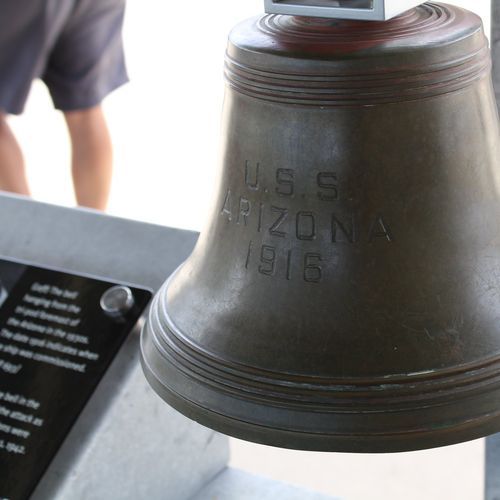
This bell from the battleship USS Arizona is displayed on the visitor center grounds, a short walk from the ship's anchor and Remembrance Circle. Early in the December 7, 1941, attack, a bomb set off the Arizona's forward ammunition magazines, and the blast killed 1,177 sailors and Marines. The ship was never raised and still rests in the harbor beneath the memorial, so this artifact offers a close, tangible link to her crew.
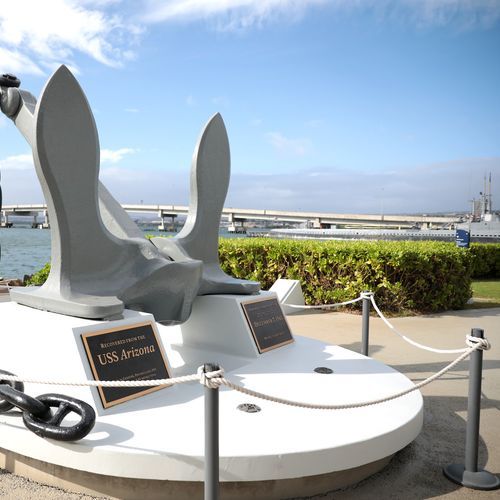
One of the battleship Arizona's three original anchors rests here near the visitor center entrance, each weighing nearly 20,000 pounds. The ship was hit by a bomb that set off its forward magazines on December 7, 1941, killing 1,177 sailors and Marines, and its hull still lies on the harbor floor. Seeing this massive piece of the ship up close gives a sense of its scale before you head out to the memorial over the wreck.
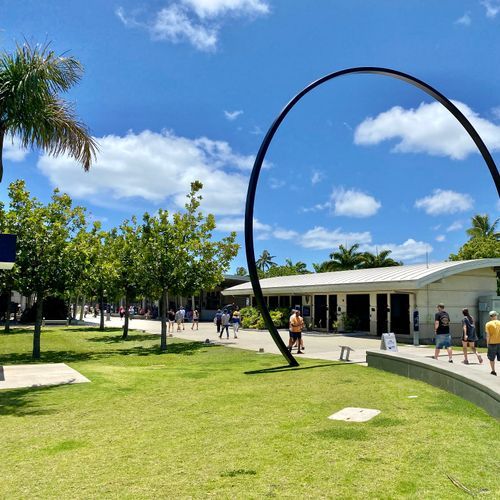
This outdoor memorial beside the visitor center honors the service members and civilians, including children, who died in the attack of December 7, 1941. Their names are listed together, with Medal of Honor recipients marked in gold. A bronze relief map of Oahu sits at its center, showing where the attacks struck across the island. It's a quiet spot to pause before or after touring the galleries.
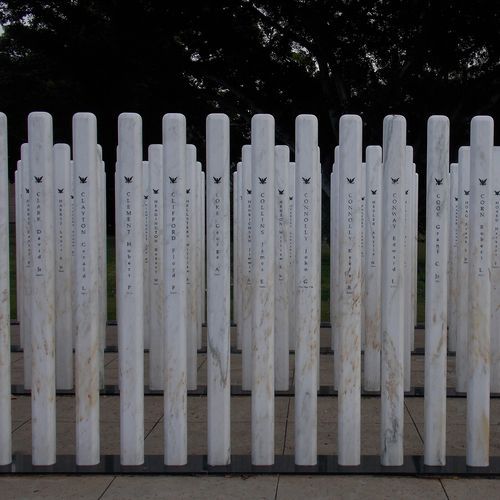
On the Ford Island shore beside the ship's former berth, white marble standards rise in rows before black granite walls, honoring the 429 sailors and Marines killed when the battleship capsized on December 7, 1941. The granite evokes the hull, while each marble post stands for a crew member "manning the rails." Because Ford Island is an active military base, most visitors arrive by the historic sites shuttle, often pairing a stop here with the nearby Battleship Missouri.
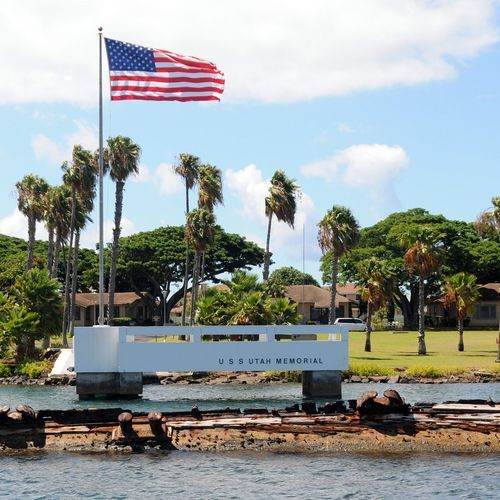
A white concrete walkway runs from the northwest shore of Ford Island to a small platform with a brass plaque and flagpole, facing a battleship that was never raised and still rests where it sank. Converted to a target ship in 1931, it was struck by torpedoes early in the December 7, 1941 attack and quickly capsized, killing 58 crew. Some survivors have since had their ashes interred in the wreck. Access is limited to people with military identification.
Discover more activities and plan your visit in the Parka app
Download Parka — It's Free