Petrified Forest National Park guide · 1 min read
Geological Wonders: The Tepees and Agate Bridge
Along Petrified Forest Road, the drive passes through the Tepees, one of the most colorful and unusual parts of the park.
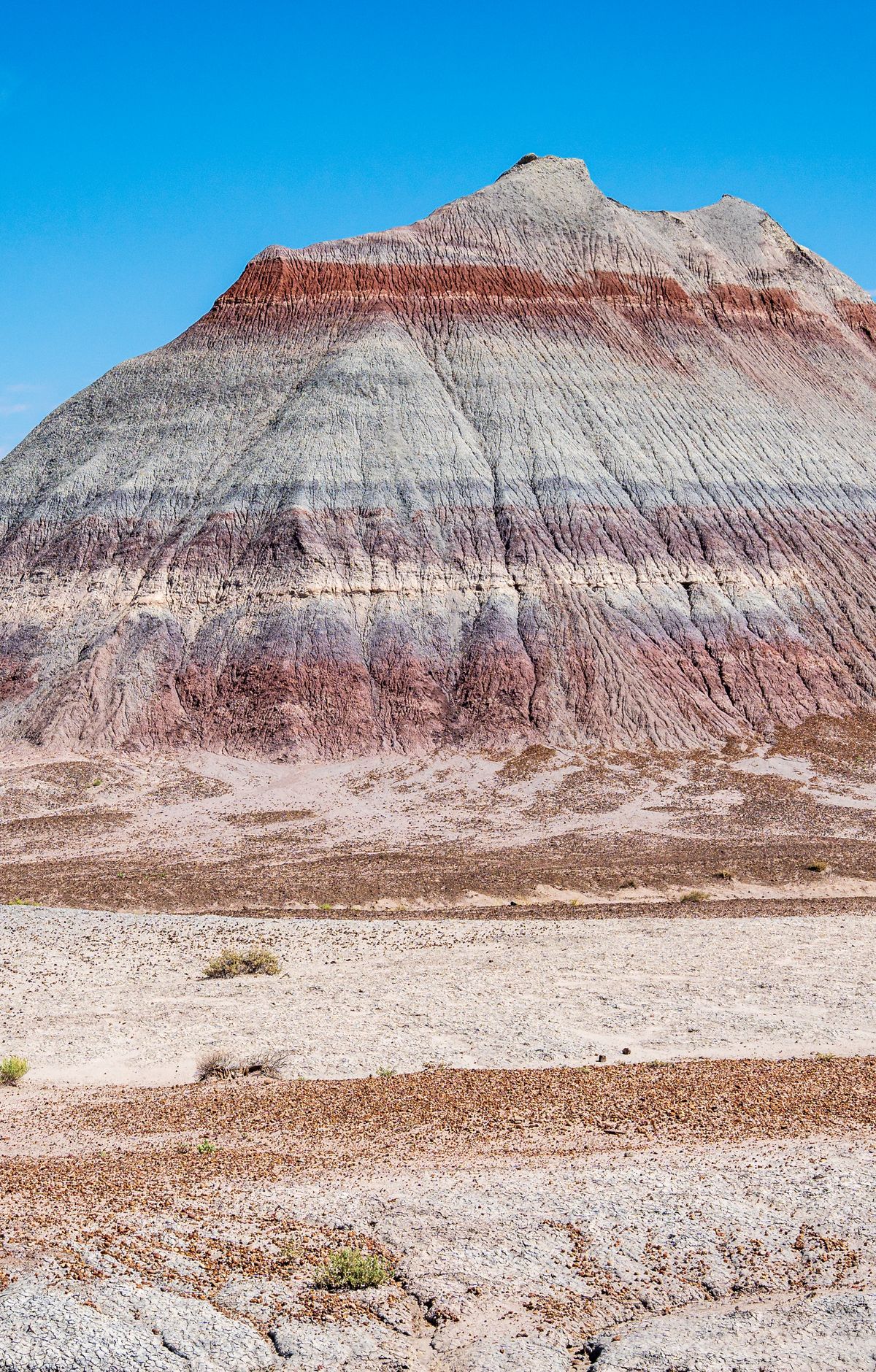
Here the pavement curves back and forth among hills banded in stripes that some visitors liken to a zebra. It makes a quick stop: pull over, take a few photographs, then carry on down the road.
The Tepees belong to the colorful, deeply eroded badlands found across the park. On the Blue Mesa Trail, the path weaves among slopes layered in blue, purple, and gray, a walk that can feel like another world. These same hills also serve as a working site for science, where researchers excavate fossils.
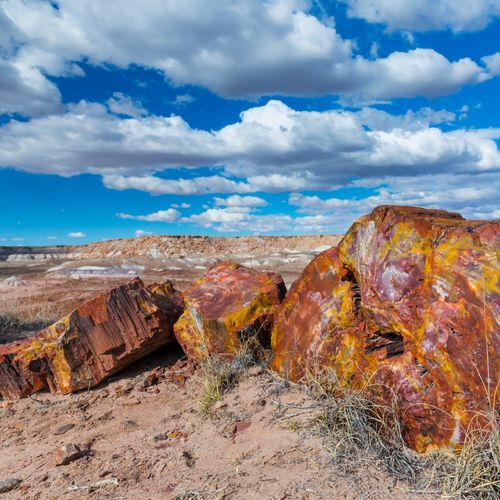
Petrified wood gives the park its name, and large deposits of it are scattered across the land. Behind the Rainbow Forest Museum, the paved Giant Logs Trail runs about 0.4 miles past many logs, including the biggest in the park, known as Old Faithful. The nearby Long Logs Trail, an easy loop of about 0.6 miles, leads to the densest gathering of petrified wood anywhere in the park. For bright color in the stone itself, stop at Jasper Forest, home to many of the park's most vividly hued logs.
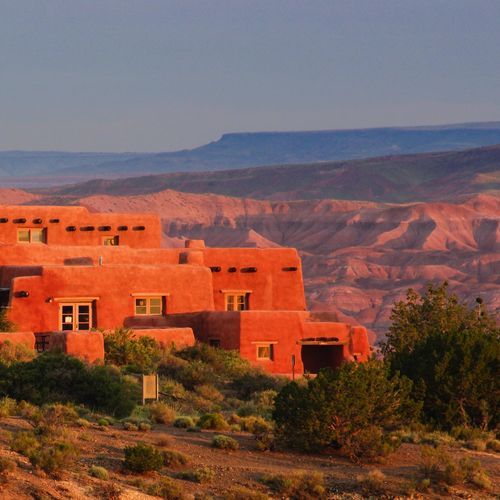
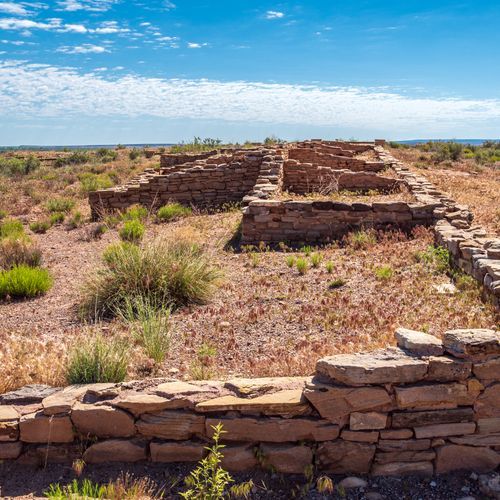
From the Long Logs Trail, a spur of about half a mile reaches Agate House, a pueblo that has been rebuilt using pieces of petrified wood. Photographers should plan around the light, since sunrise and sunset are popular times to capture the park's colors. For the red side of the Painted Desert, head to Kachina Point, an overlook just behind the historic Painted Desert Inn.