Puʻuhonua o Hōnaunau National Historical Park guide · 1 min read
Hale o Keawe and Its Kiʻi Guardians
Standing on the northern side of the eastern section of the Great Wall, Hale o Keawe is the island of Hawaiʻi's only example of a hale poki, or royal mausoleum.
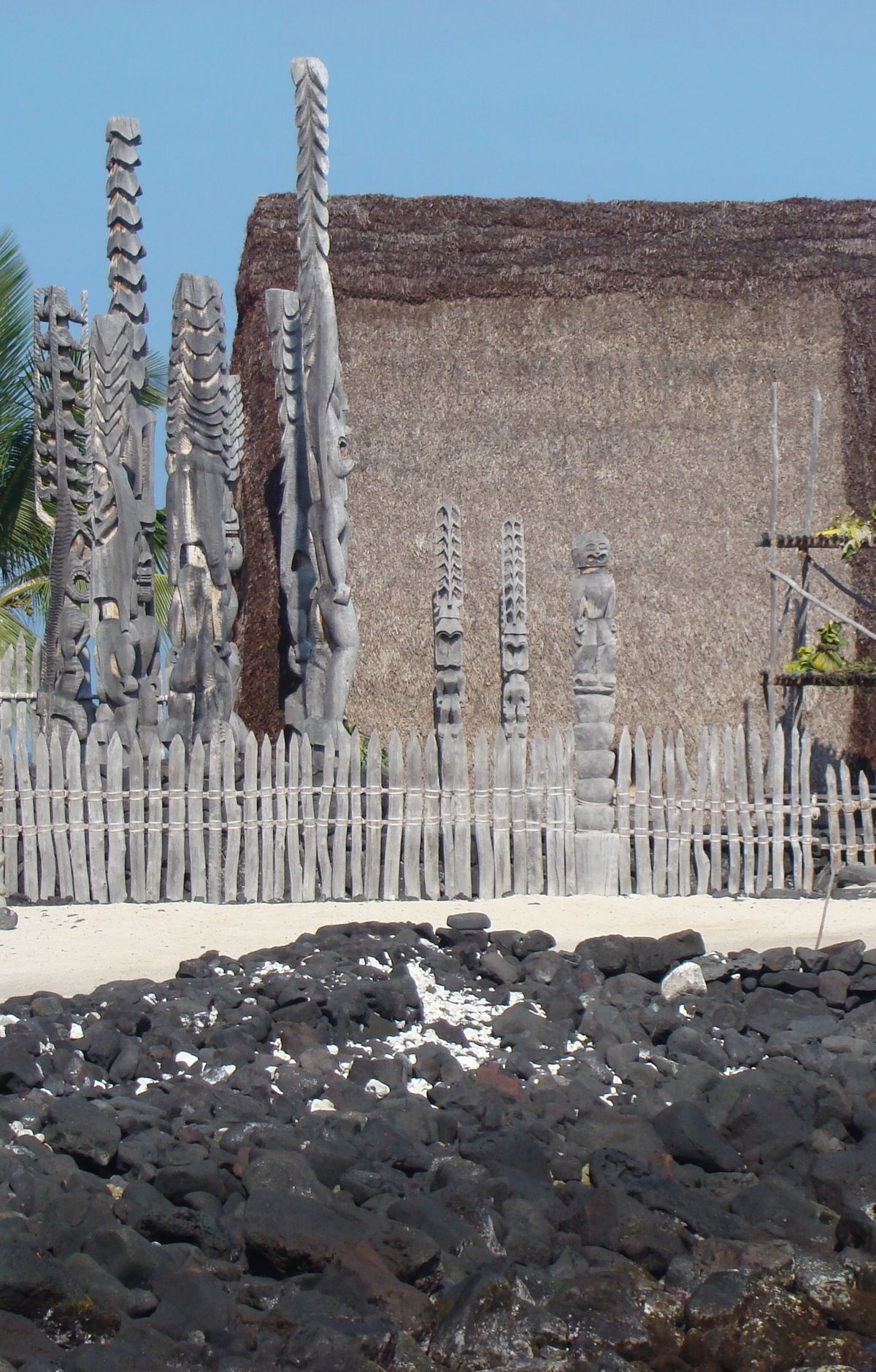
The structure is named for Keaweʻīkekahialiʻiokamoku, a paramount chief whose reign spanned the late seventeenth and early eighteenth centuries. Walking tour stop number eight is set at this site, where the place remains an active center of worship.
The mausoleum held the remains of 23 deified chiefs from the Keawe line, with Keawe himself among them. Their bones carried mana, a divine power that helped sanctify and validate the nearby place of refuge. The first structure was lost and the bones were removed, yet Native Hawaiians still honor this place, and some leave hoʻokupu, or offerings, on the lele tower.
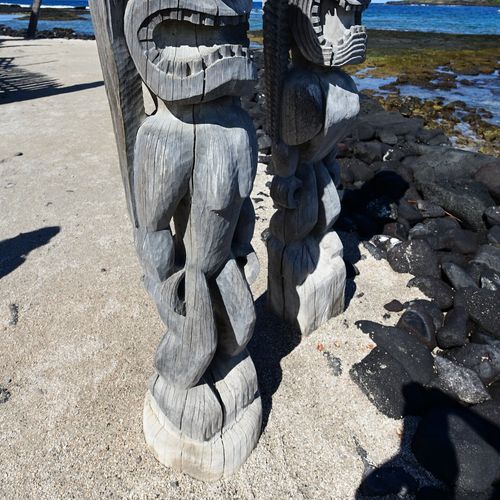
Kiʻi, which are carved wooden figures of Hawaiian deities, act as guardians around the thatched structure. A wooden palisade set with kiʻi surrounds the building, two guardian figures stand near its small doorway, and a semicircle of carved kiʻi shows different sides of the god Lono. The lele, a wooden offering platform with a ladder, is also part of the scene. Nearby, the Great Wall, a dry-stacked wall of black volcanic rock 965 feet long, encloses the place of refuge.
Hale o Keawe was restored and rebuilt in the 1960s, and care has continued ever since. Many of its materials are organic, so they wear down and need repair or replacement over time. The carved kiʻi have been replaced two times since that restoration, most recently in 2004. Local carvers, many of them relatives of the original carvers, keep the tradition going, and recent work included re-thatching the structure.