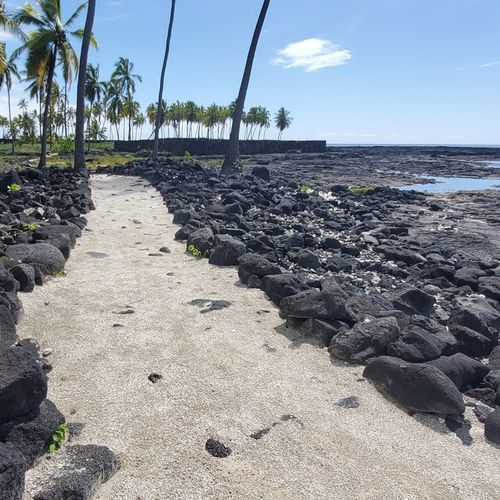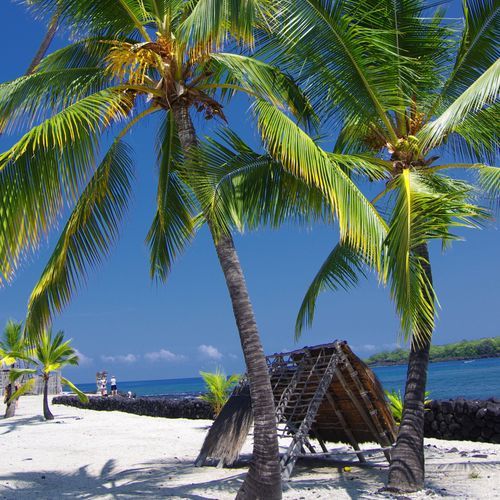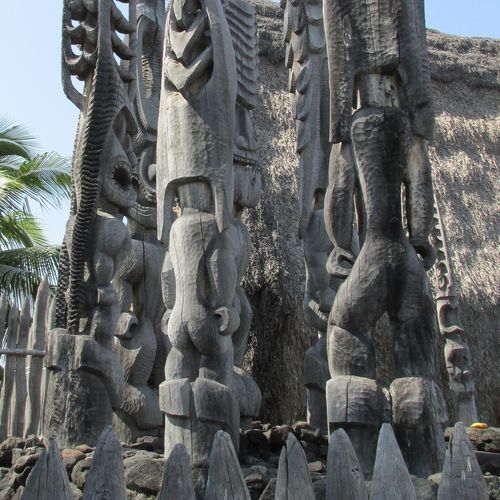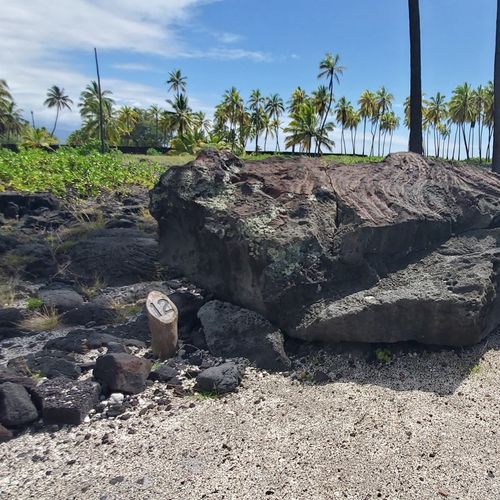
This broad, rectangular stone platform stands at the center of the place of refuge and may once have been its principal heiau, before Hale o Keawe took that role. Its name refers to Hōkūleʻa, the star Arcturus, which passes directly overhead here. Built up over seven stages across several centuries, it was later a spot where aliʻi relaxed and watched hula. What you see today is a restoration of the original remains.
Things to Do in Puʻuhonua o Hōnaunau National Historical Park
The Puʻuhonua, or place of refuge, on Hawaiʻi island once offered safety to anyone who had broken a kapu, a sacred law, and to defeated warriors and noncombatants. The refuge is enclosed by the Great Wall, a masonry wall 965 feet long. Nearby, the Royal Grounds hold residential and ceremonial sites of the aliʻi, Hawaiian royalty, while a reconstructed Hale o Keawe, a thatched structure, stands at the water's edge. Sheltered water in Hōnaunau Bay and Keoneʻele Cove is where honu, Hawaiian green sea turtles, forage on algae over the rocks. Lava flows from Mauna Loa shape the Kona Coast, and the site preserves traditional Hawaiian culture and history across 420 acres.
Puʻuhonua o Hōnaunau National Historical Park has 21 places to see and things to do on the Parka map: 21 points of interest. They include ʻĀleʻaleʻa Heiau, Hālau and Hale o Keawe.
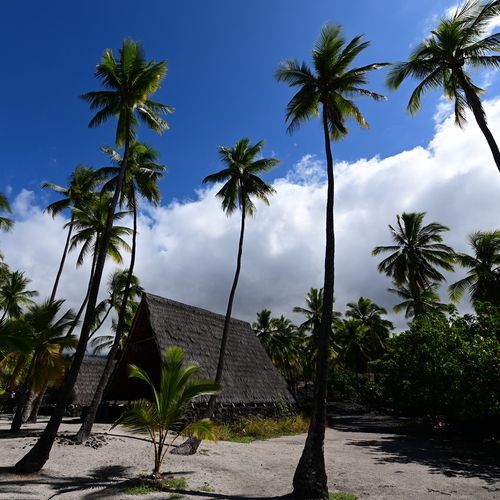
A shaded long house shelters canoe building and restoration under the park's care, where traditional waʻa take shape. The sailing canoe Mauloa was fashioned or restored here, and it has come to stand for the rebirth of Polynesian voyaging customs. Nearby, artisans work in a smaller house of the same kind, keeping alive crafts that were once taught from master to student. Its shade makes it a good place to pause and reflect after touring the Royal Grounds.
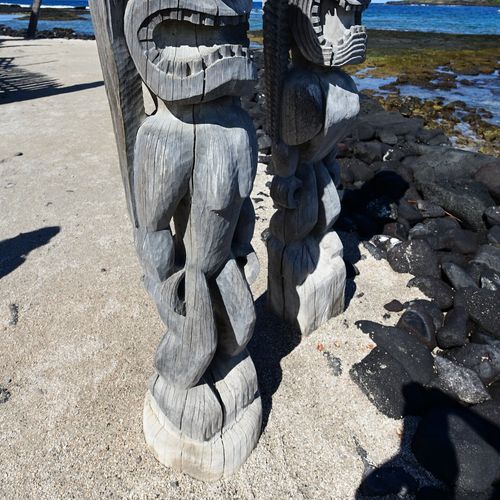
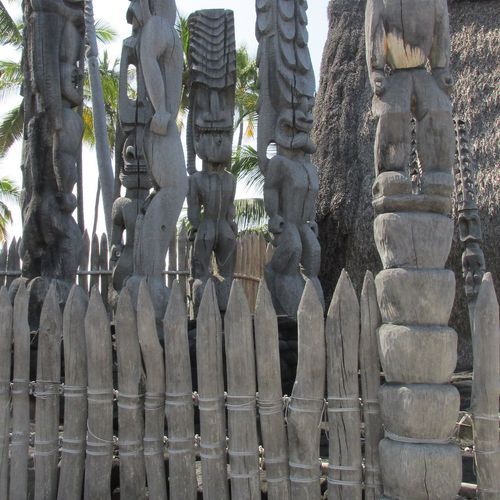
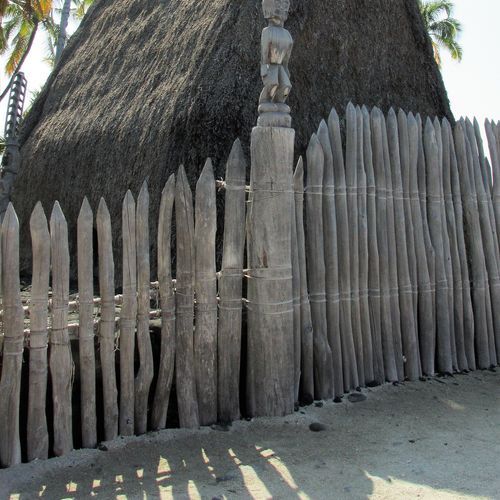
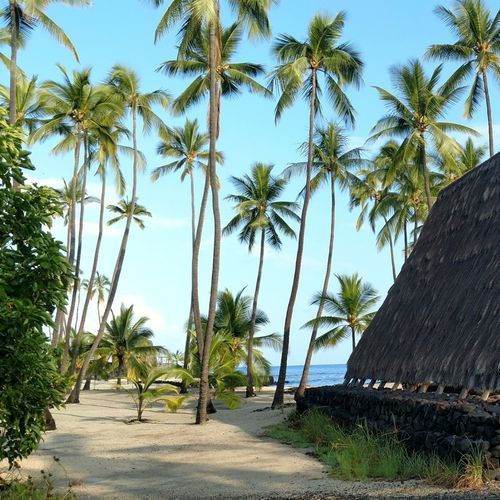
Set at the north end of the Great Wall near Keoneʻele Cove, this reconstructed temple is the island's only example of a hale poki, or consecrated house. Built around 1700 as a royal mausoleum, it held the bones of 23 deified chiefs, including a great-grandfather of Kamehameha I, whose mana made the place of refuge sacred. The remains were later removed, but Native Hawaiians still leave offerings on the tower, so visit with respect.
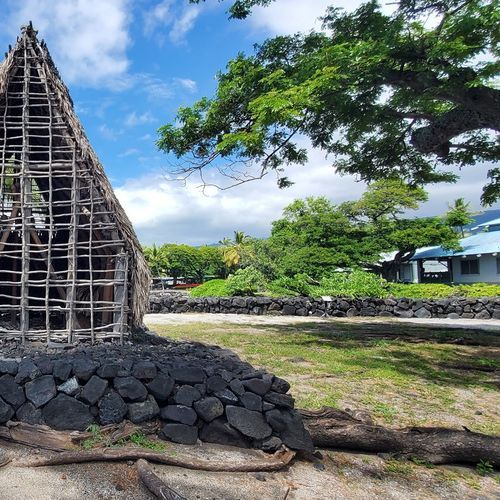
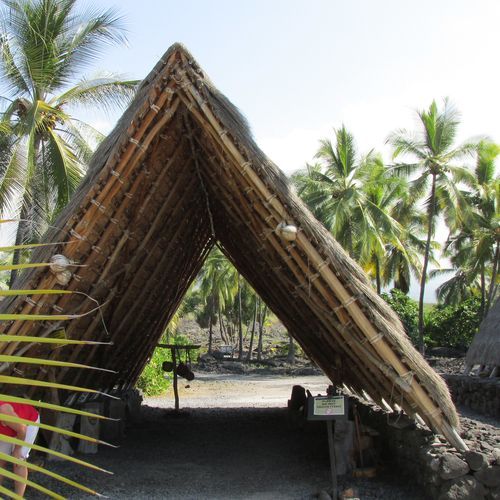
This small-scale replica of Hale o Keawe, the royal mausoleum that stands farther along the walking tour, lets you study up close how the full-size temple was built. Its frame is ʻōhiʻa wood, its roof is thatched with kī leaves, and fern trims the edges, with one side left open. Look closely and you won't find nails, hinges or any metal: beams are locked together and lashed with cord twisted from native plant fibers.
This lava-rock ramp was a course for hōlua, a sport in which aliʻi raced headfirst downhill on long, narrow wooden sleds. The runners were rubbed with kukui nut oil and the ramp was layered with grass and leaves to speed the ride. It sits in the Kiʻilae Village area near Alahaka Heiau and the Keanaeʻe Cliffs, and a replica sled hangs in the visitor center.
Only a pile of stone rubble remains of this ancient Hawaiian temple, which may once have rivaled the large ʻĀleʻaleʻa Heiau inside the Puʻuhonua. Its original purpose is uncertain, though cultural practitioners and descendants believe it may have served for observing the stars or been tied to local fishing. The curving Keanaeʻe Cliffs rise behind it like a natural amphitheater, formed by Mauna Loa lava flows. Please stay off the stones.
These curving lava cliffs form a natural amphitheater behind the stone rubble of Alahaka Heiau along the 1871 Trail. They took shape when flows from Mauna Loa spilled across this coast roughly 750 to 1,500 years ago, leaving rock that still looks rippled and frothy where it cooled. Mark Twain likened the frozen cascade to a petrified Niagara in his Letters from Hawaii. The Alahaka Ramp and Waiū o Hina Lava Tube sit close by.
Just outside the park's sacred grounds at the Hōnaunau Bay boat ramp, this popular snorkeling spot offers the closest ocean access, since entering the water within the park itself isn't allowed. Swimmers climb in from natural lava rock ledges that form steps, or from the concrete ramp. The rock can be sharp and slippery, and sea urchins (wana) cling to the rocks and seafloor. It's still an active boat ramp, so keep clear of boats coming and going.
This walled place of refuge once offered a second chance to anyone who broke kapu, the sacred laws of ancient Hawaiʻi, if they could reach it alive. A priest here could absolve them, and in wartime it sheltered elders, children and defeated warriors. The massive L-shaped Great Wall borders it on two sides and the ocean on the others, enclosing ʻĀleʻaleʻa Heiau and Hale o Keawe. It remains a sacred place to Hawaiians today.
Hawaiian chiefs once arrived here by canoe through Keoneʻele Cove, landing at grounds set aside for royalty. Sandy paths lead past the royal fishponds, a stone board for the strategy game kōnane, and spots where workers once pounded taro and readied the area for visiting chiefs. Beyond them rises the Great Wall, marking the edge of the Puʻuhonua, the place of refuge. This is a sacred cultural site, so walk respectfully and follow posted guidelines.
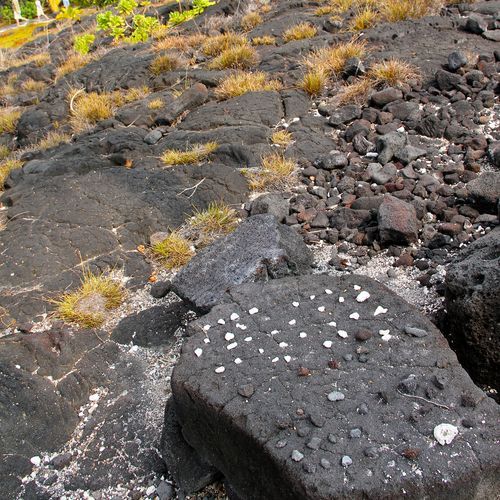
This traditional Hawaiian strategy game is played here on a papamū, a board of small hollows set into lava rock that holds rows of black stone and white coral pieces. Players take turns, and whoever makes the last possible move wins. Chiefs once used the game to settle disputes and wagered canoes or land rights on the outcome. Staff at the visitor center can explain the rules so you can try a match.
Look closely at the lava rock here and you'll find round bowls worn into its surface, shaped by Native Hawaiians for everyday work. They may have served for dyeing kapa (bark cloth) or fishnets, curing fibers, or grinding octopus, seaweed, bait and ʻawa root for a ceremonial drink. Similar bowls and smaller hollows called poho turn up along trails and shoreline across the Kona coast, quiet traces of daily life beside the Royal Grounds.
Long ago, lava flows from Mauna Loa swept through this coastal spot, wrapping around the trees in their path. Moisture in the living trunks cooled the lava into a shell before the wood burned away, leaving hollow, round impressions. Look closely and you can still see the texture of bark pressed into the rock. Many of these molds were formed by loulu palms, once common along this coast and now endangered.
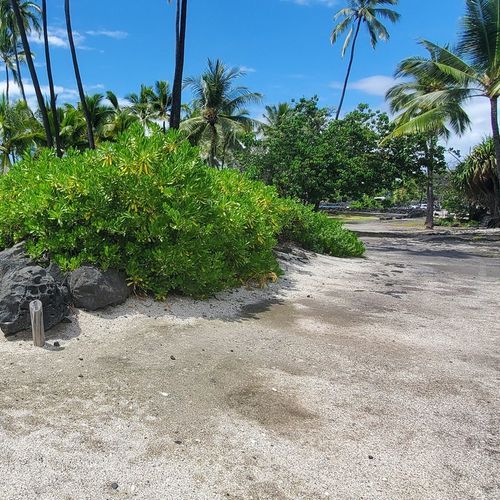
This narrow sandy cove at the head of Hōnaunau Bay was once kapu, reserved as a canoe landing for aliʻi arriving at the Royal Grounds. Its traditional name refers to black sand that may once have covered the shore, and coconut palms now shade its southern end. Honu (green sea turtles) often rest on the sand or nearby lava flats; they are protected by law, so give them plenty of space and watch from a respectful distance.
This long, carefully shaped block of lava rests on the north side of ʻĀleʻaleʻa Heiau inside the puʻuhonua. Local tradition holds that Keōua, a high chief of Kona, napped here while his men fished, his head fitting a natural rust-colored hollow at the western end. Holes in the surrounding lava may once have held posts for a shady coconut leaf canopy. Some believe the stone was cut centuries earlier for a mausoleum ordered by the ruling chief ʻUmi.
This large lava boulder inside the Puʻuhonua rests partly on smaller stones beneath it and is tied to a story about Queen Kaʻahumanu and Kamehameha. After a quarrel, the queen is said to have swum across Hōnaunau Bay and hidden under the stone, until her barking dog gave her away. The couple later reconciled. It's a short walk from ʻĀleʻaleʻa Heiau and the Keōua Stone.
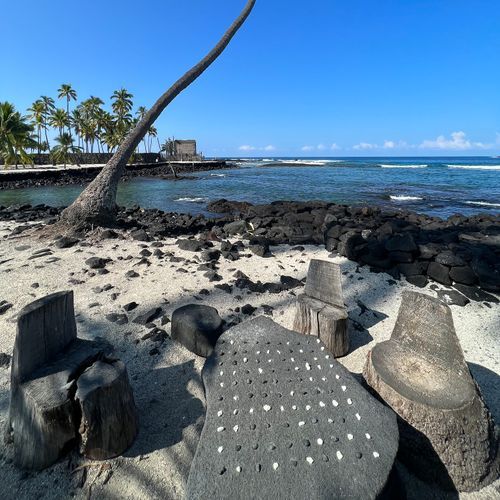
This original stone game board was made by carving rows of small depressions, called poho, into a flat surface of lava for playing kōnane, a strategy game that sharpened skills useful in battle and other pursuits. Its 9 by 11 grid is deliberately uneven, a traditional design that made play more complex and raised the stakes for wagers. It sits steps from the Puʻuhonua, and more boards can be spotted on the pāhoehoe benches along the coastal trail.
These weathered stone remnants mark one of the oldest structures in the park, a large temple built around the 1200s or 1300s and possibly the refuge's first heiau. Excavations suggest it followed the walled luakini style, with enclosures and inner platforms, before centuries of pounding surf reduced it to ruins. Oral tradition holds that part of it may once have held kapu breakers and war captives. Please stay off the walls and leave every stone in place.
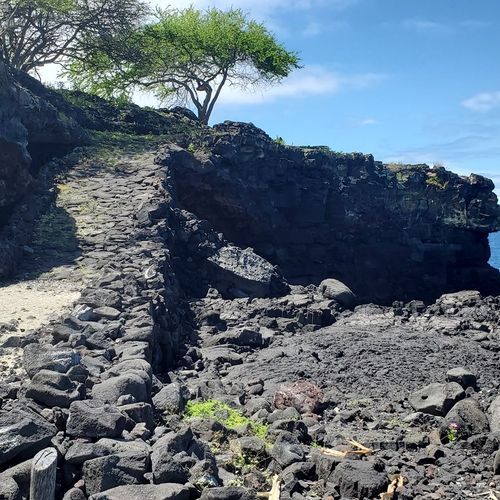
This massive stone ramp climbs the southern end of the Keanaeʻe Cliffs, linking the 1871 Trail with Kiʻilae Village above. Before it was built, people reached the village by ladder or rope, and the early ramp was so rough that paniolo rode it with one foot free of the stirrup, ready to jump. It was widened and stabilized in 1868. Expect the steepest, sun-exposed stretch of the trail here, with uneven lava rock underfoot.
This heiau, a Hawaiian temple site, sits in the 1871 Trail area south of the Puʻuhonua, a short walk from the Kēōkea Hōlua sled ramp and Alahaka Heiau. It is one of several sacred stone structures along this stretch of the Kona coast. Treat the site with respect: stay off the walls and stonework, and leave the rocks where they lie.
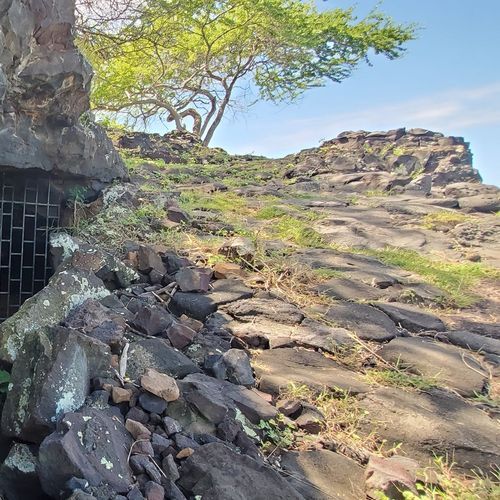
This hollow tube took shape when molten lava from Mauna Loa flowed through it and then drained away, some of it into the ocean, once the eruption ended. Caves like this mattered deeply to Native Hawaiians, offering shelter from weather, refuge in wartime and fresh water that seeped through porous rock and was gathered in gourds. Some lava tubes served as burial caves, and many remain sacred and protected, so treat the site with respect.
Discover more activities and plan your visit in the Parka app
Download Parka — It's Free