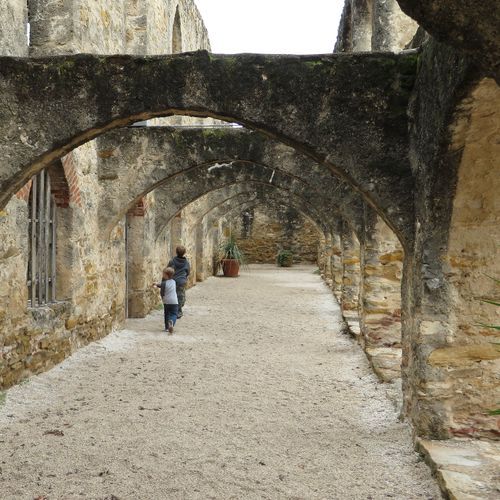
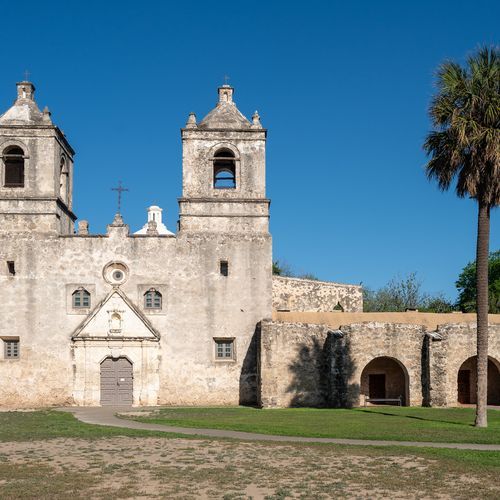
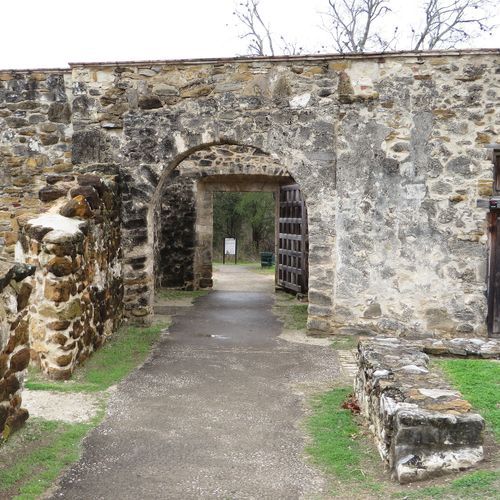
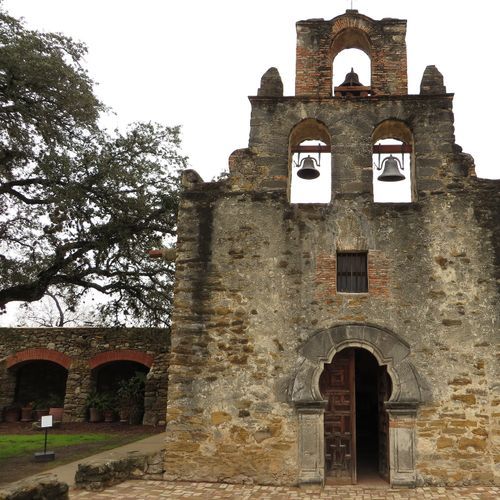
San Antonio Missions National Historical Park unfolds as a chain of four Spanish colonial mission sites strung along the San Antonio River on the city's south side, joined by a far-flung colonial ranch and a remarkable network of aqueducts and acequias that once carried river water to fields and orchards. Rather than a single destination, the park works best as a progression. Mission Concepción, closest to downtown, holds one of the oldest unrestored stone churches in the country, its faded frescoes still clinging to interior walls. Mission San José, often called the queen of the missions, is the park's hub, with the main visitor center, a sweeping walled compound, restored living quarters, and the daily ranger-led walks that set off from the visitor center patio. Farther south, Mission San Juan and Mission Espada feel quieter and more rural, surrounded by farmland and demonstration fields that hint at how these communities fed themselves, while Espada's acequia and the nearby aqueduct reveal the engineering that made the whole system possible.
What ties these places together is that they were never just churches. Each was a self-sufficient settlement where Indigenous peoples and Spanish newcomers farmed, ranched, worked trades, and blended traditions into the cultural foundation of modern San Antonio. That story is still alive: all four churches remain active Catholic parishes, so you may encounter a Sunday Mass, a wedding, or a funeral, during which visitors should give the sanctuary room. The buildings are centuries old and uneven underfoot, so watch your step in low doorways and historic rooms, and resist the urge to sit or climb on the walls.
First-timers with limited time should start at San José, join a ranger tour, and then decide how far south to push. A full day lets you visit all four, either by car or, far more memorably, by bike or on foot along the Mission Reach trail that hugs the river and links the sites. Self-guided brochures are available at each mission, and an audio tour adds depth as you travel, but the real reward is the contrast itself: moving from the busy edge of the city to the pastoral quiet of Espada, you trace the arc of a frontier world that shaped Texas.