Parka
San Antonio Missions National Historical Park

Things to Do in San Antonio Missions National Historical Park

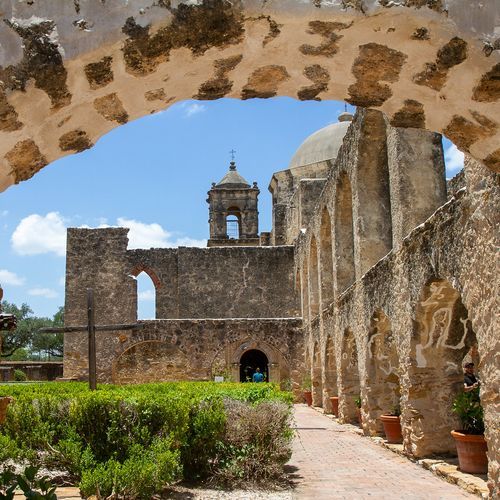
San Antonio Missions National Historical Park is one of the rare places in the national park system where living history and everyday city life share the same ground. Strung along the San Antonio River on the city's south side, four Spanish Colonial mission compounds (Concepción, San José, San Juan, and Espada) anchor a corridor of stone churches, fortified walls, and centuries-old farmland. These were never just places of worship. They were self-reliant frontier communities, and their survival makes this the most complete and concentrated collection of its kind in North America, a distinction recognized by UNESCO World Heritage status. Each church still serves an active Catholic parish, so you may hear bells or hymns echoing through limestone naves that have welcomed worshippers for nearly three hundred years. The churches are open to visitors during park hours unless a wedding, funeral, or other special service is under way.

Mission San José is the natural starting point and the showpiece of the park. Its visitor center patio is the meeting spot for ranger-led walks held most mornings at 10 and 11, and these tours of about an hour bring the convento, granary, and Indigenous living quarters to life. Rangers also give talks in the afternoon. At Mission Concepción, take your time: few stone sanctuaries anywhere in America have stood this long without a restoration, and faint traces of the original painted designs still survive on its walls. At Mission San Juan, seek out the Tufa House, a modest dwelling built after secularization from porous local limestone and salvaged colonial materials, a quiet snapshot of life after the mission era ended. Mission Espada carries the deepest roots of all. It began in 1690 in East Texas as the first mission in the province and moved to the river valley in 1731. Nearby, the Espada Aqueduct still carries water over a creek, and the acequia irrigation ditches that fed mission fields remain some of the most evocative sights in the park.

The park offers no beaches or dramatic summit overlooks. Its scenery is gentler: shaded riverbanks, sunlit plazas framed by stone arches, and the green ribbon of historic farmland around the missions. You can explore at your own pace with the brochures available at each site, or download the free audio tour, which explains how Indigenous, Spanish, and later cultures blended to create San Antonio's distinctive character. Leashed pets are welcome on the grounds, and the missions sit close enough together that you can link them in a single day by car or bicycle along the river trail. Rancho de las Cabras, the missions' colonial ranch, completes the picture of an outpost that once fed and sustained an entire frontier community.

Point of interestMission San José

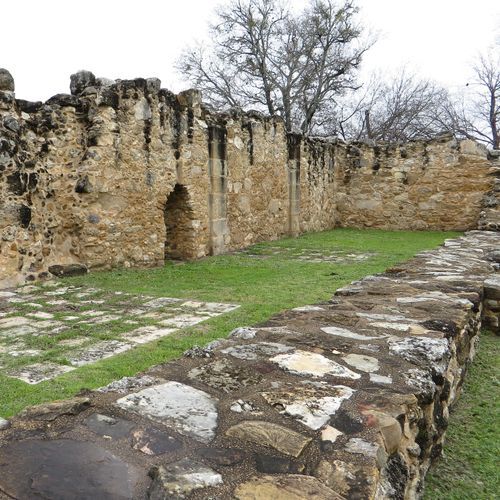
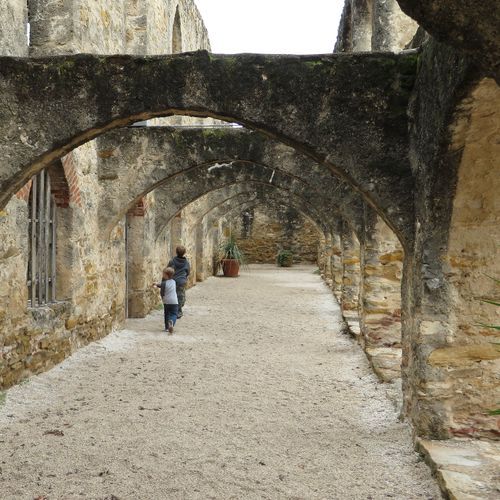
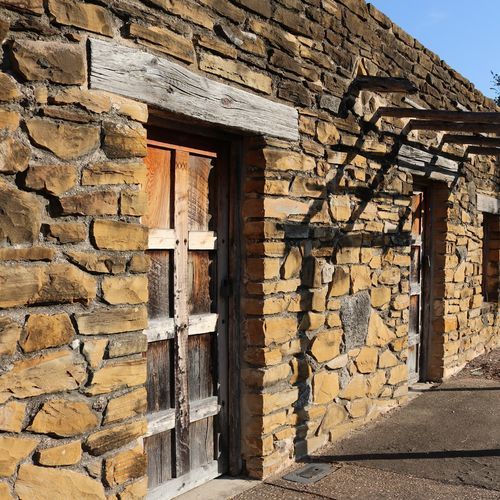
These quarters were home to the mission's Indigenous residents, many of them Coahuiltecan people from hunting and gathering bands across the region. Families moved into the mission seeking safety from Apache and Comanche raids, yet European diseases such as smallpox and measles killed many, so new residents were constantly recruited. The quarters sit a short walk from the church with its Rose Window, the granary and the gristmill, which together help bring daily mission life into focus.

Point of interestMission San Juan

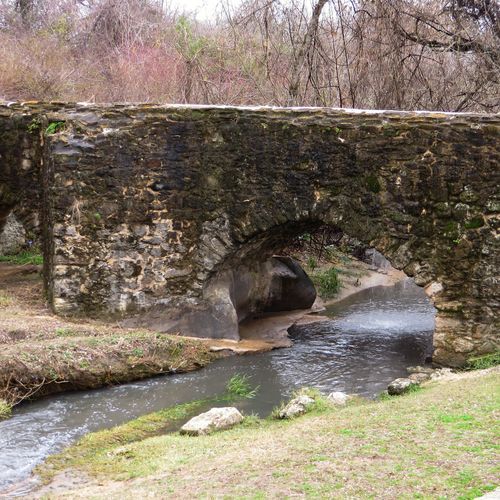
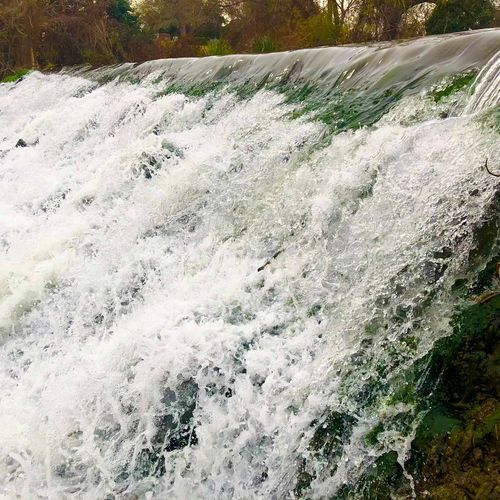
This stone aqueduct carries water across two arches over Six-mile Creek and has held up through major floods for more than 275 years. Dating from the 1740s, it is one of the oldest Spanish water structures still standing in the country, and water still flows over it toward Mission Espada. The site is self-guided, with no restrooms, drinking fountains or picnic areas, so come prepared.

Point of interestMission Concepción

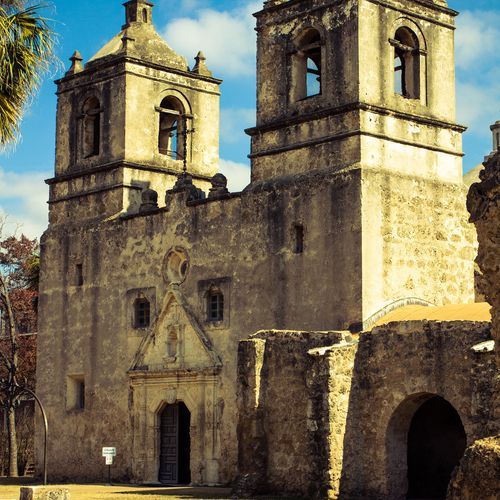
Built in 1755 by Franciscans, this church stands largely as it was, making it one of the oldest original stone churches in the United States. Inside, traces of the colonial-era frescoes survive in bright colors, including a painted sun face in the former library. It still serves an active parish, and the River Walk Mission Reach trail lies within walking distance for exploring the river corridor.

Point of interestMission San Juan

Founded in East Texas as Misión San José de los Nazonis, this Spanish Colonial mission moved to the banks of the San Antonio River in 1731. Its church features a built-in bell wall, or campanario, and the grounds sit amid original labores, the farm fields once worked by mission residents. The setting is quieter than the other missions, with a riverside trail nearby and the mission museum just steps away.

Point of interestMission Espada

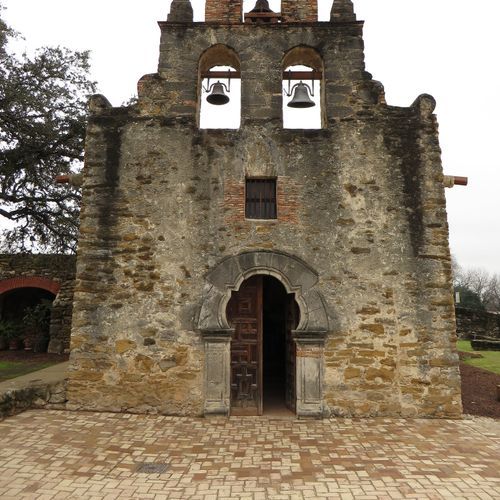
The southernmost of San Antonio's missions has roots reaching back to 1690, when it was founded far to the east in Texas before relocating here in 1731. Its quiet grounds invite you to picture the community that once lived and worked here, supplied in part by Rancho de las Cabras, a ranch to the southeast. A small museum and restrooms sit just steps away, and audio description is available on the NPS app.

Point of interestMission San José

Known as the "Queen of the Missions," this is the largest of the five Spanish colonial missions along the San Antonio River, founded in 1720 by Father Antonio Margil. Its church, built in 1768, has an original carved stone facade with some of the finest statuary in Spanish colonial America. Much of the compound, including the church dome and the surrounding walls, was restored in the 1930s. Nearby you can explore the Rose Window, gristmill, granary, convento and Indian Quarters.

Point of interestMission San José

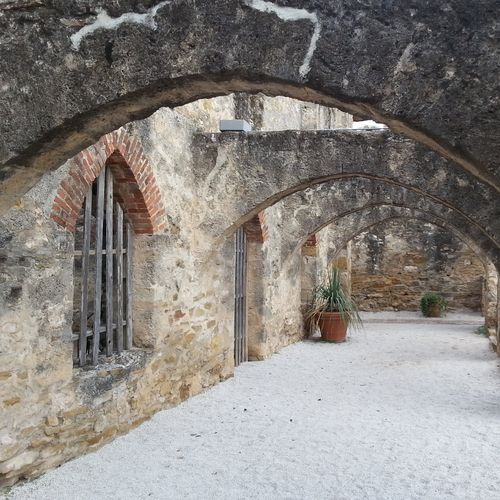
Built into the northern stretch of the mission's western wall, with the church a short way to its east, this long, single-story stone building once held the community's stored grain. Its barrel-vaulted roof is a notable example of colonial masonry. The restored gristmill, the first in Texas, sits just beyond the walls nearby, so the two make a natural pairing for understanding how the mission grew and processed its food.

Point of interestMission San José

Texas's first gristmill began grinding wheat here in 1794, the same year the mission brought in its first successful wheat harvest. Water diverted from the acequia filled a circular stone forebay, where it swirled to turn a wooden wheel in the arched room below. The mill was restored in the 1930s and returned to working order in 2001. Look along the back wall for three circular hollows, the remains of earlier lime kilns.

Point of interestMission San José

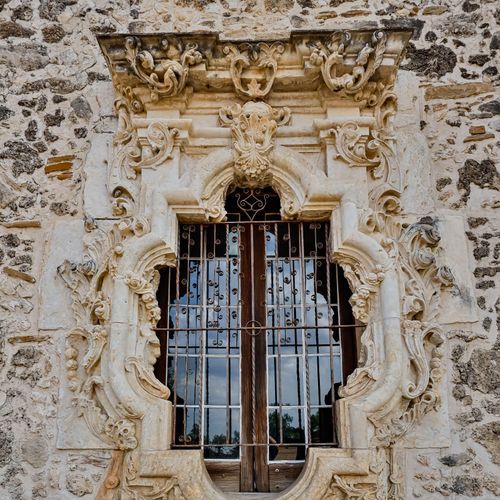
On the south wall of the mission church's sacristy, this stone window is considered one of the finest examples of Spanish Colonial ornamentation in the United States. Its sculptor and original meaning remain uncertain, though a popular legend credits a carpenter named Pedro Huizar with carving it as a memorial to his sweetheart, who was lost at sea on her way to join him. Another theory connects it to Saint Rose of Lima. The stonework dates to about 1775.

Point of interestMission San José

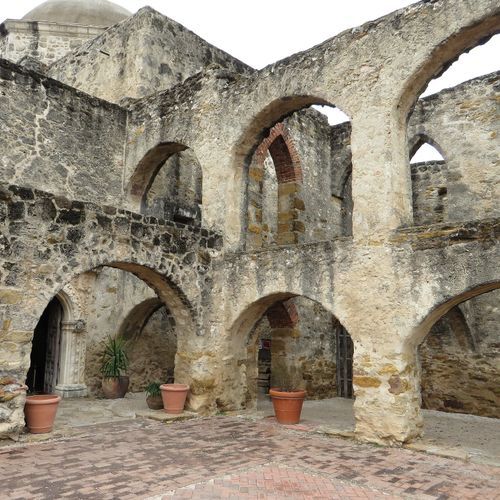
This complex beside the mission church housed the friars who ran Mission San José, along with the rooms that kept daily life going: living quarters, storerooms for mission goods, a kitchen and a dining hall. San José was first laid out on an older plan from northern Mexico and New Mexico, then reworked to echo the Querétaran design centered on a patio. The Rose Window is just steps away.

Discover more activities and plan your visit in the Parka app

Download Parka — It's Free

Take it with you

The Parka app keeps your maps, trails and plans working with no signal. What you save here is already there.

Download on the App Store

Explore All 84 Parks

Browse parks by region and discover your next adventure